
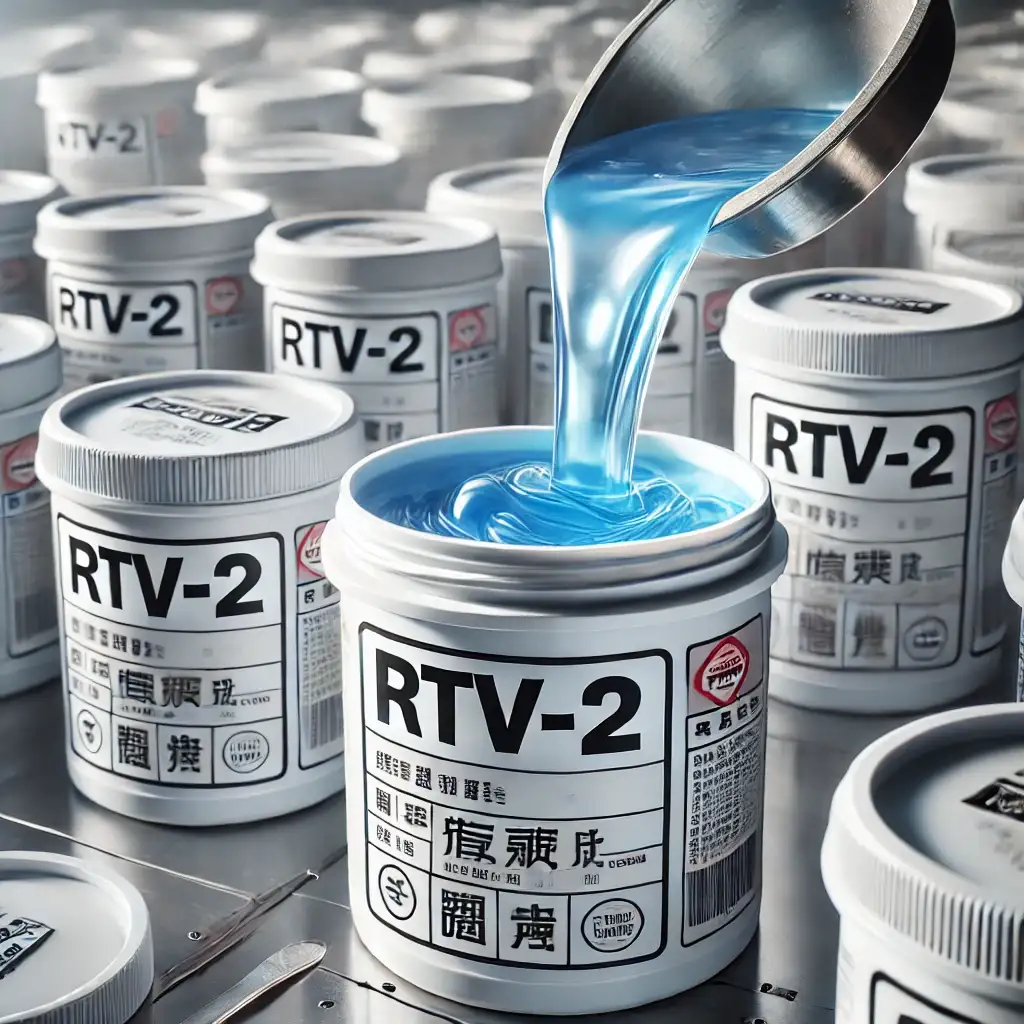
You know that moment when you stand in the hardware store, staring at rows of silicone tubes, and realize you have no idea which one fits your project.
Yeah, we have all been there.
Here is the thing about rtv silicone. It shows up everywhere. Sealing your shower. Protecting circuit boards. Creating molds for chocolate truffles or jewelry prototypes.
But the gap between standard rtv silicone and rtv 2 can decide if your work succeeds on the first try or costs you extra time and cash.
And if you build something important, medical device prototypes, food-safe baking molds, or just a leak that refuses to stay fixed, knowing what is rtv silicone and its variations matters a lot.
So let us break this down clearly. This guide explains rtv silicone, rtv 2, and how to pick the right one for your needs.
What Is RTV Silicone? Properties and Common Applications
Rtv silicone means Room-Temperature Vulcanizing silicone. The name reveals the key trick. Unlike old-school rubbers that demand heat and pressure, rtv silicone shifts from liquid to solid rubber on your bench.
What does rtv silicone stand for in action. It cures by grabbing moisture from the air. Open a tube of standard rtv silicone, called rtv 1, squeeze it out, and the change starts right away. Hours later, you hold a flexible, tough elastomer.
But what makes rtv silicone stand out.
Temperature extremes barely affect it. Most rtv silicone handles -60°F to 450°F without complaint. Freeze it. Bake it. It keeps performing.
UV light and weather leave it alone. Rtv silicone fights sunlight breakdown better than many outdoor materials.
Chemicals and water slide off. That explains rtv silicone in aquariums and car engines.
Flexibility lasts for years. It bends without cracking.
Look around any home or shop. You see rtv silicone in bathroom caulk. Kitchen sealant. Engine gaskets. Electrical insulation. Simple molds for crafts.
The strength of basic rtv silicone comes from ease. Squeeze. Apply. Wait. Done.
But ease has limits. And that opens the door for rtv 2.
What Is RTV-2 Silicone? Key Features and Uses
Picture rtv 2 as rtv silicone with advanced training. You get two parts, base and catalyst. Mix them in the correct ratio, and the cure runs through the whole batch at once.
This shifts what is rtv capable of achieving.
Rtv 2 cures evenly. Not surface-first like moisture systems. Every part cross-links together. This detail changes outcomes.
Pour a deep mold. Rtv 2 sets fully, even inches thick. Standard rtv silicone leaves the center soft in thick sections.
Need tiny details. Rtv 2 grabs textures you inspect with a magnifier. Fingerprints. Fabric patterns. Coin stamps. All copied perfectly.
Want repeatable results. You set working time and cure speed with catalyst amount. No surprises.
The types of rtv in two-part form cover pro work. Find food-grade silicone safe for direct contact. Medical grade silicone that passes biocompatibility tests. Specialized mold making silicone for sculptures or parts.
Chocolatiers build custom candy molds with rtv 2. Jewelers use it for lost-wax casting. Engineers prototype devices. Studios craft prosthetics. Designers create pre-production models.
When precision counts and failure costs big, rtv 2 silicone leads.
RTV vs RTV-2 Silicone: Main Differences Explained
So what is rtv silicone in basic form compared to the two-part system. Let us compare directly.
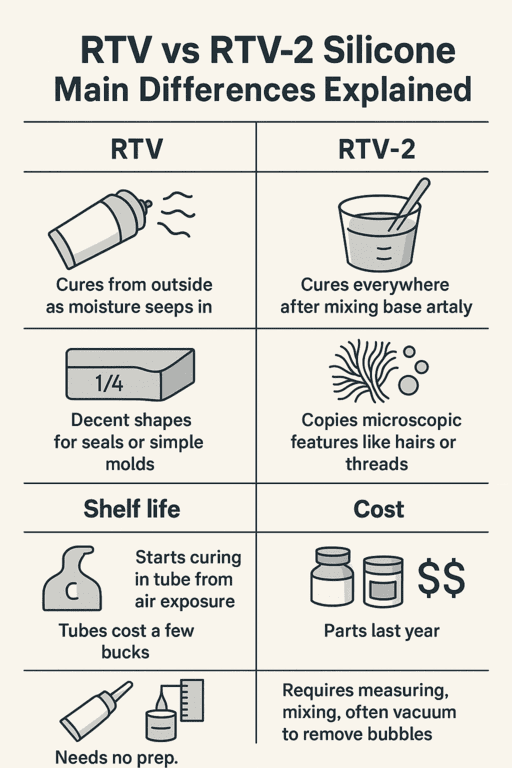
Alt text: RTV vs RTV-2 silicone comparison chart
Curing Process
Standard rtv silicone, rtv 1, cures from the outside as moisture seeps in. That garage caulk tube. Moisture-driven.
Rtv 2 cures everywhere at once after you mix base and catalyst. No moisture wait.
Thickness Limits
Rtv silicone works best under 1/4 inch. Thicker layers leave the core uncured.
Rtv 2 handles pours inches deep with even results.
Detail Level
Basic rtv silicone grabs decent shapes for seals or simple molds.
Rtv 2 copies microscopic features like hairs or threads.
Shelf Life
Open rtv silicone starts curing in the tube from air exposure.
Rtv 2 parts last years sealed separately. Mix only what you use.
Cost
Rtv silicone tubes cost a few bucks for DIY fixes.
Rtv 2 kits run higher but pay off in pro jobs.
Ease of Use
Rtv silicone needs no prep. Squeeze and go.
Rtv 2 requires measuring, mixing, and often vacuum to remove bubbles. More steps, more control.
Certifications
Standard rtv silicone fits general tasks.
Rtv 2 offers FDA, NSF, and medical approvals where rules apply.
| Feature | RTV Silicone (RTV-1) | RTV-2 Silicone |
| Components | Single (ready to use) | Two (base + catalyst) |
| Curing Method | Moisture from air | Chemical reaction after mixing |
| Best Thickness | Under 1/4 inch | Any thickness (inches deep) |
| Tiempo de curado | 24-48 hours (humidity dependent) | 4-24 hours (catalyst controls) |
| Detail Capture | Good for general work | Exceptional (microscopic) |
| Shrinkage | 1-3% typical | Less than 0.1% |
| Mixing Required | None | Yes (precise ratios) |
| Shelf Life (opened) | Limited (cures in container) | Excellent (separate storage) |
| Cost Per Unit | Lower ($5-$20 per tube) | Higher ($30-$100+ per kit) |
| Food/Medical Use | Rarely certified | Often certified |
| Best For | Sealants, repairs, basic molds | Pro molds, food-safe, medical devices |
| Skill Level | Beginner | Intermediate to advanced |
The table proves it. Rtv silicone shines for simple tasks. Rtv 2 rules precision and certified work.
RTV or RTV-2? How to Match Silicone to Your Needs
Which types of rtv fit your job. Focus on the goal. Choose standard rtv silicone when:
Alt Text: Image showing RTV and RTV-2 for comparison
- You seal joints or leaks at home. Leaky windows or tub caulk. Rtv silicone fixes it.
- Budget leads and perfection stays optional. A $10 tube beats an $80 kit for basic work.
- You apply thin layers. Gaskets or coatings under 1/4 inch.
- Details stay simple. Soap molds or candle forms. Rtv silicone delivers.
- You want no hassle. Squeeze and done.
You handle occasional repairs. Garden hose fixes need no pro materials.
Pick rtv 2 silicone when:
- Intricate details decide success. Coins, sculptures, jewelry textures.
- You build production molds. Dozens of chocolates or resin pieces demand consistency.
- Food or medical rules apply. Use certified food-grade silicone or medical grade silicone.
- Thick sections cure fully. Two-inch molds set evenly.
- Accuracy cannot slip. Prototypes or dental work need low shrinkage.
- Pro results justify cost. Exceptional beats acceptable.
You repeat batches reliably. Adjust catalyst for control.
Still unsure. Consider the final user. Will they eat from it. Touch skin. Depend medically. Certified rtv 2 becomes essential. Reproduce art or jewelry. Pro mold making silicone in rtv 2 form creates gallery-level work.
And both rtv silicone types belong in a full toolkit. Different jobs need different strengths.
Conclusión
You now hold the full picture of rtv silicone and rtv 2. Standard rtv silicone seals leaks, fills gaps, and handles basic molds with zero fuss. Rtv 2 silicone captures every detail, cures thick pours evenly, and meets food or medical rules when the job demands perfection.
Match the material to the mission. Need speed and savings on a weekend repair? Grab rtv silicone. Building production molds or certified products? Choose rtv 2.
Head to Topsil Silicone now and grab the exact rtv silicone that turns your next mold into profit.

 ES
ES  EN
EN  RU
RU  AR
AR  TR
TR  DE
DE  KO
KO  IT
IT  PT
PT  PL
PL  ID
ID  FA
FA  CS
CS  FR
FR  RO
RO  EL
EL  JA
JA  SL
SL  VI
VI