
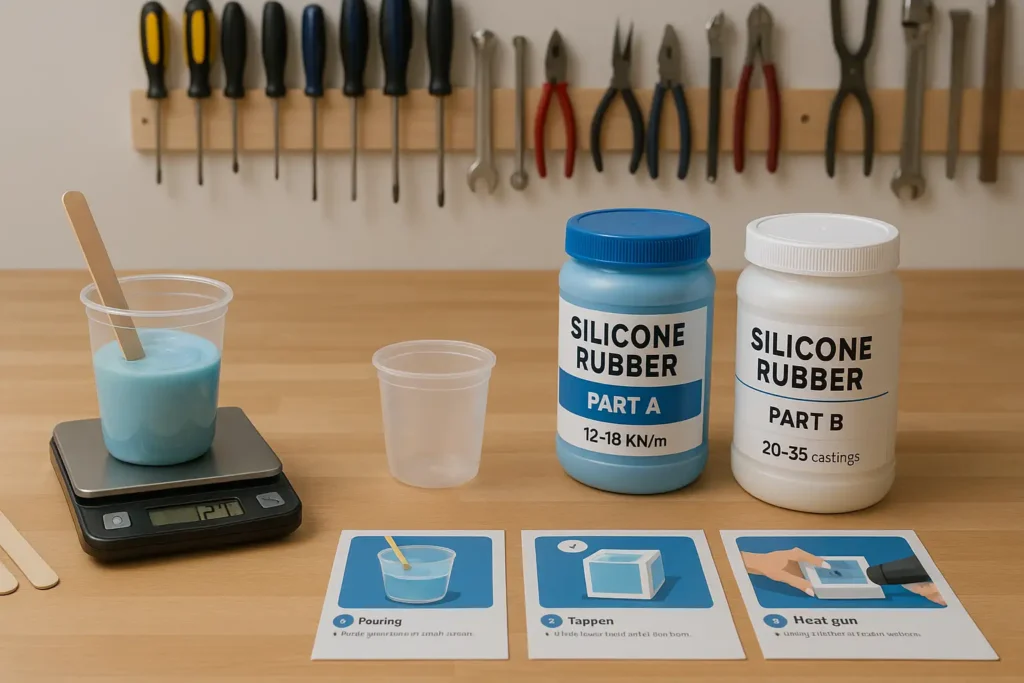

When starting a mold-making project, one of the most important decisions is choosing between platinum-cure silicone and tin-cure silicone.
Both materials are RTV (Room Temperature Vulcanizing) silicone rubbers, curing at room temperature without high heat or pressure. However, they use different chemical reactions to crosslink, resulting in different shrinkage, tear strength, mold life, cost, and suitable applications.
Understanding these differences will help you select the right silicone for your project. A comparison table is included at the end for quick reference.
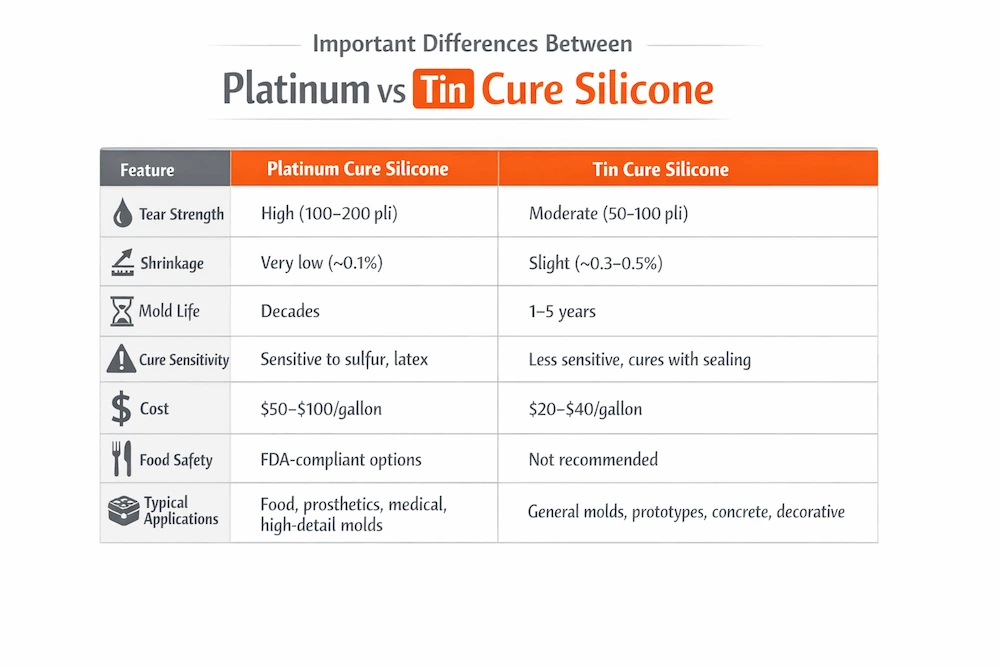
Quick Comparison: Platinum-Cure Silicone vs Tin-Cure Silicone
Before diving into the details, here’s a quick overview of the main differences between platinum-cure silicone and tin-cure silicone for mold making.
What Is Platinum Cure Silicone?
Platinum-cure silicone, also called addition-cure silicone, is a two-part RTV silicone that cures using a platinum catalyst.
- Mixed ratios: 1:1 or 10:1 (Part A:Part B)
- Cures at room temperature (heat can accelerate)
- Forms a strong, flexible elastomer suitable for complex molds
Key Advantages
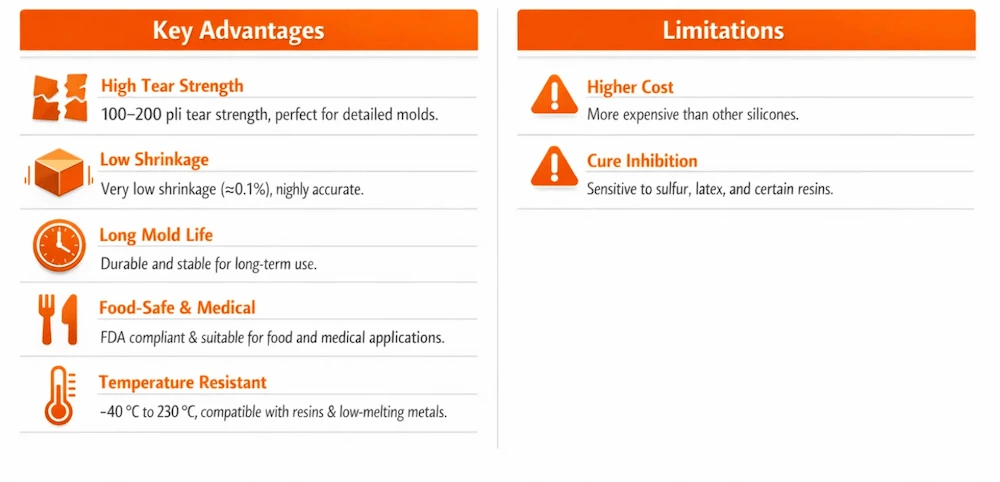
High Tear Strength
Platinum silicone typically has 100–200 pli tear strength, ideal for molds with deep undercuts and fine details.
Low Shrinkage
Because the addition reaction produces no by-products, shrinkage is extremely low (≈0.1%), ensuring high dimensional accuracy.
Long Mold Life
When stored properly, molds can remain stable for decades, making them suitable for museum-quality reproductions and long-term production.
Food-Safe and Medical Options
Many platinum silicones are FDA-compliant and medical-grade, suitable for chocolate molds, baking molds, candy molds, and skin-contact applications.
Temperature Resistance
Typical range: -40 °C to 230 °C, compatible with resins and low-melting metals.
Limitations
- Higher cost
- Sensitive to cure inhibition (sulfur, latex, certain resins)
What Is Tin Cure Silicone?
Tin-cure silicone, also called condensation-cure silicone, is another two-part RTV material that cures using a tin-based catalyst.
- Mixed ratios: 10:1, 4:1, or 1:1 (base:catalyst)
- Cures at room temperature over several hours
- Crosslinks while releasing small molecules (alcohol, water, or acetic acid)
Key Advantages
Cost-Effective
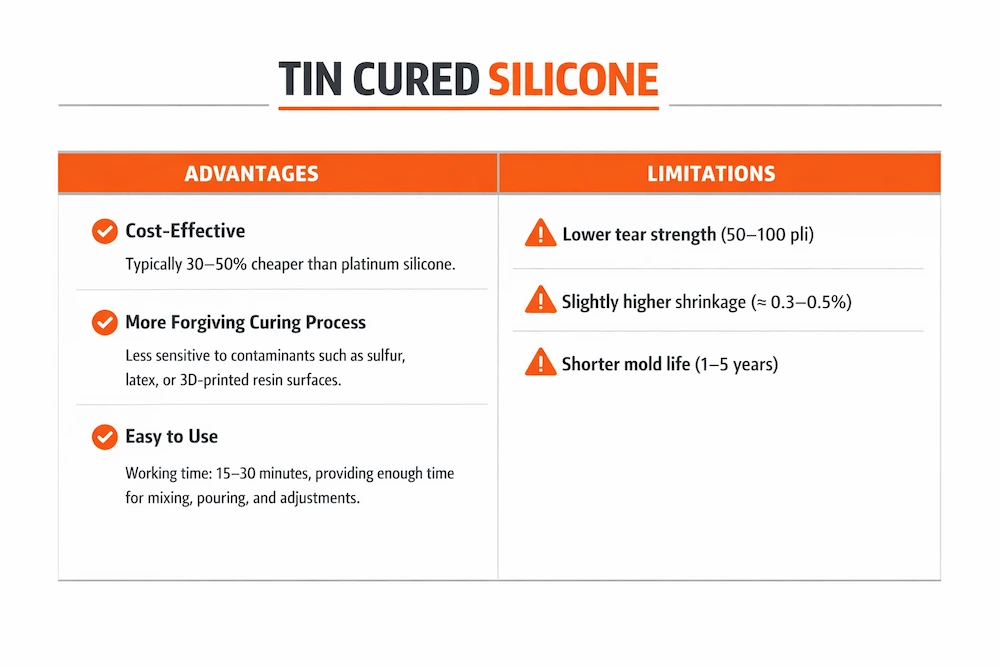
Typically 30–50% cheaper than platinum silicone.
More Forgiving Curing Process
Less sensitive to contaminants such as sulfur, latex, or 3D-printed resin surfaces.
Easy to Use
Working time: 15–30 minutes, providing enough time for mixing, pouring, and adjustments.
Limitations
- Lower tear strength (50–100 pli)
- Slightly higher shrinkage (≈0.3–0.5%)
- Shorter mold life (1–5 years)
Chemical Curing Mechanism: Platinum vs Tin Cure Silicone
The fundamental difference between these two systems lies in their curing chemistry, which explains differences in shrinkage, durability, and sensitivity to contaminants.
Platinum Cure Silicone (Addition Reaction)
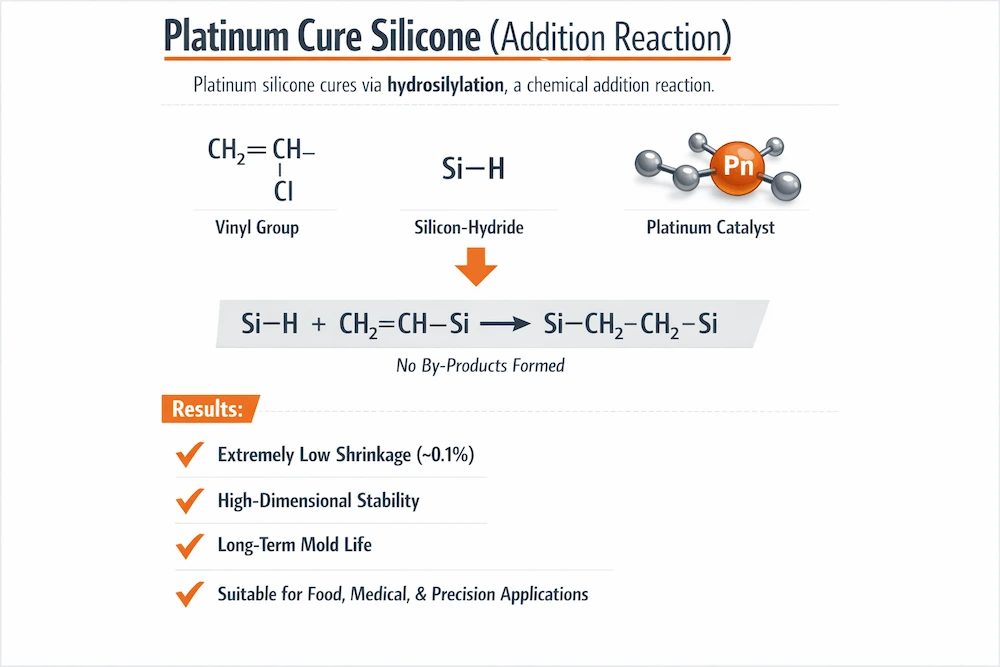
Platinum silicone cures via hydrosilylation, a chemical addition reaction.
- Vinyl groups (CH₂=CH–) react with silicon-hydride groups (Si–H)
- Catalyzed by platinum
- No by-products are formed
Simplified reaction:
Si–H + CH₂=CH–Si → Si–CH₂–CH₂–Si
Results:
- Extremely low shrinkage (≈0.1%)
- High-dimensional stability
- Long-term mold life
- Suitable for food, medical, and precision applications
Tin Cure Silicone (Condensation Reaction)
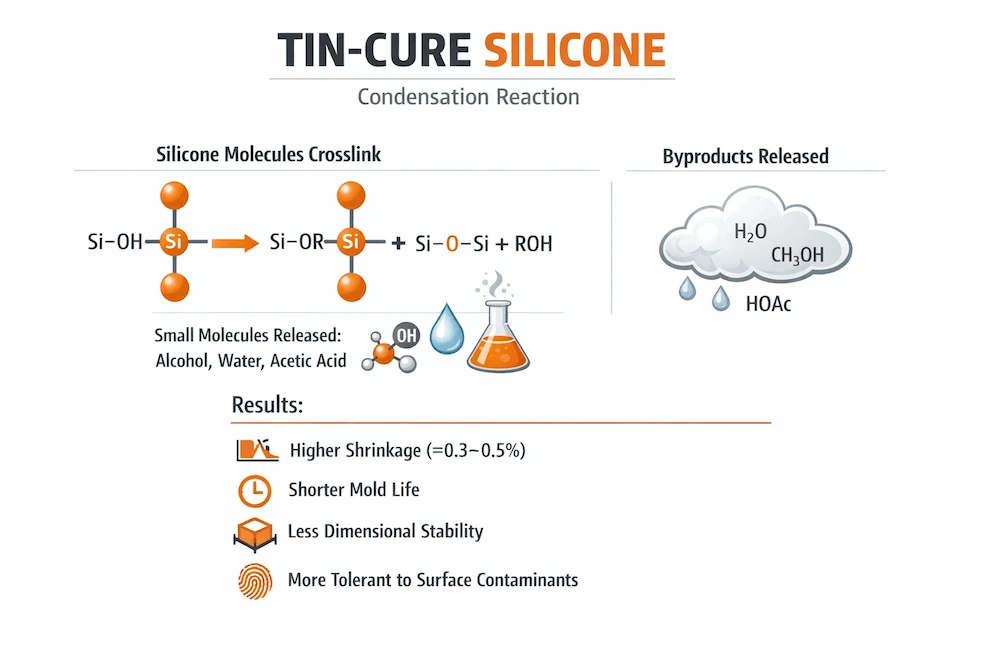
Tin silicone cures via a condensation reaction, catalyzed by tin compounds.
- Silicone molecules crosslink
- Small molecules (alcohol, water, acetic acid) are released
Simplified reaction:
Si–OH + Si–OR → Si–O–Si + alcohol
Results:
- Slightly higher shrinkage (≈0.3–0.5%)
- Shorter mold life
- Less dimensional stability
- More tolerant to surface contaminants
Typical Applications of Platinum and Tin-Cured Silicone
Both platinum-cure silicone and tin-cure silicone have specific strengths, making them suitable for different types of mold-making projects.
Platinum-Cure Silicone Applications
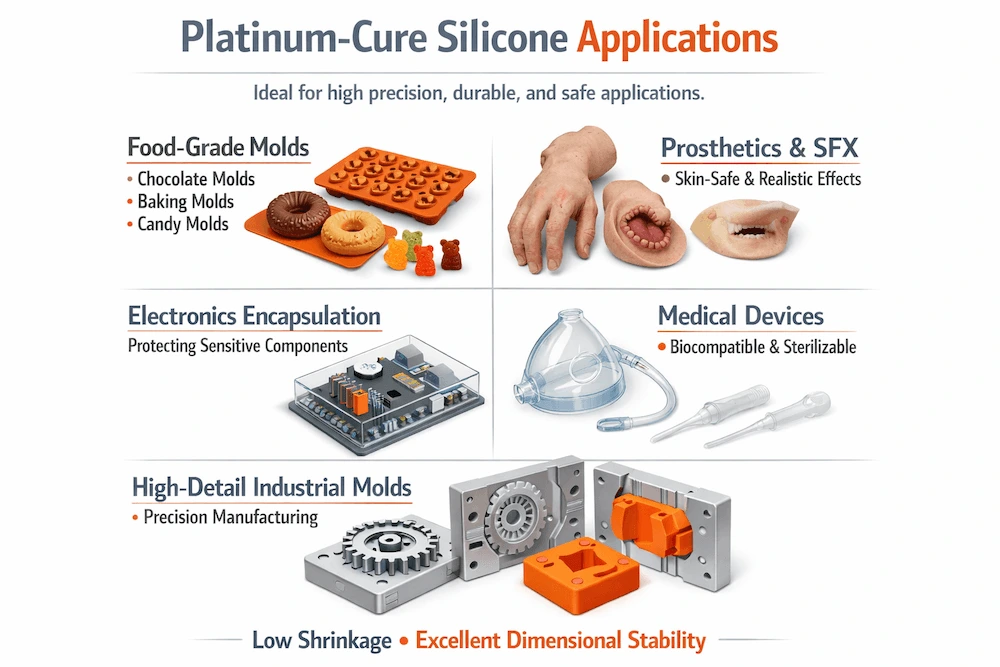
Platinum silicone is ideal for projects requiring high precision, long-term durability, and food or medical safety. Its addition-cure chemistry produces very low shrinkage and excellent dimensional stability, making it perfect for detailed or professional molds.
- Food-grade molds: chocolate molds, baking molds, candy molds
- Prosthetics and special effects: skin-safe and realistic texture for film, theater, and medical use
- Electronics encapsulation: protecting sensitive components without corrosion
- Medical devices: molds or components that contact skin or require sterilization
- High-detail industrial molds: precision manufacturing or long-term production runs
Tin-Cure Silicone Applications
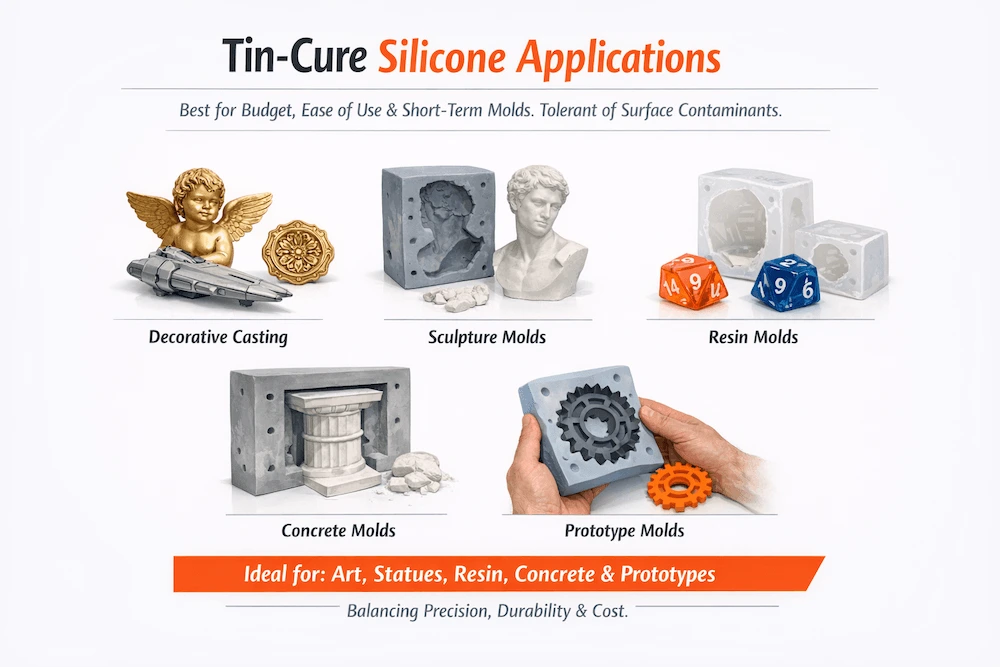
Tin-cure silicone is best suited for projects where budget, ease of use, or short-term molds are the priority. Its condensation-cure chemistry is more tolerant of surface contaminants.
- Decorative casting: art, ornaments, prototypes
- Sculpture molds: statues or architectural models
- Resin molds: general resin casting
- Concrete molds: architectural or large casting
- Prototype molds or short production runs: one-off projects or test casts
By understanding these typical applications, you can choose the silicone that best balances precision, durability, cost, and ease of use.
From Facts to Function: Your Next Step
Now you understand the main differences between platinum-cure silicone and tin-cure silicone.
- Platinum silicone: durability, precision, food safety — ideal for professional, high-detail, or long-term molds
- Tin silicone: cost-effective, easy to use — ideal for general-purpose molds, prototypes, or disposable molds
Consider budget, required precision, mold lifespan, and material compatibility to select the right silicone for your project.
Not sure whether to choose platinum-cure or tin-cure silicone? Contact TopSil, and our team will help you find the right solution for your mold-making project.