
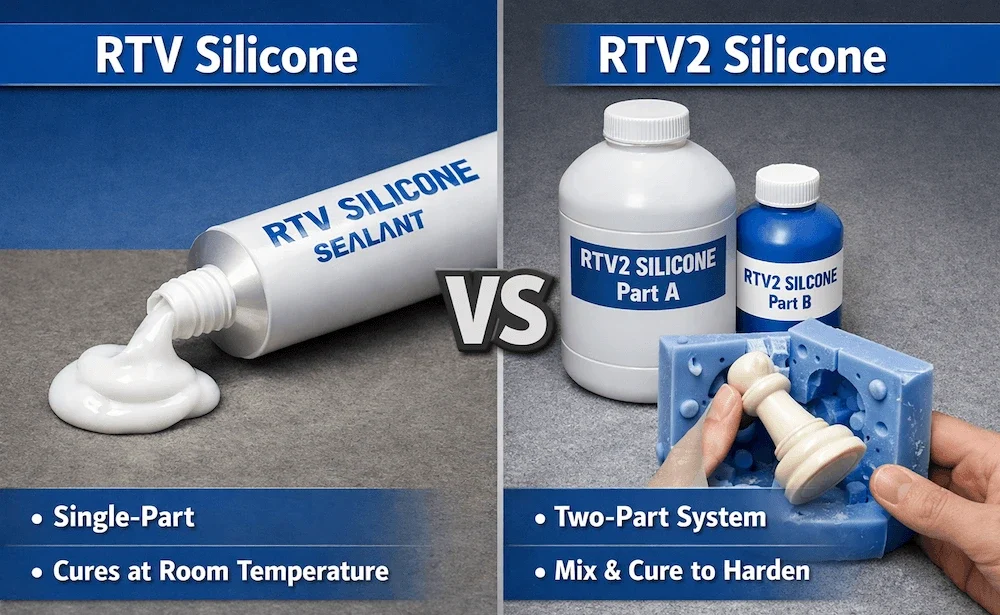

You know that moment when you stand in the hardware store, staring at rows of silicone tubes, and realize you have no idea which one fits your project.
Yeah, we have all been there.
Here is the thing about RTV silicone. It shows up everywhere. Sealing your shower. Protecting circuit boards. Creating molds for chocolate truffles or jewelry prototypes.
But the gap between standard RTV silicone and RTV 2 can decide if your work succeeds on the first try or costs you extra time and cash.
And if you build something important, medical device prototypes, food-safe baking molds, or just a leak that refuses to stay fixed, knowing what RTV silicone and its variations are matters a lot.
So let us break this down clearly. This guide explains RTV silicone, RTV 2, and how to pick the right one for your needs.
What Is Silicone?
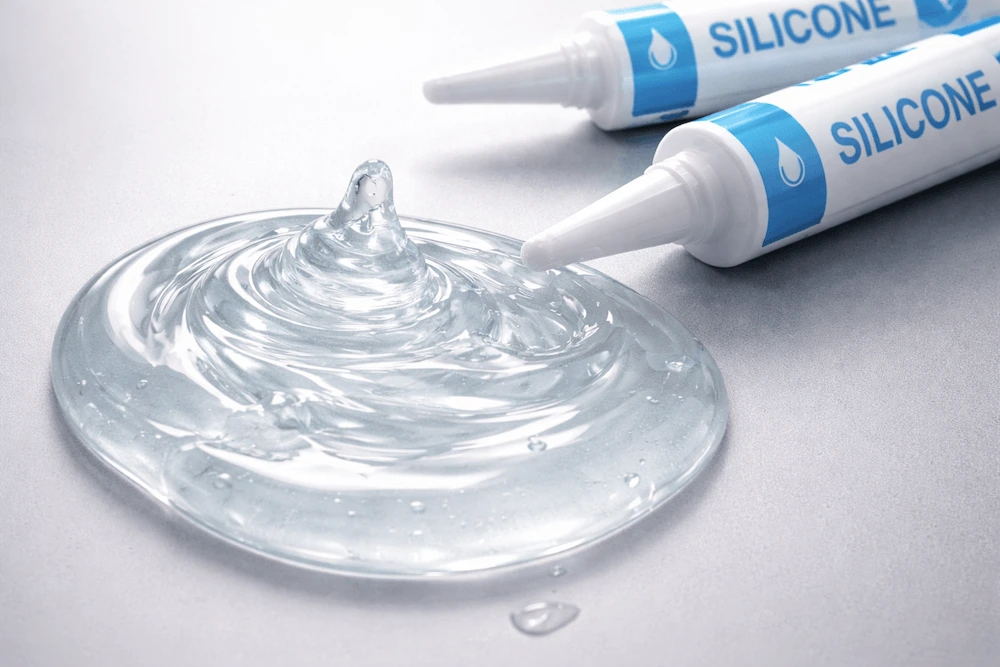
Silicone is a general term for all polymers based on the element silicon. It is characterized by high temperature resistance, chemical stability, excellent electrical insulation, and elasticity, making it widely used across various industries.
Types:
Silicone can be divided into several types, including but not limited to:
Room-Temperature Vulcanizing (RTV) Silicone – Cures at room temperature without additional heat.
High-Temperature Curing Silicone – Requires heat to cure and achieve final properties.
Liquid Silicone – Often used for molding or coating applications.
Silicone Elastomers – Used for seals, gaskets, and flexible components.
What Is RTV Silicone? Properties and Common Applications
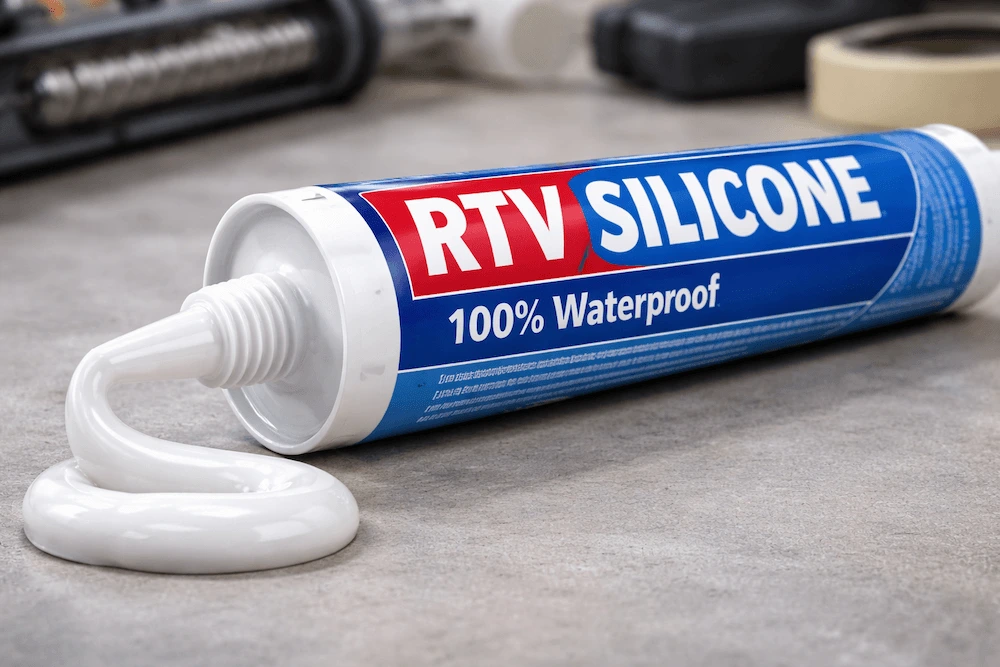
RTV silicone stands for Room-Temperature Vulcanizing silicone. The name reveals the key trick. Unlike old-school rubbers that demand heat and pressure, RTV silicone shifts from liquid to solid rubber on your bench.
What does RTV silicone stand for in action? It cures by grabbing moisture from the air. Open a tube of standard RTV silicone, called RTV 1, squeeze it out, and the change starts right away. Hours later, you hold a flexible, tough elastomer.
But what makes RTV silicone stand out?
One of the main advantages of RTV silicone is its ability to perform across a wide temperature range. Many grades can withstand temperatures from around -60°F to 450°F, making them suitable for both low-temperature and high-temperature applications.
RTV silicone also offers strong resistance to UV exposure, weathering, moisture, and many chemicals, which makes it a practical choice for sealing, insulation, maintenance, and general-purpose industrial use. In addition, it maintains long-term flexibility and elasticity, allowing it to perform reliably without cracking easily over time.
In practical applications, RTV silicone is widely used for sealing, gasketing, electrical insulation, maintenance repair, and basic mold-making. Another major advantage is ease of use: in many standard applications, it can be applied directly and cured at room temperature without complex processing.
However, this convenience also comes with limitations, especially when greater depth, higher precision, or more controlled curing is required. In those cases, RTV-2 silicone is often the better choice.
What Is RTV-2 Silicone? Key Features and Uses
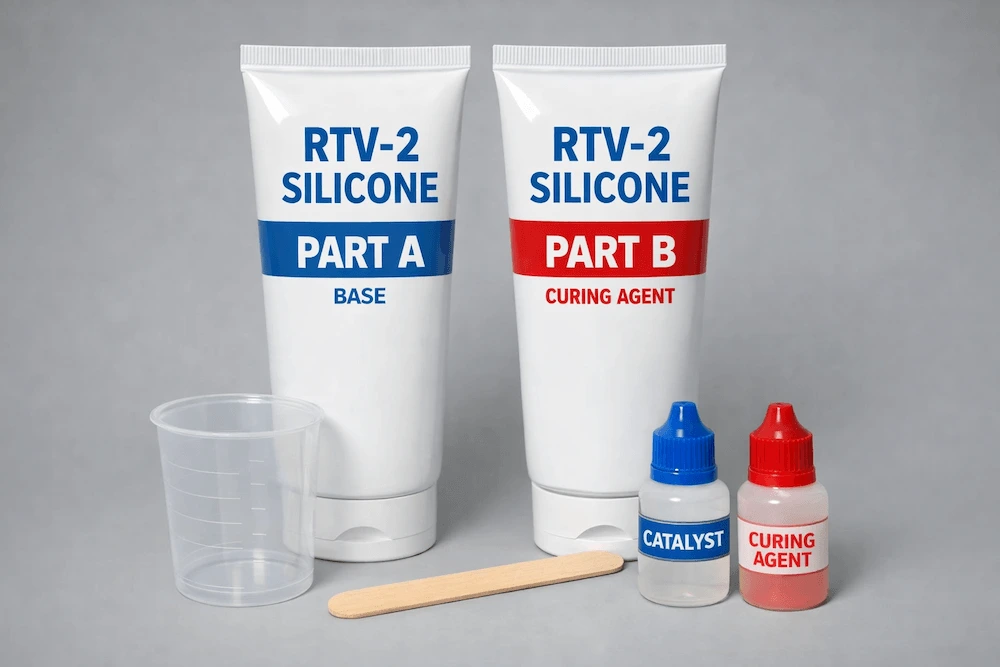
RTV-2 silicone is a two-part room-temperature vulcanizing silicone system made up of a base and a curing agent or catalyst. Once the two components are mixed in the correct ratio, the material cures throughout the entire mass rather than only from the surface.
This is one of the main differences between RTV-1 and RTV-2 silicone. Because RTV-2 cures uniformly, it is better suited for applications that require greater thickness, higher precision, and more consistent results. In deep mold-making applications, for example, RTV-2 can cure evenly throughout the mold, while moisture-cure systems may cure more slowly or less evenly in thicker sections.
Another key advantage of RTV-2 silicone is its ability to reproduce fine surface details. It is widely used for molds that need to capture textures, patterns, or small design features with high accuracy. Depending on the formulation, RTV-2 silicone can also offer controlled working time, predictable curing behavior, low shrinkage, and application-specific performance.
RTV vs RTV-2 Silicone: Main Differences Explained
So, what is RTV silicone in basic form compared to the two-part system? Let us compare directly.
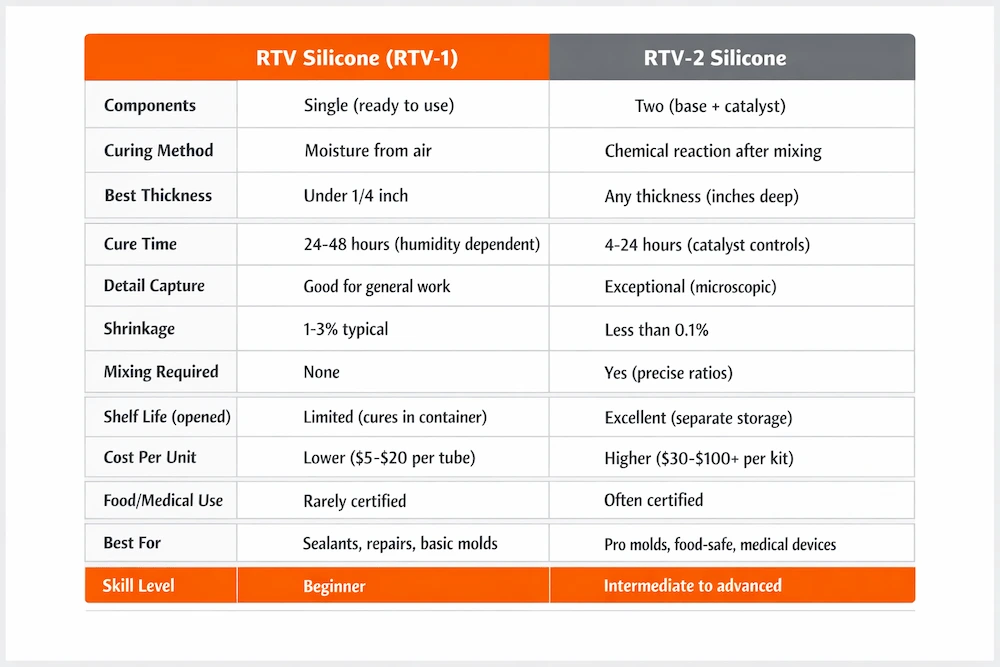
1. Curing Process
Standard RTV silicone, RTV 1, cures from the outside as moisture seeps in. That garage caulk tube. Moisture-driven.
RTV 2 cures everywhere at once after you mix the base and catalyst. No moisture wait.
2. Thickness Limits
Rtv silicone works best under 1/4 inch. Thicker layers leave the core uncured.
Rtv 2 handles pours inches deep with even results.
3. Detail Level
Basic RTV silicone grabs decent shapes for seals or simple molds.
RTV 2 copies microscopic features like hairs or threads.
4. Shelf Life
Open RTV silicone starts curing in the tube from air exposure.
Rtv 2 parts last year sealed separately. Mix only what you use.
5. Cost
RTV silicone tubes cost a few bucks for DIY fixes.
Rtv 2 kits run higher but pay off in pro jobs.
6. Ease of Use
Rtv silicone needs no prep. Squeeze and go.
Rtv 2 requires measuring, mixing, and often a vacuum to remove bubbles. More steps, more control.
7. Certifications
Standard RTV silicone fits general tasks.
Rtv 2 offers FDA, NSF, and medical approvals where rules apply.
The table proves it. Rtv silicone shines for simple tasks. Rtv 2 rules precision and certified work.
RTV or RTV-2? How to Match Silicone to Your Needs
Which types of RTV fit your job? Focus on the goal.
Choose standard RTV silicone when:
- You seal joints or leaks at home. Leaky windows or tub caulk. RTV silicone fixes it.
- Budget leads, and perfection stays optional. A $10 tube beats an $80 kit for basic work.
- You apply thin layers. Gaskets or coatings under 1/4 inch.
- Details stay simple. Soap molds or candle forms. Rtv silicone delivers.
- You want no hassle. Squeeze and done.
You handle occasional repairs. Garden hose fixes need no pro materials.
Pick RTV 2 silicone when:
- Intricate details decide success. Coins, sculptures, jewelry, textures.
- You build production molds. Dozens of chocolates or resin pieces demand consistency.
- Food or medical rules apply. Use certified food-grade silicone or medical-grade silicone.
- Thick sections cure fully. Two-inch molds set evenly.
- Accuracy cannot slip. Prototypes or dental work need low shrinkage.
- Pro results justify the cost. Exceptional beats acceptable.
You repeat batches reliably. Adjust the catalyst for control.
Still unsure. Consider the final user. Will they eat from it? Touch skin. Depend medically. Certified RTV 2 becomes essential. Reproduce art or jewelry. Pro mold-making silicone in RTV 2 form creates gallery-level work.
And both RTV silicone types belong in a full toolkit. Different jobs need different strengths.
Conclusion
You now hold the full picture of RTV silicone and RTV 2. Standard RTV silicone seals leaks, fills gaps, and handles basic molds with zero fuss. Rtv 2 silicone captures every detail, cures thick pours evenly, and meets food or medical rules when the job demands perfection.
Match the material to the mission. Need speed and savings on a weekend repair? Grab RTV silicone. Building production molds or certified products? Choose RTV 2.
Head to Topsil Silicone now and grab the exact RTV silicone that turns your next mold into profit.