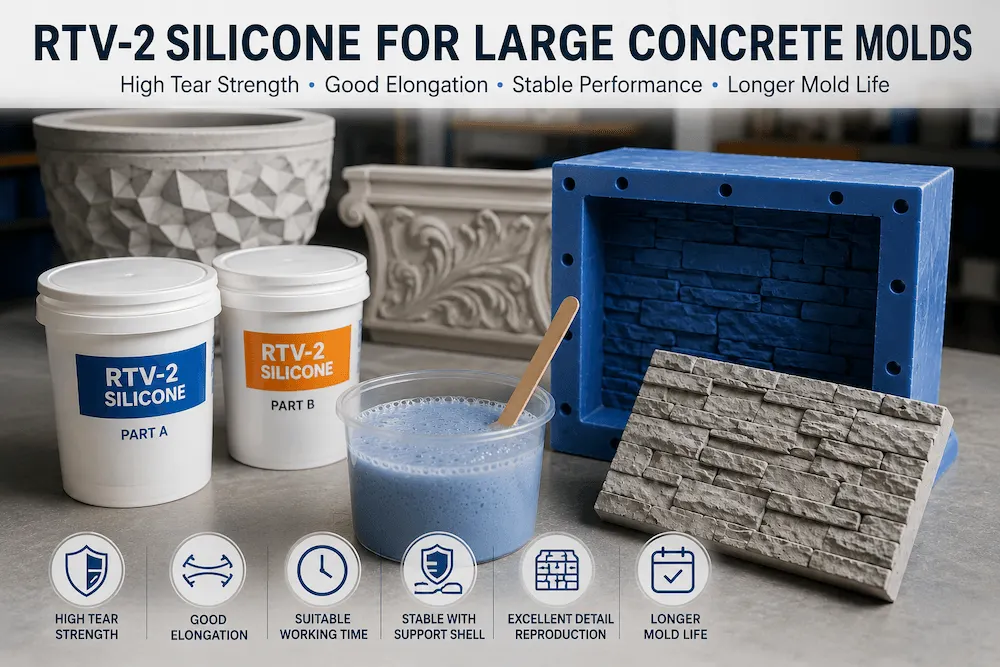

Büyük beton kalıpları için silikon seçimi sadece Shore sertliği ile ilgili değildir.
Büyük beton kalıpları, küçük tekne kalıplarına göre daha fazla stresle karşı karşıyadır. Döküm daha ağırdır, kalıptan çıkarma kuvveti daha yüksektir, kalıp duvarı daha büyüktür ve beton yüzey aşındırıcı olabilir. Silikon çok yumuşaksa kalıp deforme olabilir. Çok sert ise, alt kesimler veya köşeler etrafında yırtılabilir. Yırtılma mukavemeti çok düşükse, kalıp sadece birkaç dökümden sonra başarısız olabilir.
That is why the right RTV-2 silicone for large concrete molds should be selected by looking at the full molding process:
kalıp boyutu + beton ağırlığı + yüzey detayı + alt kesimler + kalıptan çıkarma yöntemi + beklenen kalıp ömrü.
Bu kılavuz, büyük beton kalıplar için silikon kauçuğun nasıl seçileceğini ve erken yırtılma, deformasyon, kabarcıklar, zayıf detay üretimi ve kısa kalıp ömrü gibi yaygın sorunlardan nasıl kaçınılacağını açıklamaktadır.
Hızlı Cevap: Büyük Beton Kalıpları İçin En İyi Silikon Hangisidir?
Büyük beton kalıpları için, uygun Shore sertliği, yüksek yırtılma mukavemeti, iyi uzama, düşük büzülme ve karıştırma, gaz giderme ve dökme için yeterli çalışma süresine sahip RTV-2 silikonunu seçin.
Büyük düz veya ağır beton parçalar için, şekli korumak amacıyla genellikle orta sertlikte silikon gereklidir. Ayrıntılı kalıplar veya alt kesimler için, silikon aynı zamanda iyi bir esnekliğe ve kalıptan çıkarmaya dayanacak yüksek yırtılma direncine sahip olmalıdır.
Kalay kürlü RTV-2 silikon, uygun maliyetli olması ve birçok genel beton döküm uygulaması için uygun olması nedeniyle beton kalıp yapımında yaygın olarak kullanılır. Platin kürlü silikon, daha düşük büzülme, daha iyi boyutsal stabilite veya özel proje gereksinimleri daha önemli olduğunda düşünülebilir.
En iyi silikon her zaman en yumuşak, en sert veya en ucuz kalite değildir.
En iyi kalite, kalıp boyutuna, beton tasarımına, kalıptan çıkarma gerilimine ve gerekli kalıp ömrüne uygun olandır.
Öncelikle Beton Kalıp Uygulamasını Tanımlayın
Bir silikon sınıfı seçmeden önce, ne tür bir beton kalıp yapacağınızı tanımlayın.
Büyük beton kalıpları için kullanılabilir:
- Dekoratif beton paneller
- Yapay taş kaplama
- GFRC / GRC projeleri
- Bahçe heykelleri
- Duvar kaplaması
- Mimari prekast parçalar
- Beton karolar
- Çimento el sanatları
- Büyük saksılar
- Peyzaj ürünleri
- Temalı çevre dekorasyonu
- Beton mobilya parçaları
Her uygulamanın farklı gereksinimleri vardır.
Büyük bir düz panelin boyutsal dengeye ihtiyacı vardır.
Bir taş kaplama kalıbının yüzey detayına ve tekrarlanan kalıptan çıkarma işlemine ihtiyacı vardır.
Bir heykel kalıbının eğriler ve alt kesimler etrafında esnekliğe ihtiyacı vardır.
Ağır bir ekici kalıp, daha güçlü kalıp desteğine ve yırtılma direncine ihtiyaç duyar.
Yani ilk soru şu olmamalı:
"Ne kadar sertliğe ihtiyacım var?"
Daha iyi bir soru:
"Döküm ve kalıptan çıkarma sırasında kalıp hangi stresle karşılaşacak?"
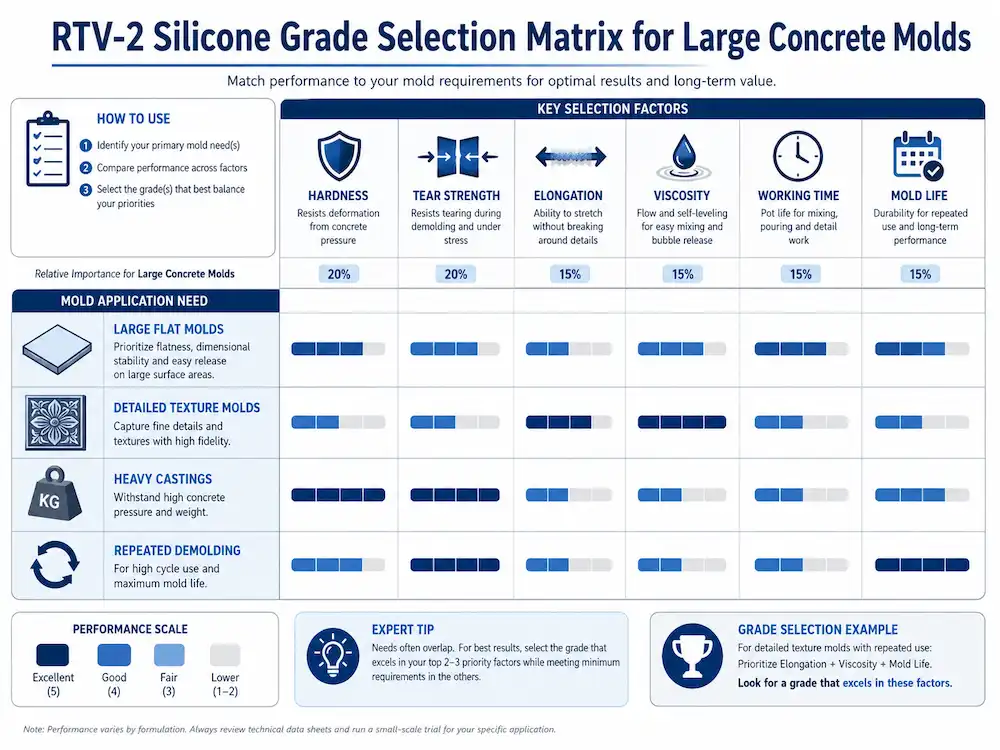
Büyük Beton Kalıp Silikonu Seçim Kılavuzu
| Kalıp Gereksinimi | Odaklanılması Gereken Silikon Özelliği | Neden Önemli? |
|---|---|---|
| Büyük kalıp boyutu | Orta sertlik + düşük büzülme | Deformasyonu azaltmaya yardımcı olur |
| Ağır beton dökümü | Yırtılma mukavemeti + kalıp desteği | Yırtılma ve bozulmayı önler |
| Derin doku veya taş deseni | Düşük viskozite + iyi akış | Yüzey detaylarını yakalar |
| Alt kesimler veya karmaşık şekiller | Yüksek uzama + yırtılma mukavemeti | Kalıptan çıkarma sırasında yırtılmayı azaltır |
| Uzun dökme süresi | Daha uzun çalışma süresi | Karıştırma, gaz giderme ve dökmeye izin verir |
| Üretim tekrarı | Yüksek yırtılma mukavemeti + aşınma direnci | Kalıp ömrünü uzatır |
| İnce kalıp kesiti | Yırtılma direnci + güçlendirilmiş duvar tasarımı | Zayıf bölgelerin yırtılmasını önler |
Bu tablo testten önce silikon seçimine rehberlik etmelidir.
Büyük beton kalıplar için, küçük reçine kalıpları için iyi çalışan bir silikon sınıfı yeterince güçlü olmayabilir. Kalıp boyutu ve döküm ağırlığı her şeyi değiştirir.
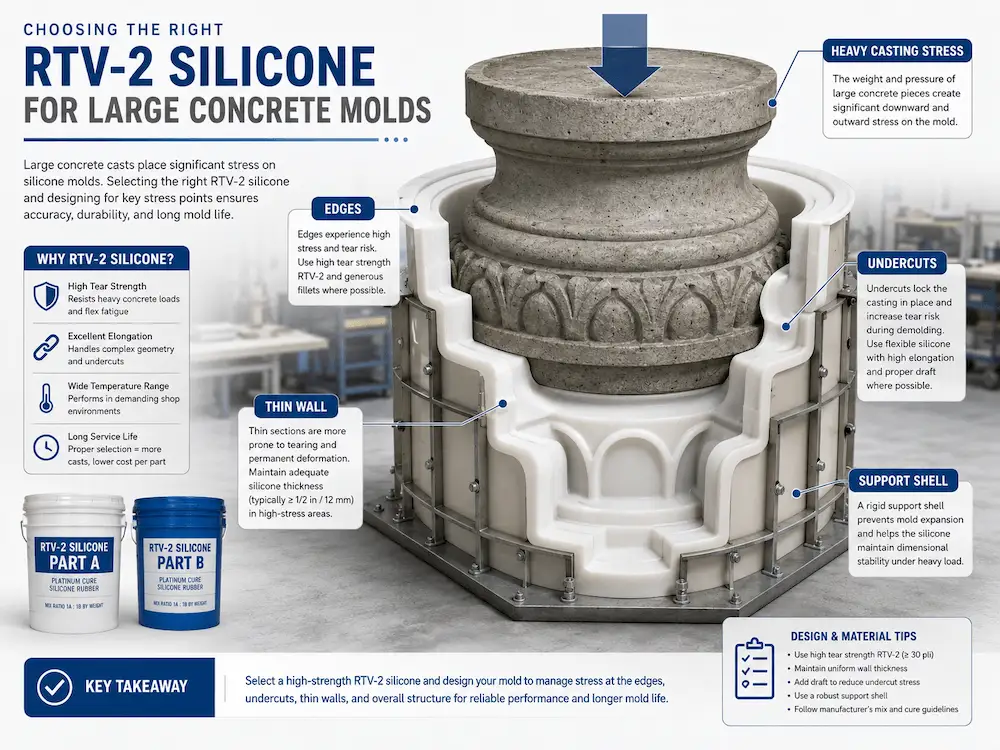
2.1 Shore Sertliği: Yalnızca Sertliğe Göre Seçim Yapmayın
Shore sertliği önemlidir, ancak tek seçim standardı olmamalıdır.
Beton kalıplar için alıcılar genellikle şöyle düşünür:
- Daha yumuşak silikonun kalıptan çıkarılması daha kolaydır.
- Daha sert silikon daha dayanıklıdır.
Her ikisi de bazı durumlarda doğru olabilir, ancak her ikisi de yanlış olabilir.
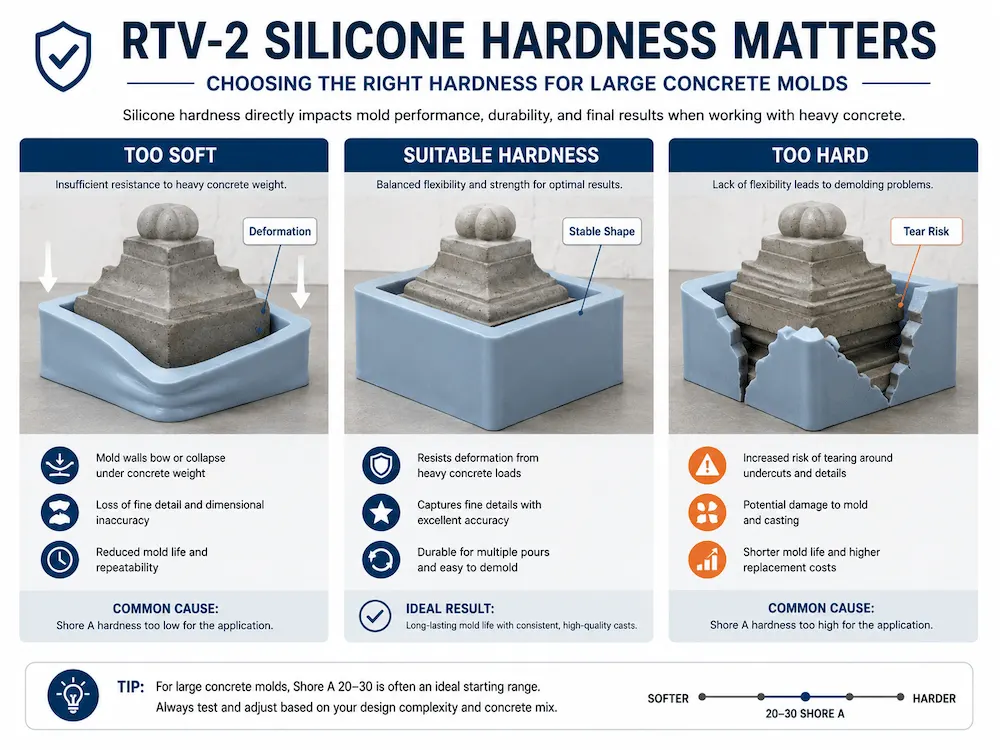
Silikon çok yumuşaksa:
- Kalıp beton ağırlığı altında deforme olabilir.
- Geniş düz alanlar şeklini kaybedebilir.
- Boyutlar dengesiz hale gelebilir.
- Kalıbın daha güçlü bir dış desteğe ihtiyacı olabilir.
Silikon çok sert ise:
- Kalıptan çıkarma zorlaşabilir.
- Alt kesimler yırtılmaya neden olabilir.
- İnce detaylar kırılabilir.
- Kalıp, serbest bırakma sırasında yeterince esnemeyebilir.
Büyük beton kalıpları için doğru sertlik dengelenmelidir:
şekil stabilitesi + esneklik + yırtılma direnci + kalıp sökme güvenliği.
Orta sertlikte bir silikon genellikle birçok büyük beton kalıp için pratik bir başlangıç noktasıdır, ancak nihai seçim kalıp tasarımına, beton ağırlığına ve alttan kesme derinliğine bağlıdır.
2.2 Yırtılma Dayanımı Kalıp Ömrü İçin Kritiktir
Büyük beton kalıplar genellikle silikon kürlenemediği için değil, yırtılma nedeniyle başarısız olur.
Yırtılma mukavemeti özellikle kalıbın sahip olduğu durumlarda önemlidir:
- Derin taş dokusu
- Keskin kabartma desenleri
- İnce kenarlar
- Alt Kesimler
- Büyük döküm ağırlığı
- Tekrarlanan kalıptan çıkarma
- Manuel çekme
- Karmaşık kalıp kesimleri
Beton kalıptan çıkarılırken silikon gerilebilir, çekilebilir, bükülebilir ve eğilebilir. Yırtılma mukavemeti çok düşükse, küçük kesikler hızla büyüyebilir.
Tipik yırtılma noktaları şunlardır:
- Kalıp kenarları
- Köşeler
- İnce dudaklar
- Alt Kesimler
- Kesik çizgiler
- Derin doku alanları
- Sert destek kabuklarının yakınındaki alanlar
Büyük beton kalıplar için yırtılma mukavemeti genellikle alıcıların beklediğinden daha önemlidir.
Düşük yırtılma mukavemetine sahip daha ucuz bir silikon başlangıçta maliyetten tasarruf sağlayabilir, ancak kalıp erken arızalanırsa daha pahalı hale gelebilir.
2.3 Uzama Kalıbın Kalıptan Çıkmasını Sağlar
Uzama, silikonun kırılmadan önce ne kadar esneyebileceğini gösterir.
Alt kesimleri, kavisleri, kabartma desenleri veya derin dokuları olan büyük beton kalıpları için uzama önemlidir çünkü kalıp, kalıptan çıkarma sırasında esnemelidir.
Daha yüksek uzama yardımcı olabilir:
- Beton parçaları daha güvenli bir şekilde serbest bırakın
- Alt kesimler etrafında yırtılmayı azaltın
- Detaylı kalıp alanlarını koruyun
- Kalıp esnekliğini artırın
- Zor şekillerde kalıp ömrünü uzatın
Ancak uzama, yırtılma mukavemeti ve sertlik ile birlikte değerlendirilmelidir.
Yüksek uzamaya sahip çok yumuşak bir silikon, büyük bir kalıpta yine de çok fazla deforme olabilir. Zayıf uzamaya sahip daha sert bir silikon, kalıptan çıkarma sırasında yırtılabilir.
Doğru silikon, şeklini kaybetmeden yeterince esnemelidir.
Need silicone for this application?
Send us your mold size, casting material, target hardness, and expected working time. Topsil can recommend a suitable RTV-2 silicone grade for testing.
2.4 Viskozite Detay Üretimi ve Kabarcık Salınımını Etkiler
Büyük beton kalıplar genellikle taş, tuğla, ahşap damarı, kabartma desenleri veya mimari detaylar gibi derin dokulara sahiptir.
Silikon viskozitesi çok yüksekse, ince dokuya iyi akmayabilir. Ayrıca ana yüzey etrafında kabarcıklar oluşturabilir.
Düşük viskoziteli silikon yardımcı olabilir:
- Ayrıntılı dokulara akış
- Sıkışmış havayı azaltın
- İnce yüzey desenlerini yakalayın
- Kalıp yüzey kalitesini iyileştirme
- Karmaşık kalıplar için dökmeyi kolaylaştırır
Ancak tek faktör viskozite değildir.
Büyük kalıplar için silikonun da yeterli çalışma süresine ihtiyacı vardır. Dökme işlemi tamamlanmadan malzeme kalınlaşmaya başlarsa kabarcıklar, akış izleri veya düzensiz kalıp kalınlığı ortaya çıkabilir.
Büyük beton kalıplar için her ikisini de düşünün:
viskozite + kap ömrü.
İyi bir akış önemlidir, ancak yeterli çalışma süresi de bir o kadar önemlidir.
2.5 Çalışma Süresi Kalıp Boyutuna Uygun Olmalıdır
Büyük kalıpların hazırlanması, karıştırılması, gazının alınması ve dökülmesi daha uzun sürer.
Silikon çalışma süresi çok kısaysa, malzeme master'ı tamamen kaplamadan önce kalınlaşabilir. Bu durum şunlara yol açabilir:
- Zayıf akış
- Daha fazla baloncuk
- Eşit olmayan kalıp duvar kalınlığı
- Eksik detay reprodüksiyonu
- Görünür akış izleri
- Daha yüksek atık riski
Büyük beton kalıpları için, yeterli kap ömrüne sahip silikon seçin:
- Kısım A ve Kısım B'nin Ölçülmesi
- Tamamen karıştırma
- Gerekirse vakumlu gaz giderme
- Yavaşça dökülüyor
- Gerekirse detay alanlarının fırçalanması
- Kalıp yüzeyinin tesviye edilmesi
Küçük kalıplar için iyi çalışan bir silikon sınıfı, büyük kalıplar için çok hızlı sertleşebilir.
Kalıp ne kadar büyük olursa, çalışma süresi o kadar önemli hale gelir.
2.6 Kalıp Duvar Kalınlığı Silikon Sınıfı Kadar Önemlidir
Kalıp duvarı çok inceyse iyi bir silikon sınıfı bile başarısız olabilir.
Büyük beton kalıpları, ağırlığı ve kalıptan çıkarma stresini kaldıracak yeterli silikon kalınlığına ihtiyaç duyar. İnce kalıp duvarları ilk malzeme maliyetini azaltabilir, ancak deformasyon, yırtılma ve kısa kalıp ömrü riskini artırabilir.
Zayıf alanlar genellikle şunları içerir:
- Kenarlar
- Köşeler
- Derin doku bölgeleri
- Alttan kesilmiş alanlar
- Kesik çizgiler
- Geniş desteklenmeyen düz alanlar
- Kalıp açıklığına yakın ince dudaklar
Kalıp dayanıklılığını artırmak için:
- Aşırı ince kalıp duvarlarından kaçının.
- Zayıf alanları güçlendirin.
- Köşelere ekstra kalınlık ekleyin.
- Büyük kalıplar için bir destek kabuğu kullanın.
- Duvar kalınlığını mümkün olduğunca eşit tutun.
- Detaylı alanlara çok yakın kesim yapmayın.
Büyük beton kalıpları için kalıp tasarımı ve silikon kalitesi birlikte çalışmalıdır.
2.7 Büyük Beton Kalıpları Genellikle Bir Destek Kabuğuna İhtiyaç Duyar
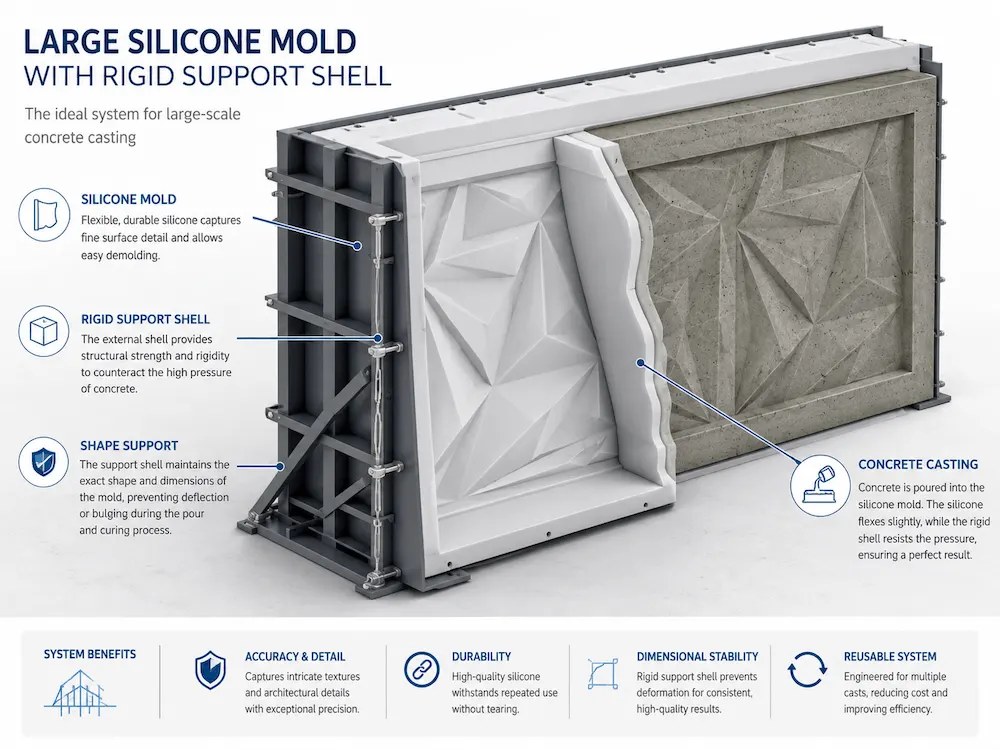
Silikon esnek olduğundan, büyük kalıplar genellikle kalıp şeklini tutmak için harici bir destek kabuğuna ihtiyaç duyar.
Destek olmadan, beton döküldüğünde kalıp deforme olabilir. Bu özellikle şu durumlarda yaygındır:
- Büyük düz paneller
- Dikey duvar panelleri
- Bahçe ürünleri
- Beton saksılar
- Mimari unsurlar
- Uzun veya geniş kalıplar
- Yumuşak silikon kalıplar
Bir destek kabuğu yardımcı olabilir:
- Kalıp şeklini koruyun
- Silikon deformasyonunu azaltın
- Boyutsal stabiliteyi iyileştirin
- Kalıp ömrünü uzatın
- Ağır beton ağırlığını destekler
- Kullanımı kolaylaştırın
Destek kabuğu, uygulamaya bağlı olarak fiberglas, reçine, alçı, ahşap çerçeve veya diğer uygun destek malzemelerinden yapılabilir.
Büyük bir kalıp döküm sırasında deforme oluyorsa, silikon sertliğini değiştirmek tek başına sorunu çözmeyebilir. Kalıbın daha iyi bir dış desteğe ihtiyacı olabilir.
2.8 Beton Ağır, Aşındırıcı ve Zorludur
Beton kalıplar reçine, balmumu veya alçı kalıplara kıyasla farklı stresle karşı karşıyadır.
Beton olabilir:
- Ağır
- Aşındırıcı
- Alkali
- Kum veya agrega ile doldurulmuş
- Büyük şekillerde kalıptan çıkarmak zordur
- Kalıp yüzeylerinde pürüzlü
- Tekrarlanan döküm sırasında stresli
Bu, büyük beton kalıpları için silikonun sadece dökülmesinin kolay olmaması gerektiği anlamına gelir. Aynı zamanda iyi bir mekanik mukavemete ve uzun vadeli kalıp performansına ihtiyaç duyar.
Tekrarlanan beton dökümü için kontrol edin:
- Yırtılma mukavemeti
- Çekme mukavemeti
- Uzama
- Yüzey dayanıklılığı
- Serbest bırakma performansı
- Kalıp duvar kalınlığı
- Destek kabuğu tasarımı
- Temizleme yöntemi
- Saklama koşulları
Döküm malzemesi keskin dolgu maddeleri veya kaba agregalar içeriyorsa, kalıp aşınması daha hızlı gerçekleşebilir.
Bu durumda, silikon sınıfı ve kalıptan çıkarma işlemi toplu üretimden önce test edilmelidir.
2.9 Büyük Beton Kalıplar için Kalay Kürlü ve Platin Kürlü Silikon
Her ikisi de kalay kürlemeli ve platin kürlemeli RTV-2 silikon kalıp yapımı için kullanılabilir, ancak genellikle farklı nedenlerle seçilirler.
Tin-Cure RTV-2 Silikon
Kalay kürlü silikon pratik, uygun maliyetli ve birçok genel kalıp uygulaması için uygun olması nedeniyle beton kalıp yapımında yaygın olarak kullanılır.
Genellikle şunun için kullanılır:
- Beton taş kalıpları
- Dekoratif paneller
- Çimento el sanatları
- Bahçe ürünleri
- Alçı ve alçı kalıpları
- Yapay taş kalıpları
- Genel inşaat dekorasyon kalıpları
Birçok beton kalıp projesi için, kalay kürlü silikon iyi bir maliyet ve performans dengesi sağlar.
Platinum-Cure RTV-2 Silikon
Platin kürlü silikon genellikle daha düşük büzülme, daha iyi boyutsal kararlılık veya daha yüksek hassasiyet gerektiğinde seçilir.
Şunlar için düşünülebilir:
- Yüksek hassasiyetli beton parçalar
- Daha iyi boyutsal kararlılık gerektiren projeler
- Daha katı toleranslı tekrarlanan kalıplar
- Düşük büzülmenin önemli olduğu özel uygulamalar
- Seçilmiş premium kalıp yapım projeleri
Bununla birlikte, platinle sertleşen silikon genellikle daha pahalıdır ve bazı malzemelerden kaynaklanan sertleşme inhibisyonuna karşı daha hassas olabilir.
Büyük beton kalıpları için seçim, performans ihtiyaçlarına, bütçeye, kalıp ömrü beklentisine ve uyumluluğa bağlı olmalıdır.
Pratik soru bu değildir:
"Hangi sistem daha iyi?"
Daha iyi bir soru:
"Hangi silikon sistemi başarılı döküm başına en iyi maliyeti sağlar?"
2.10 Büyük Beton Kalıpları için Silikon Seçerken Sık Yapılan Hatalar
Birçok kalıp arızası, alıcıların silikonu tek bir faktöre dayanarak seçmesi nedeniyle meydana gelir.
Hata 1: Sadece Shore Sertliğine Göre Seçim Yapmak
Sertlik önemlidir, ancak yırtılma mukavemeti, uzama, viskozite veya çalışma süresini göstermez.
Bir silikon doğru sertliğe sahip olabilir, ancak yine de çok erken yırtılabilir.
Hata 2: En Ucuz Silikonu Seçmek
Büyük kalıplar daha fazla silikon kullanır, bu nedenle maliyet önemlidir. Ancak kalıp birkaç dökümden sonra arızalanırsa, gerçek maliyet daha yüksek olur.
Üretim kalıpları için, sadece kilogram başına fiyatı değil, başarılı döküm başına maliyeti de hesaplayın.
Hata 3: Kalıp Desteğini Görmezden Gelmek
Destek kabuğu olmayan yumuşak bir silikon kalıp beton ağırlığı altında deforme olabilir.
Büyük kalıplar için genellikle destek tasarımı gereklidir.
Hata 4: Büyük Kalıplar İçin Kısa Kap Ömürlü Silikon Kullanmak
Büyük kalıplar daha fazla zamana ihtiyaç duyar. Silikon çok çabuk sertleşirse, dökme ve gaz giderme zorlaşır.
Hata 5: Alt Kesimleri Görmezden Gelmek
Derin alt kesimler esneklik, uzama, serbest bırakma planlaması ve bazen çok parçalı kalıp tasarımı gerektirir.
Hata 6: Kalıp Duvarını Çok İnce Yapmak
İnce duvarlar ilk başta silikondan tasarruf sağlar, ancak yırtılma ve deformasyon riskini artırır.
Hata 7: Gerçek Beton Karışımı ile Test Yapmamak
Beton karışım tasarımı kalıp ömrünü etkiler. Kum, agrega, katkı maddeleri, kürleme ısısı ve kalıptan çıkarma yöntemi performansı etkileyebilir.
Toplu kalıp üretiminden önce küçük testler yapılmalıdır.
2.11 Büyük Beton Kalıpları için Silikon Nasıl Seçilir: Adım Adım
Silikon siparişi vermeden önce bu seçim işlemini kullanın.
Adım 1: Kalıp Boyutunu Kontrol Edin
Büyük kalıplar daha iyi boyutsal stabiliteye, yeterli duvar kalınlığına ve genellikle harici desteğe ihtiyaç duyar.
Adım 2: Beton Ağırlığını Kontrol Edin
Daha ağır dökümler daha güçlü kalıp tasarımı ve uygun sertlik gerektirir.
Adım 3: Yüzey Detayını Kontrol Edin
İnce doku, iyi akış ve kabarcık kontrolü gerektirir.
Adım 4: Alt Kesimleri Kontrol Edin
Derin alt kesimler iyi uzama, yırtılma mukavemeti ve güvenli kalıptan çıkarma tasarımı gerektirir.
Adım 5: Beklenen Kalıp Ömrünü Kontrol Edin
Tek seferlik bir kalıp ile bir üretim kalıbı aynı şekilde seçilmemelidir.
Adım 6: Kalıptan Çıkarma Yöntemini Kontrol Edin
Manuel kalıptan çıkarma, mekanik veya destekli kalıptan çıkarmaya kıyasla farklı stres yaratır.
Adım 7: Çalışma Koşullarını Kontrol Edin
Sıcaklık, karıştırma ekipmanı, vakum kullanılabilirliği ve operatör becerisi nihai kalıp kalitesini etkiler.
Adım 8: Silikon Sınıfını Eşleştirin
Sertlik, yırtılma mukavemeti, uzama, viskozite, çalışma süresi ve kürleme sistemine göre kaliteyi seçin.
Büyük Beton Kalıp Silikonu Seçim Kontrol Listesi
Fiyat teklifi istemeden önce bu ayrıntıları hazırlayın:
- Kalıp boyutu
- Beton parça ağırlığı
- Ana malzeme
- Yüzey dokusu derinliği
- Alttan kesme durumu
- Hedef Shore sertliği
- Gerekli çalışma süresi
- Kalıptan çıkarma yöntemi
- Beklenen döküm sayısı
- Vakumlu gaz giderme olup olmadığı
- Destek kabuğunun kullanılıp kullanılmayacağı
- Kalay-kür veya platin-kür tercihi
- Kalıp tasarımının fotoğrafları veya çizimleri
Bu bilgilerle, bir silikon tedarikçisi tahmin etmek yerine daha uygun bir kalite önerebilir.
Silikon Sınıfını Ne Zaman Değiştirmelisiniz?
Aşağıdaki durumlarda silikon derecesini değiştirmeniz gerekebilir:
- Beton döküldükten sonra kalıp deforme olur.
- Kalıp, alt kesimler etrafında yırtılır.
- Kalıp birkaç dökümden sonra detaylarını kaybeder.
- Kabarcıklar derin doku alanlarında kalır.
- Silikon, büyük kalıp dökümü için çok hızlı sertleşir.
- Kalıp duvarının daha ince ama yine de dayanıklı olması gerekir.
- Beton kısım ağırdır ve kalıptan çıkarılması zordur.
- Mevcut kalıp ömrü üretim için çok kısa.
- Silikon sadece sertliğe göre seçilmiştir.
Büyük beton kalıpları için kalite seçiminde sadece ürün adı değil, her zaman gerçek uygulama dikkate alınmalıdır.
Sonuç: Silikonu Yalnızca Sertliğe Göre Değil, Kalıp Stresine Göre Seçin
Büyük beton kalıplar "yumuşak silikon" veya "sert silikon "dan daha fazlasına ihtiyaç duyar.
Doğru dengeye ihtiyaçları var:
sertlik + yırtılma mukavemeti + uzama + viskozite + çalışma süresi + kalıp duvar kalınlığı + destek tasarımı.
Silikon çok yumuşaksa kalıp deforme olabilir.
Çok sert olursa, kalıptan çıkarma yırtılmaya neden olabilir.
Yırtılma mukavemeti çok düşükse kalıp ömrü kısa olacaktır.
Çalışma süresi çok kısaysa, büyük kalıp dökümü riskli hale gelir.
Kalıp desteği zayıfsa, iyi bir silikon sınıfı bile başarısız olabilir.
Büyük beton kalıplar için en iyi silikon, tam döküm sürecine uygun olan silikondur.
SSS
Büyük beton kalıplar için en iyi silikon hangisidir?
Büyük beton kalıpları için en iyi silikon, uygun Shore sertliğine, yüksek yırtılma mukavemetine, iyi uzamaya, stabil kürlenmeye ve büyük kalıp dökümü için yeterli çalışma süresine sahip olmalıdır. Nihai seçim kalıp boyutuna, beton ağırlığına, alt kesimlere, yüzey detayına ve beklenen kalıp ömrüne bağlıdır.
Kalay kürlü silikon beton kalıplar için iyi midir?
Evet. Kalay kürlü RTV-2 silikon, dekoratif paneller, yapay taş, bahçe ürünleri ve çimento el sanatları dahil olmak üzere birçok genel beton döküm uygulaması için pratik ve uygun maliyetli olduğundan beton kalıpları için yaygın olarak kullanılır.
Platin kürlü silikon büyük beton kalıplar için daha mı iyidir?
Platin kürlü silikon daha düşük büzülme ve daha iyi boyutsal stabilite sunabilir, ancak genellikle daha pahalıdır ve daha dikkatli uyumluluk kontrolü gerektirebilir. Genel beton kalıpları için her zaman gerekli değildir.
Beton kalıpları için hangi Shore sertliğini kullanmalıyım?
There is no single correct hardness for all concrete molds. Large flat molds may need better shape stability, while detailed molds with undercuts may need more flexibility. Hardness should be selected together with tear strength, elongation, wall thickness, and mold support.
Büyük beton silikon kalıbım neden deforme oluyor?
Silikon çok yumuşaksa, kalıp duvarı çok inceyse, beton döküm çok ağırsa veya destek kabuğu yoksa büyük silikon kalıplar deforme olabilir. Destek yapısının iyileştirilmesi genellikle silikon sertliğinin değiştirilmesi kadar önemlidir.
Beton silikon kalıbım neden erken yırtılıyor?
Erken yırtılma, düşük yırtılma mukavemeti, ince kalıp duvarları, derin alt kesimler, keskin köşeler, agresif kalıptan çıkarma, yetersiz ayırıcı madde veya uygun olmayan silikon sınıfından kaynaklanabilir.
Büyük beton kalıpların bir destek kabuğuna ihtiyacı var mı?
Çoğu durumda evet. Büyük silikon kalıplar genellikle şekli korumak, beton ağırlığını desteklemek ve döküm sırasında boyutsal stabiliteyi artırmak için bir destek kabuğuna ihtiyaç duyar.
Beton kalıplar için düşük viskoziteli silikon daha mı iyidir?
Düşük viskoziteli silikon detaylara akmaya ve sıkışan havayı azaltmaya yardımcı olur, ancak büyük kalıpların da yeterli çalışma süresine ve mekanik güce ihtiyacı vardır. Viskozite tek başına değerlendirilmemelidir.
RECOMMENDED NEXT STEP
Different applications demand different silicone properties.
Send us your project details to get the exact silicone grade for your test.
Ask for Application Grade Matching