
RTV-2 Silicone for Rapid Prototyping
Prototype molds need more than fast curing. If your main problem is dimensional variation, short mold life, or uncertain cure on 3D printed masters, start by matching silicone to your part geometry, master type, and production rhythm.
- Better Dimensional Stability
- Practical Working Time
- 3D Print Test-Cure Ready
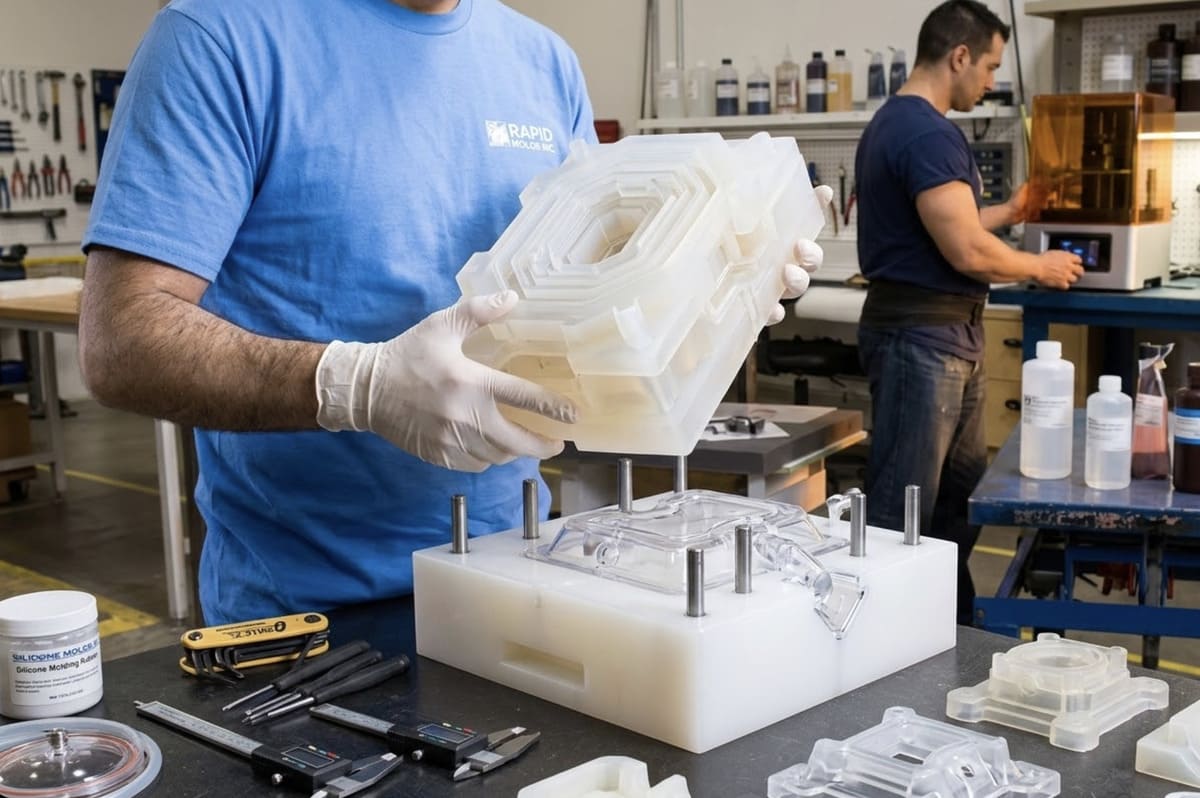
Choose by Prototype Goal, Not by Generic Mold Silicone Claims
For rapid prototyping, the right silicone is not the one that simply cures fast. It is the one that supports the real goal of the mold — surface validation, dimensional repeatability, short-run casting, or practical compatibility with the master pattern.
Use this quick logic before choosing a grade:
Appearance model/surface validation
Start with surface transfer + dimensional consistency
Short-run functional prototype
Start with mold life + repeatability
Large or slow-pour prototype mold
Start with usable working time
3D printed master pattern
Start with compatibility + test cure discipline
What Prototype Buyers Should Prioritize?
Dimensional Consistency
A prototype mold is not useful if the part changes too much across repeated casts. Stable mold behavior matters more than fast curing alone.
Usable Working Time
Fast demolding is attractive, but if the silicone becomes hard to pour before the mold is filled properly, the process still fails. Working time should fit the real mold size and process.
Mold Life
Even short-run prototype molds should survive repeated casting without early tearing, surface loss, or unstable results.
Why Prototype Molds Commonly Go Wrong?
Most prototype mold problems show up in one of these ways:
In many prototype projects, the problem is not “bad silicone” in general. The real issue is often grade mismatch — the silicone may cure, but it does not match the master type, process window, or repeatability goal of the project.
01
Dimensional Variation
The first cast looks acceptable, but repeat casts become less reliable.
02
Early Mold Tearing
The mold works for a few cycles, then weak zones begin to fail.
03
Poor Surface Transfer
The mold captures the shape, but not the surface finish or fine detail required for evaluation.
04
Unexpected Cure Issues on Printed Masters
The silicone cures in the cup, but not cleanly on the model surface.
A Common Real-World Mistake
A prototype mold that demolds quickly is not always the right mold. In many rapid prototyping projects, the real problem is not slow cure — it is poor repeatability, unstable dimensions, or a grade that does not fit the master surface and process window.
That is why prototype silicone should be matched to part geometry + master type + target cycle rhythm, not chosen by “fast cure” alone.
A Better Way to Choose the Grade
Before choosing a prototype silicone grade, answer these four questions:
- What is the part size and geometry?
- Is the master traditionally made or 3D printed?
- How important is dimensional repeatability?
- Is the mold for one-off validation or repeated short-run casting?
If your project is detail-sensitive, surface transfer matters more. If your project is repeat-use, mold life matters more. If your project is large or slow to process, working time matters more. If your master is 3D printed, compatibility and test cure matter more.
Prototype silicone should be matched to the validation goal, not just chosen as a fast-curing general mold material.
Typical Applications
Vacuum casting molds
Appearance model duplication
Short-run functional prototype molds
Product development validation molds
Small-batch pre-production molds
Prototype molds from traditional or 3D printed masters
Need a Better Silicone Grade for Rapid Prototyping or Vacuum Casting?
Send us your part size, master type, target working time, and expected casting frequency. We’ll help you narrow down a more suitable RTV-2 silicone starting point.
FAQs
What silicone is best for rapid prototyping molds?
The best silicone depends on part geometry, master type, dimensional repeatability needs, and whether the mold is used once or across repeated short runs.
Should I choose the fastest-curing silicone for prototype molds?
Not always. In many cases, practical working time matters more than simply having the fastest demold time.
Why do prototype molds sometimes lose consistency over repeated casts?
This often happens when the silicone grade does not match the mold design, process rhythm, or performance target of the prototype job.
Do 3D printed masters need special attention?
Yes. Printed masters should be reviewed carefully for compatibility, and test cure is recommended before full mold production.
Can you recommend a grade for vacuum casting or short-run prototype molds?
Yes. Share your part size, master type, production plan, and target cycle needs for a more practical recommendation.



Topsil delivers high-performance RTV-2 silicone rubber. From platinum to tin-cure silicone, we help customers choose the right material.
Quick Links
Products
© Topsilsilicone ALL RIGHTS RESERVED 2025