- +86 18923498815
- [email protected]
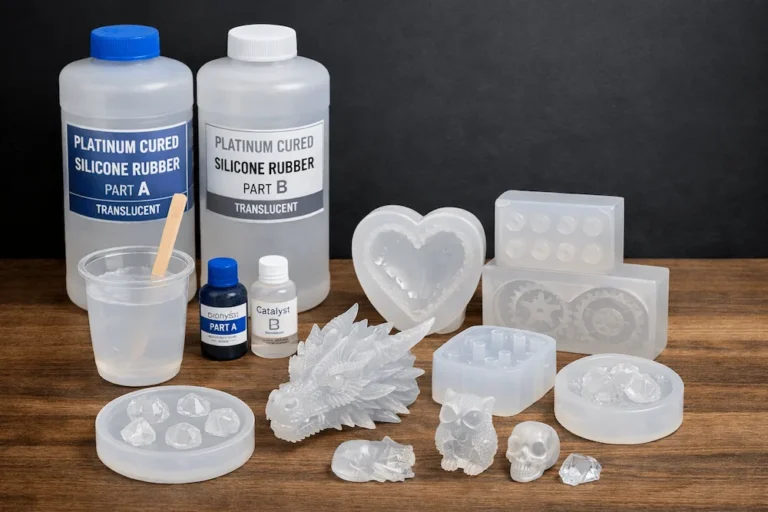
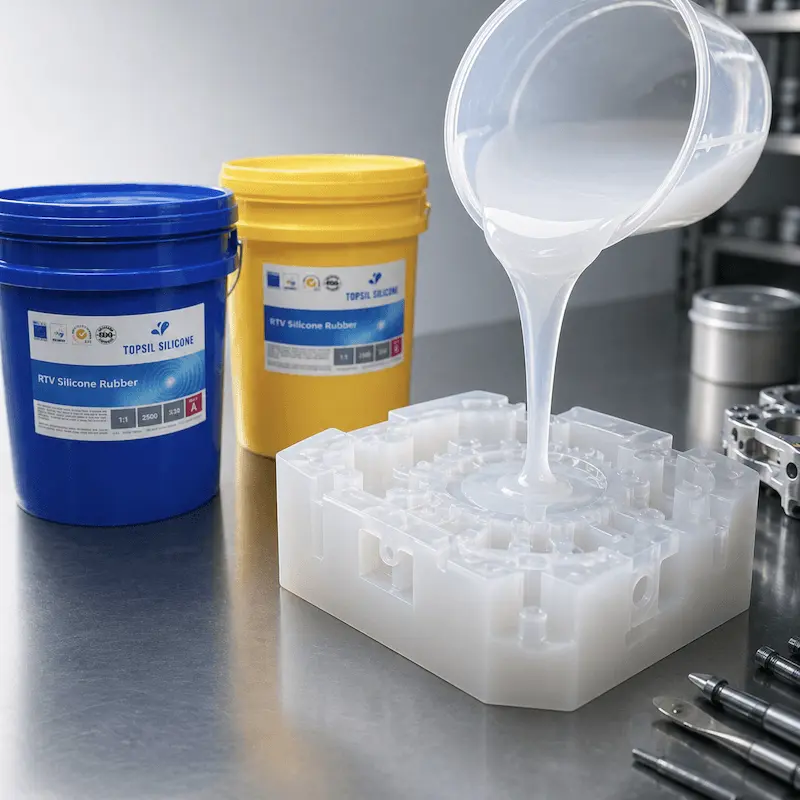
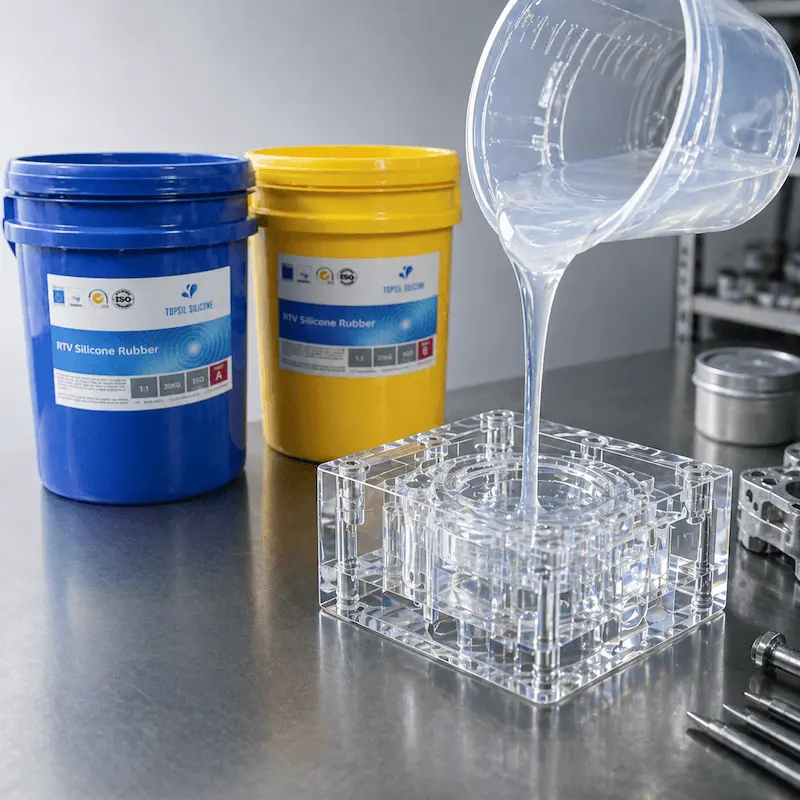
Platinum cured silicone, also called platinum-cure silicone or addition-cure silicone, is a two-component RTV silicone system that cures into flexible silicone rubber at room temperature. In mold making, it is often selected when lower shrinkage, better dimensional stability, cleaner detail reproduction or selected food-related requirements are important.
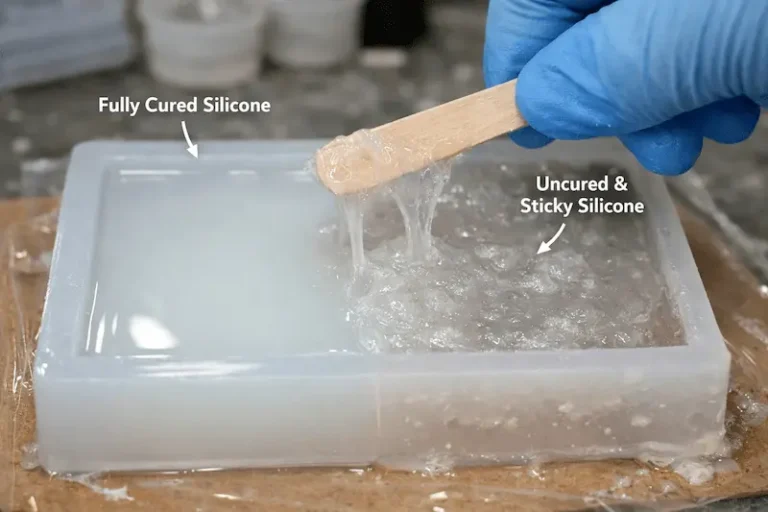
Compared with general tin-cure silicone, platinum cured silicone usually offers better dimensional stability and cleaner curing behavior. However, this addition-cure system can be more sensitive to cure inhibition from sulfur-based clays, latex, amines, uncured resin, tin-cure residue or unknown surface coatings.
| Factor | Platinum Cured Silicone | Tin-Cure Silicone |
|---|---|---|
| Cure System | Addition cure | Condensation cure |
| Shrinkage | Lower | Higher |
| Dimensional Stability | Better | Good for general molds |
| Cure Inhibition Risk | More sensitive | Less sensitive |
| Cost | Higher | Lower |
| Best For | Precision molds, selected food molds, repeated casting | General mold making, concrete, resin, plaster |
| Grade | Hardness | Viscosity (mPa.s) | Tear Strength (kN/m) | Best For |
|---|---|---|---|---|
| TL-10 | 10±2 | 2000±1000 | ≥18 | Soft molds and easier release |
| TL-25 | 25±2 | 4000±1000 | ≥26 | General mold making |
| TL-40 | 40±2 | 9000±2000 | ≥22 | Firmer support |
| TL-60 | 60±2 | 18000±2000 | ≥8 | High-hardness applications |
| Grade | Hardness | Viscosity (mPa.s) | Tear Strength (kN/m) | Best For |
|---|---|---|---|---|
| CL-10 | 10±2 | 6000±1000 | ≥8 | Soft clear molds |
| CL-20 | 20±2 | 10000±1000 | ≥12 | Balanced clear applications |
| CL-30 | 30±2 | 15000±2000 | ≥14 | General clear mold making |
| CL-40 | 40±2 | 20000±2000 | ≥10 | Firmer clear molds |
| Grade | Hardness | Viscosity (mPa.s) | Tear Strength (kN/m) | Best For |
|---|---|---|---|---|
| TP-10 | 10±2 | 6000±2000 | ≥6 | Soft transparent molds |
| TP-20 | 20±2 | 10000±3000 | ≥10 | Balanced transparent applications |
| TP-30 | 30±2 | 15000±3000 | ≥12 | General transparent mold making |
| TP-40 | 40±2 | 20000±5000 | ≥8 | Firmer transparent molds |
For soft molds and easier demolding, TL-10 is usually the starting direction.
For general high-detail mold making, TL-25 is often the practical starting point.
For firmer support or larger molds, TL-40 may be more suitable.
TL-60 is used only when high hardness and stronger shape retention are required.
Before choosing a platinum cured silicone rubber grade, buyers should confirm the mix ratio, working time, cure time, room temperature curing conditions, viscosity, tear resistance, tensile strength and expected mold life.
For liquid silicone rubber used in silicone molds, these technical factors affect pouring behavior, demolding performance, mold durability and repeated casting stability. If the master pattern contains sulfur-based clays, latex, amines, uncured resin, tin-cure residue or unknown surface coatings, a small test cure is recommended before full pouring.
For detailed resin casting where low shrinkage, clean surface reproduction and easier demolding are important.
For selected food-related mold projects where platinum cure options and document support may be required.
For prototype casting, small-batch trial parts and detailed master models that need better dimensional stability.
For molds that require stable dimensions, fine detail reproduction and lower shrinkage during repeated casting.
For molds where transparency helps with cutting, alignment, inspection or complex demolding.
For complex masters, fine textures, small details and molds where surface accuracy matters more than the lowest material cost.
Platinum cured silicone is a two-component addition-cure silicone system. It cures into flexible silicone rubber and is often used for precision mold making, selected food mold projects, rapid prototyping, and applications requiring lower shrinkage and better dimensional stability.
Yes. This RTV-2 platinum cured silicone rubber is designed for making silicone molds that require lower shrinkage, clean detail reproduction and better dimensional stability. It can be used for resin molds, prototype molds, selected food mold projects and other precision mold-making applications after proper testing.
Send us your application details and we will suggest a suitable grade for testing.
Your information will be kept strictly confidential.

This is Evan, the Manager of Topsil Silicone. Congratulations on finding a professional supplier! Pls send your inquiry, and we will contact you within 24 hours.