Lost wax molds need more than fine detail. If your project depends on clean wax pattern release, cut-mold durability, dimensional consistency, or repeated wax production, start by matching silicone to pattern complexity, mold-cutting method, and wax workflow.
Choose by Wax Workflow, Not by Generic Mold Silicone Claims
For lost wax casting, the right silicone is not simply the softest or easiest-to-cut option. A mold for a fine-detail pattern behaves differently from a mold used for repeated wax production. The correct grade depends on what your mold needs most: sharper detail, cleaner wax release, stronger cut zones, or more stable repeat output.
استخدم هذا المنطق السريع قبل اختيار التقدير:
Fine-detail wax patterns
Start with pattern fidelity + clean release
قوالب القطع المعقدة
Start with tear resistance + cut-mold stability
Repeat wax production
Start with durability + dimensional consistency + repeatability
Wax injection workflow
Start with mold sealing behavior + wax flow control + stable opening
What Lost Wax Buyers Should Prioritize?
Wax Pattern Fidelity
If the mold cannot reproduce fine lines, edges, and small surface changes cleanly, the wax pattern quality drops before investment and casting even begins.
قوة القطع-القالب
Lost wax molds are often cut and opened repeatedly. A mold that cuts easily but tears too fast will not stay useful in production.
Repeat Production Stability
For real wax pattern production, the better grade is usually the one that keeps producing consistent patterns over repeated cycles, not the one that only looks good in the first test.
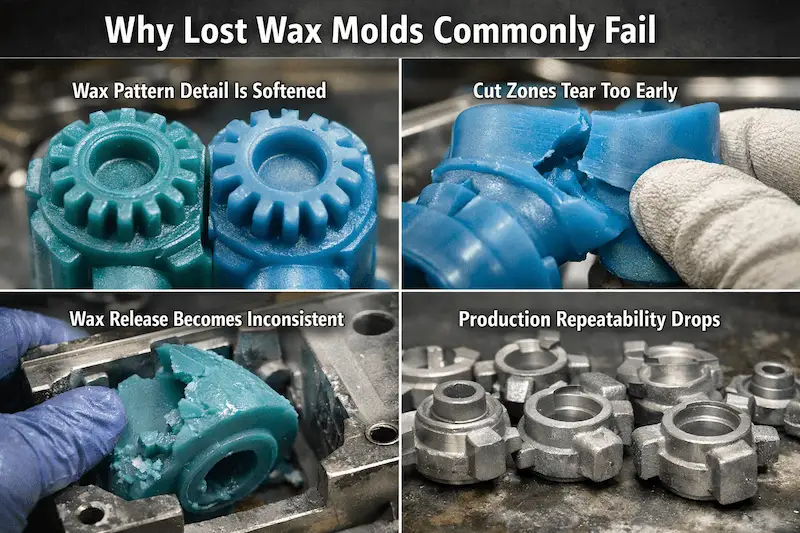
Why Lost Wax Molds Commonly Fail?
In many lost wax projects, the real problem is not “bad silicone” in general. The issue is usually grade mismatch. A silicone may feel easy to cut or easy to open, but still be the wrong choice if it cannot maintain wax detail, survive repeated opening, or keep pattern quality stable in the real workflow.
Most lost wax mold problems show up in one of these ways:
The mold reproduces the shape, but not the crisp edges or surface quality needed for a clean wax pattern.
تمزق مناطق القطع مبكرًا جدًا
The mold opens correctly at first, but repeated use damages weak areas too quickly.
Wax Release Becomes Inconsistent
The first patterns look good, but later waxes release less cleanly or become harder to demold.
Production Repeatability Drops
The mold still works, but wax pattern consistency becomes less reliable across repeated cycles.
خطأ شائع في العالم الحقيقي
لا يفشل القالب ذو القوام المعماري الكبير في كثير من الأحيان لأن السيليكون ضعيف جدًا بشكل عام. بل غالبًا ما يفشل لأن الدرجة تكون لينة جدًا بالنسبة لحجم القالب بينما لا يزال يواجه إجهاد إزالة القوالب المتكرر.
ولهذا السبب يجب أن يتوافق سيليكون القوالب الخرسانية مع حجم القالب + عمق القالب + تكرار الإنتاج، وليس اختياره حسب النعومة أو السعر فقط.
طريقة أفضل لاختيار الدرجة
Before choosing a silicone grade, do not start with “Which hardness do you have?” Start with what the mold must do in the wax production workflow.
For Fine-Detail Wax Patterns
If the pattern includes engraving, sharp edges, delicate lines, or small surface transitions, pattern fidelity matters first. A mold that releases well but softens the wax pattern is still the wrong mold.
لقوالب القطع المعقدة
إذا كان القالب سيتم قطعه وفتحه مرارًا وتكرارًا، فإن مقاومة التمزق مهمة أولاً. وغالباً ما تكون الدرجة الخاطئة هي التي تبدو سهلة القطع مرة واحدة، ولكنها تفقد قوتها بسرعة كبيرة عند الاستخدام.
For Repeat Wax Production
If the mold is used for repeated pattern making, consistency matters more than first-pass convenience. The better grade is the one that keeps producing reliable wax patterns across repeated cycles.
For Wax Injection Workflows
If wax is injected rather than simply poured or painted, mold behavior during sealing, flow, and demolding matters more. A good mold should stay predictable through repeated opening, injection, and release.
التطبيقات النموذجية
Fine-detail wax pattern molds
Cut-and-open lost wax molds
Repeat wax production molds
Wax injection mold workflows
Small-batch casting preparation molds
Precision molds for investment casting pattern making
Need a Better Silicone Grade for Lost Wax Pattern Production?
Send us your pattern type, detail level, whether the mold will be cut, and whether the project is one-off or repeat-use. We’ll help you narrow down a more suitable RTV-2 silicone direction.
What matters more for lost wax molds: pattern detail or tear resistance?
That depends on the mold. Fine-detail patterns usually require better fidelity first, while cut molds and repeated-use molds often require stronger tear resistance first.
Is the softest silicone always better for lost wax molds?
No. A softer silicone may feel easier to cut or open, but it can still be the wrong choice if the mold loses stability, tears too early, or reduces repeat pattern quality.
What causes lost wax molds to fail after a few good patterns?
In many cases, the first few patterns do not reveal the real weakness. The problem often appears later as cut-zone tearing, weaker mold opening, or reduced wax consistency across repeated use.
What should I prioritize for repeat wax production?
For repeated production, pattern consistency, mold durability, and stable release usually matter earlier than first-pass convenience.
Can you recommend a suitable grade for my lost wax mold project?
Yes. Share your pattern type, detail level, whether the mold will be cut, and how often it will be used, and we can help you review a more practical starting direction.