
How to Check Incoming HEPA Filter Silicone Gel Before Releasing a Lot
The gel delivery is on time and both drums show the expected grade. Then your receiving team finds that the Part B lot on the label differs from the one referenced on the certificate. The decision to release the delivery starts with traceability, before anyone mixes a sample.
To release an incoming lot of HEPA or ULPA filter silicone gel, confirm the grade and the traceability of Parts A and B, check the delivery against your purchase and quality requirements, and run any incoming tests in your control plan. Keep the documents, observations and disposition with the lot record. This checklist applies to gel used in perimeter channels that seal against a housing knife edge.
Know what each supplier document covers
| Document | What it tells you | What to confirm at receiving |
|---|---|---|
| Technical data sheet (TDS) | The intended grade, typical properties and processing conditions | Correct grade and revision, and the conditions relevant to your line |
| Certificate of analysis (COA), where agreed | Results or conformity information for the lot or component identified on the document | Which container lots it covers, how to trace A and B, and which fields are part of the supply agreement |
| Safety data sheet (SDS) | Handling, storage and safety information for the material | Applicable SDS for the supplied components and site handling procedures |
| Purchase order and agreed acceptance specification | What you approved the supplier to deliver | Grade, color, pack size, required paperwork and agreed lot release criteria |
Use the TDS to understand the grade. Use your purchasing and quality agreement to decide which values or certificates are required for routine release. If the COA shows a result, check the unit, test temperature and whether the result refers to Part A, Part B or the mixed gel before comparing it with your incoming test.
Match both containers before opening the lot
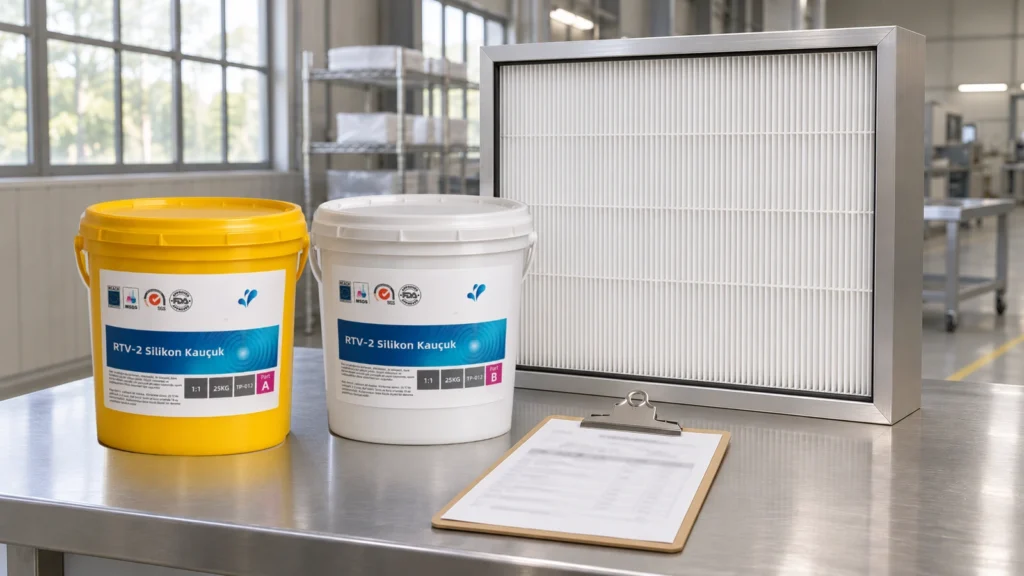
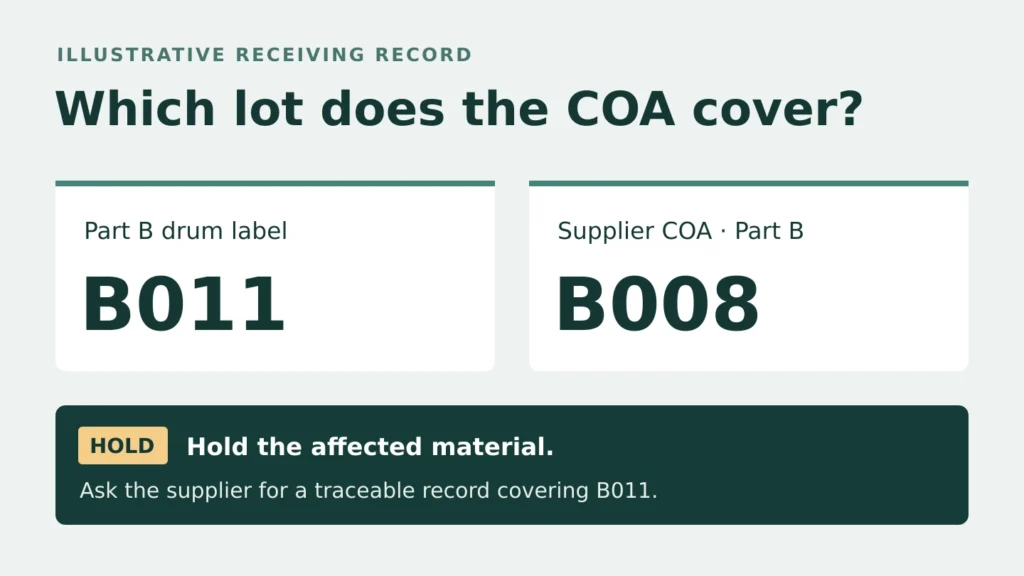
Record the grade, component designation and lot number from each container. Compare the labels to the purchase order and the supplier’s lot mapping. A and B may carry different numbers. The record needs to show how each part relates to the delivered set and to the required documentation.
Check the color designation, pack size, seal condition, production or expiry information and storage requirements for the approved grade. Record visible damage or unusual appearance according to your incoming procedure. When your quality plan requires shipment temperature records, review those alongside the package condition.
For example, if the label shows Part B lot B011 and the COA references B008, hold the affected material and ask for the corrected document or traceability record. Enter the discrepancy before using the gel so the production and quality teams can track the affected stock. The lot codes here are illustrative.
Compare a controlled mix with the agreed release checks
Where your incoming plan calls for a mix check, condition the sample and equipment as the method specifies. Confirm whether the A:B ratio is by mass or volume, and use the supplier’s current processing instructions. Record the sample size, material temperature, mix method and evaluation time. Keep separate tools for the unmixed components and follow the applicable SDS.
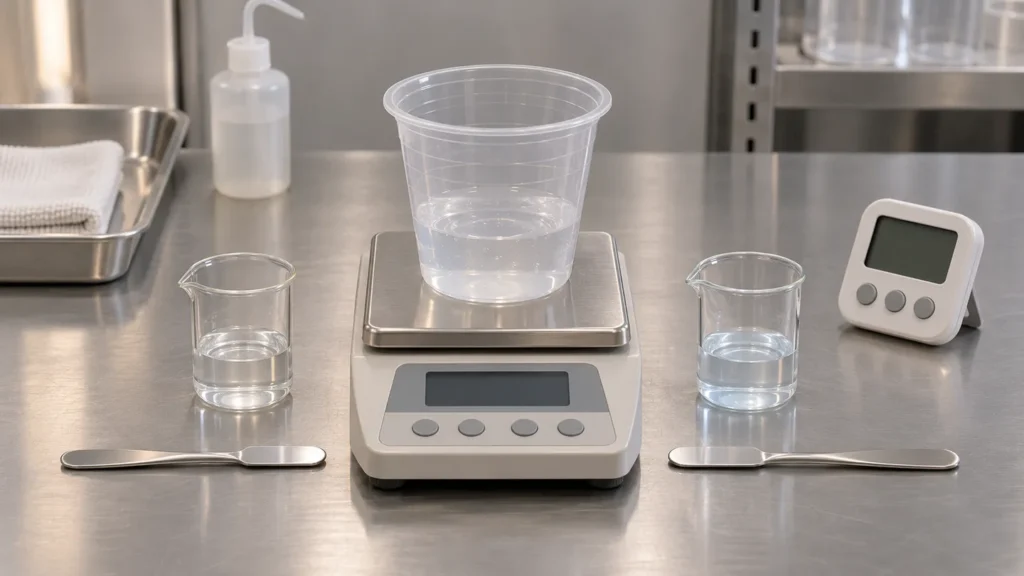
Check the properties that matter to your operation under a repeatable method. For a dispensing line, those may include mixed appearance, flow or a defined cure or handling endpoint. If viscosity is measured, record the instrument and method settings as well as temperature and time after mixing. A difference measured under different conditions calls for a controlled comparison before a release decision.
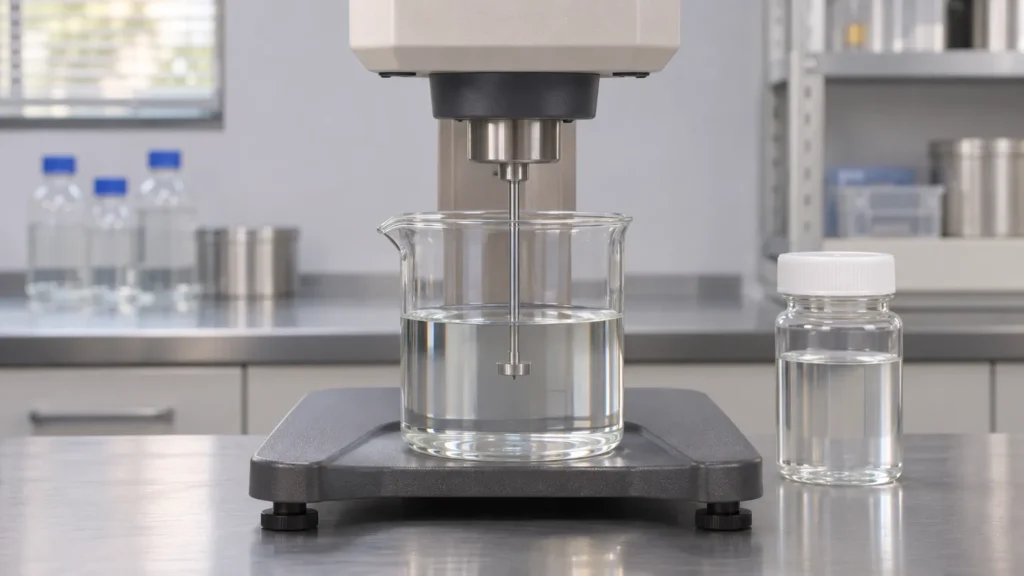
If a fresh mix behaves differently from the approved reference, keep the result with the lot record. Check ratio, temperature, material condition and test setup before changing production settings. For equipment-related questions, see the guide to mixing and dispensing 1:1 silicone gel in HEPA filter production.
Use a simple release record
| Checkpoint | Evidence to keep | When to hold the lot |
|---|---|---|
| Material identity | Grade, color, container labels and lot mapping for Parts A and B | Grade or component identity differs, or lot mapping is incomplete |
| Condition on arrival | Package and seal condition, shelf-life information and required storage evidence | Damage, leakage or storage history requires quality review |
| Documentation | Current TDS, required COA or conformity record and purchase specification | Required documents are missing or refer to a different material |
| Incoming test, if required | Sample and lot ID, method, conditions, result and acceptance criterion | Result falls outside the agreed criterion or the test conditions make it inconclusive |
| Disposition | Release, hold or escalation with the responsible person’s name and date | An open discrepancy affects use on the line |
Keep a retained sample when required by the control plan. Link the lot record to production batches so the team can locate affected filters if a discrepancy appears later. If you are approving a new supplier, grade or contact material, use the relevant HEPA silicone gel sample validation steps before adding it to routine receiving. Finished filter leakage has its own verification requirements, such as the ISO 29463-4 filter-element scan method where specified.
Request current TP-012 data for your receiving plan
Topsil TP-012 is a two-part addition-cure silicone gel for HEPA and ULPA filter sealing. Share your required documentation, package format and any incoming tests you need to compare. If you are qualifying a second source, include the current receiving criteria or the main discrepancy you want the evaluation to address. Topsil can confirm the current TDS and the lot documentation available for the intended supply.