Silicone for GRC/GFRC Mold Making

Architectural molds need more than general-purpose silicone. If your main problem is large molds losing body, deep textures tearing early, or repeated casting performance dropping too fast, start by matching silicone to mold size, texture depth, and production rhythm.
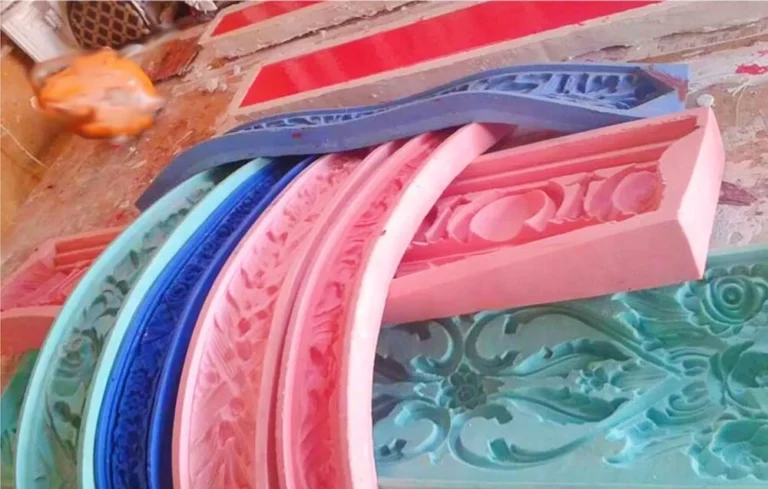
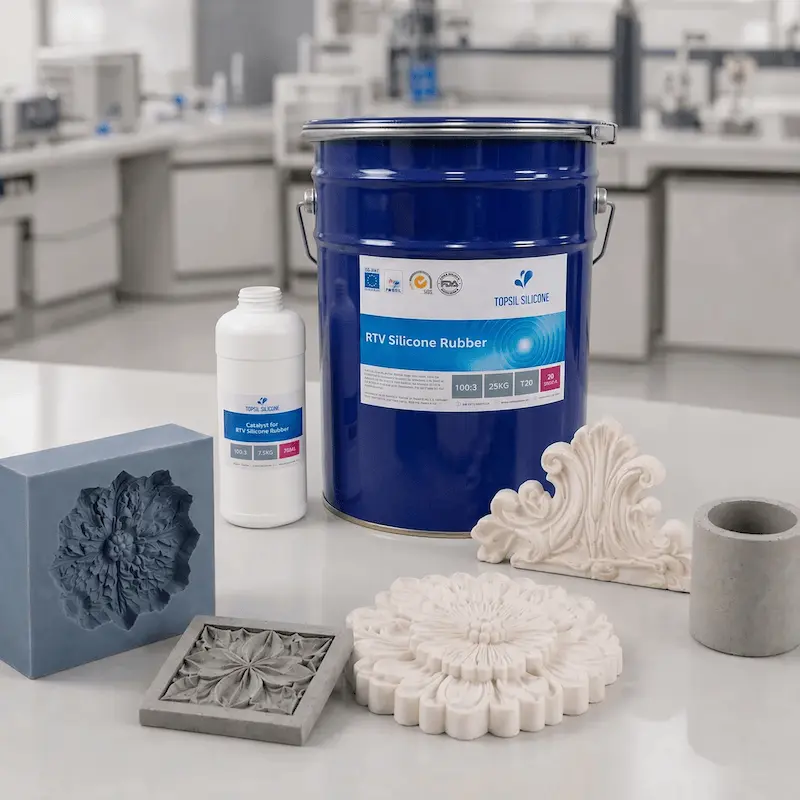
GRC Silicone Mold

Choose by Mold Behavior, Not by Generic Mold Silicone Claims

For GRC, and GFRC mold making, the right silicone is not simply the softest or easiest-to-pour option. Large panel molds, deep-texture architectural molds, and repeated casting production molds fail for different reasons. The correct grade depends on what your mold needs most: more body, better release behavior, stronger tear resistance, or longer mold life.
Use this quick logic before choosing a grade:

Large panel or cladding molds

Start with mold body + dimensional support

Deep-texture architectural molds

Start with tear strength + release behavior

Repeated casting of production molds

Start with durability + mold life

Large mold with deep texture

Choose a grade that balances body + tear resistance

What GRC/GFRC Mold Buyers Should Prioritize?

Mold Body

Large molds often fail not because the silicone is weak overall, but because the grade is too soft to hold shape well during handling, support, and casting.

Tear Strength

Deep texture, sharp edges, and repeated demolding can destroy a mold early if the tear resistance is too low.

Durability

For repeated production, the better grade is usually the one that stays stable across more castings, not the one that only feels easier in the first pour.

Why GRC/GFRC Molds Commonly Fail?

In many architectural mold projects, the issue is not “bad silicone” in general. The real problem is usually grade mismatch. A silicone may feel easy to pour, but still be the wrong choice if it lacks enough body for the mold size or enough tear resistance for the surface complexity.
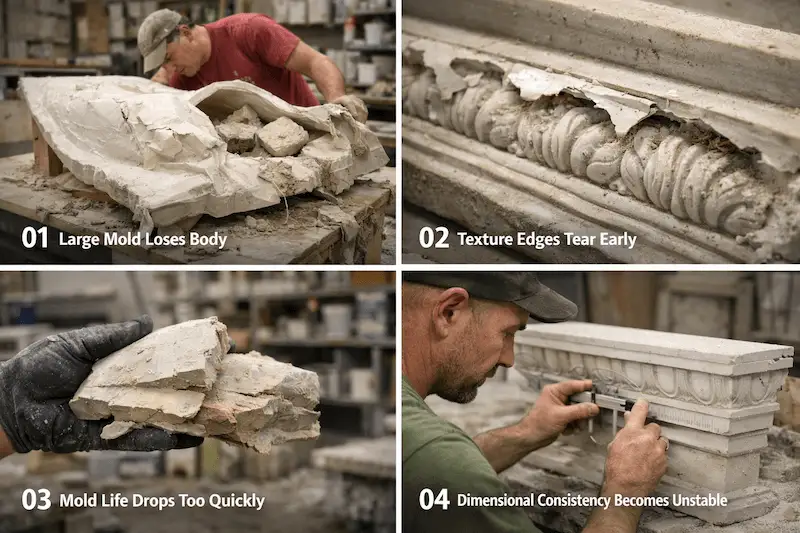
Most GRC/GFRC mold failures show up in one of these ways:

01. Large Mold Loses Body

The mold feels too soft, unstable, or difficult to support in bigger formats.

02. Texture Edges Tear Early

The silicone releases the cast, but stress damages sharp or thin areas after repeated demolding.

03. Mold Life Drops Too Quickly

The mold works for a limited number of casts, then performance falls off faster than expected.

04. Unstable Dimensional Consistency

The mold reproduces detail, but not reliably enough across repeated production.

A Common Real-World Mistake

Many buyers ask for a softer silicone first because it sounds easier to demold. But in large architectural molds, the real failure often happens because the grade lacks enough body for the mold size while still facing repeated release stress.
That is why GRC/GFRC mold silicone should be matched to mold scale + surface complexity + repeat-use expectation, not chosen like a small decorative mold material.

A Better Way to Choose the Grade

Before choosing silicone for GRC/GFRC molds, do not start with “Which hardness do you have?” Start with the actual stress profile of the mold.

Step 01

Define What Will Kill the Mold First

Ask what is most likely to shorten mold life:
If you do not identify the main failure risk first, you will usually choose the wrong grade even if the data sheet looks acceptable.

Step 02

Decide Whether Body or Tear Resistance Comes First

If the mold is large but not highly textured, focus on body and dimensional support first. If the mold is highly textured or difficult to release, tear resistance takes priority. When the mold is both large and highly textured, single-property thinking isn’t enough; you need a grade that balances both body and tear resistance.

Step 03

Match the Grade to Casting Rhythm

A mold used for occasional casting can tolerate a different trade-off than a mold used repeatedly in production. If the mold is part of ongoing architectural casting work, durability and repeatability should move up the priority list immediately.

Step 04

Match the Silicone to the Material System

Not all cementitious reproduction jobs stress the mold in the same way. If the casting system is more demanding, the grade should be selected with stability and long-term mold behavior in mind, not only first-pour convenience.

Typical Applications

Large panel and cladding molds
Architectural texture molds
Decorative restoration molds
Repeated casting of production molds
Surface pattern reproduction molds
Custom molds for GRC/GFRC architectural components

Need a Better Silicone Grade for Architectural Mold Making?

Send us your mold size, texture depth, release difficulty, and expected production frequency. We’ll help you narrow down a more suitable RTV-2 silicone starting point for GRC/GFRC molds.

FAQs

What matters more for architectural molds: softness or mold body?

That depends on the mold. Larger molds usually need better body and support first, while deeper textures and harder release often need stronger tear resistance first.

Do GRC/GFRC molds usually need higher tear resistance than simpler decorative molds?

In many cases, yes. Concrete and stone molds often face heavier demolding stress and more repeated-use pressure than general resin molds.

Why do large molds sometimes feel unstable even when the silicone seems soft and easy to use?

asy handling in the pour stage does not always mean enough structural support in the mold stage. Large molds often need more body than buyers expect.

Should I choose the softest grade for easier demolding?

Not automatically. In architectural molds, a softer grade may release more easily but still fail earlier if the mold size or repeated-use stress is too demanding.

Can you recommend a grade for my GRC/GFRC mold project?

Yes. Share your mold size, texture depth, release difficulty, and expected production plan for a more practical recommendation.

Contact Us Today, Get Reply in 24 hrs !

Your information will be kept strictly confidential.

This is Evan, the Manager of Topsil Silicone. Congratulations on you to find a professional supplier !  Pls send  your inquiry , we will contact you within 24 hours.
Free ‘Topsil Silicone Rubber’ E-book

If you still want to know more about our products,  a detailed E-catalogue can send to you.