Silicone for Climbing Hold Production Molds

Climbing hold molds are not judged only by how well they copy the first master. They are judged by whether they maintain the hold texture, shape, and release behavior across repeated polyurethane castings. If your main challenge is complex geometry, texture accuracy, early tearing, or unstable repeat production, start by matching silicone to hold design, demold stress, and production rhythm.
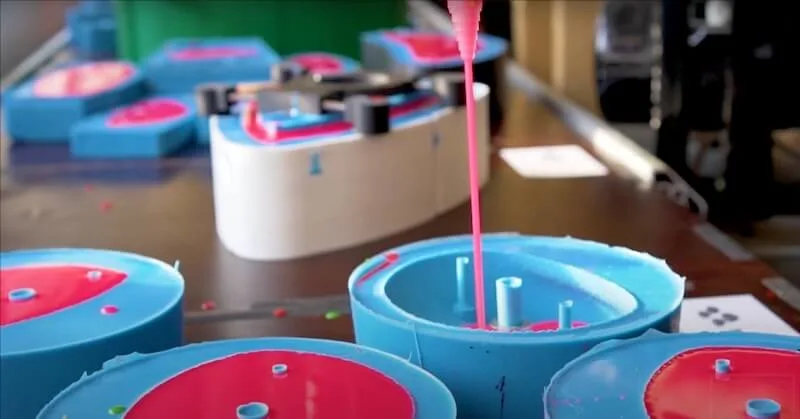
climbing-hold-molding

Choose by Hold Production Need, Not by Generic Mold Silicone Claims

For climbing holds, not every mold fails in the same way. Some molds lose texture quality. Some tear at stress zones. Some survive the first few casts but fail to stay consistent in production. The right silicone grade depends on what your hold mold needs most.

Texture-driven hold designs

Start with surface fidelity + clean reproduction

Deep undercut or complex geometry holds

Start with tear resistance + demold behavior

Repeated production molds

Start with mold life + consistency across casts

Custom hold development molds

Start with shape accuracy + practical mold handling

What Climbing Hold Buyers Should Prioritize?

Texture Fidelity

Grip feel and hold character often depend on texture. If the mold does not reproduce surface texture cleanly, the finished hold may lose consistency before durability is even discussed.

Demold Behavior

Holds with undercuts, deep features, and complex geometry place real stress on the mold. A silicone that reproduces well but tears during demolding is still the wrong grade.

Production Consistency

A good hold mold is not only a “first-cast” mold. For production use, the better grade is the one that keeps making stable, repeatable holds over more cycles.

Why Climbing Hold Production Molds Commonly Fail?

In many climbing hold projects, the real problem is not “bad silicone” in general. The issue is usually a grade mismatch. A silicone may copy the master well once, but still be the wrong choice if it cannot withstand the real demolding stress or maintain texture and geometry stability across repeated polyurethane castings.
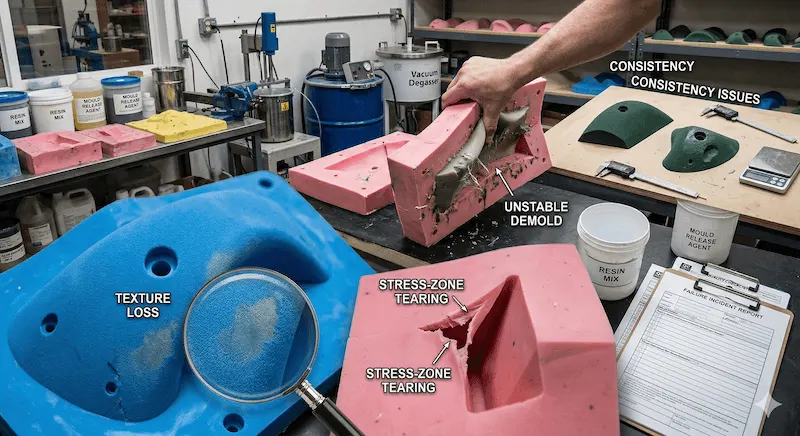
Most climbing hold mold failures show up in one of these ways:

Texture Softens Over Time

The first casts look acceptable, but the grip texture becomes less crisp over repeated use.

Mold Tears at Stress Zones

Complex geometry, sharp transitions, or undercut release paths damage weak mold areas too early.

Demold Becomes Less Predictable

The mold still works, but opening and releasing become less stable as production continues.

Hold Consistency Drops Across Runs

The mold reproduces the master at first, but production repeatability falls over time.

A Common Real-World Mistake

Many buyers ask for the softest or easiest silicone first because they want simple release and easy mold handling. But a climbing hold mold that feels easy in the first cast is still the wrong mold if it loses texture quality, tears too early, or stops producing consistent holds in repeated polyurethane casting.
That is why climbing hold mold silicone should be matched to texture fidelity + demold stress + production mold life, not chosen like a general decorative casting mold.

A Better Way to Choose the Grade

Before choosing a silicone grade, do not start with “Which hardness do you have?” Start with what the mold is most likely to lose first in real hold production.

For Texture-Driven Hold Designs

If the hold depends on texture to create the right grip feel, texture fidelity matters first. A mold that releases well but loses surface character is still the wrong mold because the finished hold no longer feels consistent.

For Deep Undercut or Complex Geometry Holds

If the hold shape creates difficult release paths, tear resistance and demold behavior matter first. The wrong grade is often the one that copies the master beautifully but breaks down too fast once the mold is opened repeatedly.

For Repeated Production Molds

If the mold is used for repeated polyurethane casting, mold life matters first. A production mold should not only survive the first few pours. It should keep delivering stable texture, shape, and release across more cycles.

For Custom Hold Development Molds

If the mold is used to test, refine, or reproduce new hold designs, shape accuracy and practical handling matter earlier than broad claims like “easy mold making.” The right grade should help you evaluate the hold correctly, not just make the first mold quickly.

Typical Applications

Climbing hold master molds
Texture-critical grip surface molds
Complex geometry or undercut hold molds
Custom hold development molds
Repeated production molds for polyurethane casting
Hold mold systems for stable run-to-run reproduction

Need a Better Silicone Grade for Climbing Hold Production?

Send us your hold type, texture level, whether the design includes undercuts, and whether the mold is for development or repeated production. We’ll help you narrow down a more suitable RTV-2 silicone direction.

FAQs

What matters more for climbing hold molds: texture fidelity or tear resistance?

That depends on the hold. Texture-driven designs usually require better surface fidelity first, while complex geometry and difficult release often require stronger tear resistance first.

Is the softest silicone always better for climbing hold molds?

No. A softer silicone may feel easier to demold, but it can still be the wrong choice if it loses texture quality, tears too early, or reduces production consistency.

Why do climbing hold molds fail after a few successful casts?

In many cases, the first few casts do not reveal the real weakness. The problem often appears later as texture loss, mold tearing, less stable demold, or reduced repeatability across production runs.

What should I prioritize for repeated polyurethane hold casting?

For repeated production, mold life, demold durability, and stable texture reproduction usually matter earlier than first-use convenience.

Can you recommend a suitable grade for my climbing hold mold project?

Yes. Share your hold type, texture level, whether the design includes undercuts, and how often the mold will be used, and we can help you review a more practical starting direction.

Contact Us Today, Get Reply in 24 hrs !

Your information will be kept strictly confidential.

This is Evan, the Manager of Topsil Silicone. Congratulations on you to find a professional supplier !  Pls send  your inquiry , we will contact you within 24 hours.
Free ‘Topsil Silicone Rubber’ E-book

If you still want to know more about our products,  a detailed E-catalogue can send to you.