Silicone for Food Mold Projects
Food mold projects should not be selected by softness or label alone. If your main concern is clean cure, low odor, production consistency, or documentation fit, start by confirming the intended use and required support before sampling.
- Clean Cure Direction
- Application-Based Matching
- Documentation-Focused Review
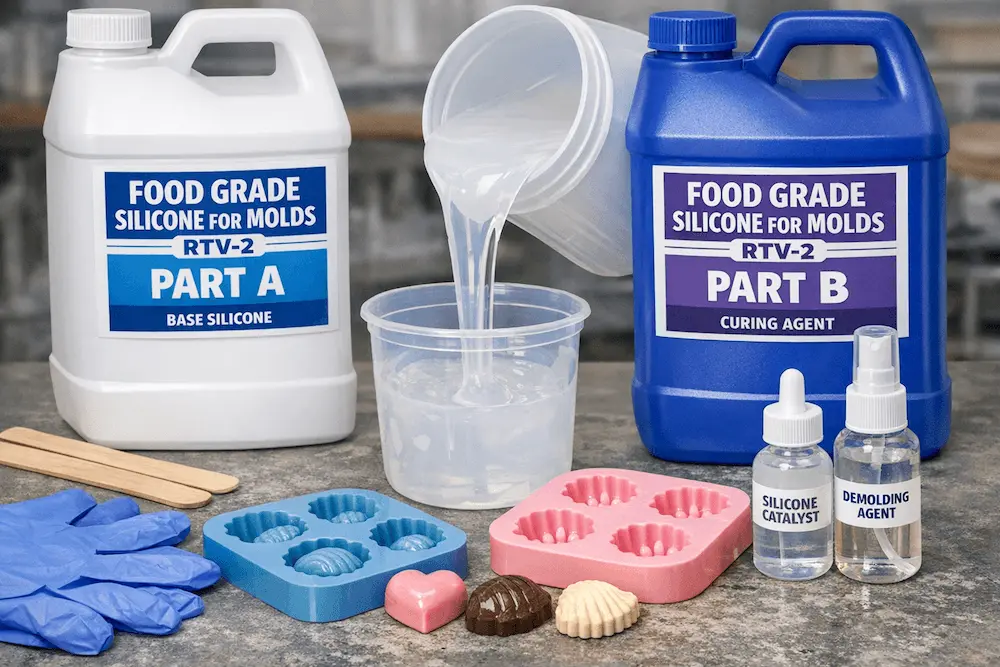
Start with Intended Use, Not with a Generic “Food Grade” Claim
For food mold projects, the right silicone grade is not chosen by label alone. A better starting point is to confirm the intended use, production method, and documentation needs first.
성적을 선택하기 전에 이 빠른 로직을 사용하세요:
Handmade or craft food molds
Start with clean cure + handling behavior + intended use confirmation
Chocolate/confectionery molds
Start with surface quality + odor control + application fit
Baking mold projects
Start with use scenario + production method + suitable documentation review
Commercial or brand-led food mold projects
Start with documentation fit + market requirement + production consistency
What Food Mold Buyers Should Prioritize
Intended Use Fit
Not every silicone promoted for food-related mold use fits every food-contact scenario. The project should be matched to the intended use, not to the label alone.
Clean Cure and Low Odor
For food mold projects, buyers usually care about clean curing behavior, low odor, and a stable user experience in actual mold making and use.
Documentation Fit
The right grade is not only about material behavior. It is also about whether the requested supporting documents match the application, market, and project type.
Why Food Mold Projects Often Go Wrong?
Most sourcing mistakes happen in one of these ways:
In many food mold projects, the main problem is not a lack of product options. The main problem is that the intended use, production method, and documentation request were not aligned before sampling.
01
Using “Food Grade” as a Blanket Claim
A label alone does not confirm suitability for every food mold use case.
02
Choosing by Price Before Checking Documentation
A lower-cost option can become risky if the buyer later finds the support package does not fit the project.
03
Ignoring Cure Behavior or Odor Expectations
A mold may look suitable on paper but still fail to meet the buyer’s real-world use expectations.
04
Ordering Before Defining the Real Use Scenario
Without a clear intended use, even a technically good grade may become the wrong starting point.
현실에서 흔히 저지르는 실수
Many buyers ask for a “food-grade silicone” sample before clearly defining the final use. But a silicone that sounds suitable in general may still be the wrong starting point if the intended use, market expectations, or document request are not aligned first.
That is why food mold projects should begin with use confirmation + support review, not just a product label.
등급을 선택하는 더 나은 방법
Before choosing a silicone grade for food mold making, answer these four questions:
- What is the exact food mold application?
- Is the project handmade, small-batch, or commercial production?
- What market or customer requirement must be supported?
- Are you evaluating the material, the mold use, or the documentation package?
If your project is small-scale and craft-focused, handling and cure cleanliness matter first. If your project is brand-led or commercial, documentation fit matters earlier. If your project is application-sensitive, intended use confirmation matters more than broad category wording. If your project is not clearly defined yet, do not sample blindly. Confirm the use case first.
Food mold silicone should be selected by intended use + documentation fit + production method, not by a generic claim alone.
일반적인 애플리케이션
Handmade food mold projects
Chocolate and confectionery molds
Baking mold projects
Small-batch branded mold production
Commercial food mold development
Food mold evaluation projects with documentation review needs
Need a More Suitable Silicone Grade for a Food Mold Project?
Send us your intended use, mold type, production method, and documentation request. We’ll help you review whether a suitable RTV-2 silicone direction is worth testing.
자주 묻는 질문
1. Can you provide documents for food mold projects?
Yes, for suitable grades we can provide technical documents and application-related supporting files. The exact document package depends on your intended use, target market, and the grade under review. The best next step is to share your mold type, end use, and market requirement before sampling.
2. Does “food grade” mean the silicone fits every food mold project?
No. “Food grade” should not be treated as a blanket label for every food-contact mold project. A grade may sound suitable in general, but the real fit still depends on intended use, processing method, and documentation needs. That is why food mold projects should be reviewed by application first, not by label alone.
3. Is platinum cure always the better choice for food mold projects?
Not automatically, but many food mold buyers start by evaluating platinum cure because they usually care about cleaner cure, lower odor, and a more premium application direction. The correct choice still depends on the intended use, process method, and required support documents.
4. What should I confirm before requesting a sample?
Before requesting a sample, it is better to confirm four things: the intended mold use, the production method, the target market, and the document expectations. This helps avoid testing a grade that later turns out to be mismatched to the real project.
5. Can you recommend a suitable starting grade for my food mold project?
Yes. If you share your intended use, mold type, production method, and documentation request, we can help you review whether a suitable RTV-2 silicone direction is worth testing.
방법 문서

탑실은 고성능 RTV-2 실리콘 고무를 제공합니다. 백금에서 주석 경화 실리콘에 이르기까지 고객이 적합한 소재를 선택할 수 있도록 지원합니다.
© 탑실리콘 모든 권리 보유 2025