
Silicone molds are widely valued for their naturally non-stick surface and high flexibility. However, over multiple production cycles, molds can accumulate resin monomers, wax compounds, concrete chemical crusts, or migratory silicone oils.
Proper maintenance is not just about keeping a mold clean; it directly extends your mold life and ensures the surface quality of your cast replicas. This guide outlines the straightforward, chemically sound methods to remove stubborn residues without degrading your RTV-2 실리콘 matrix.
1. Routine Cleaning: Post-Production Degreasing
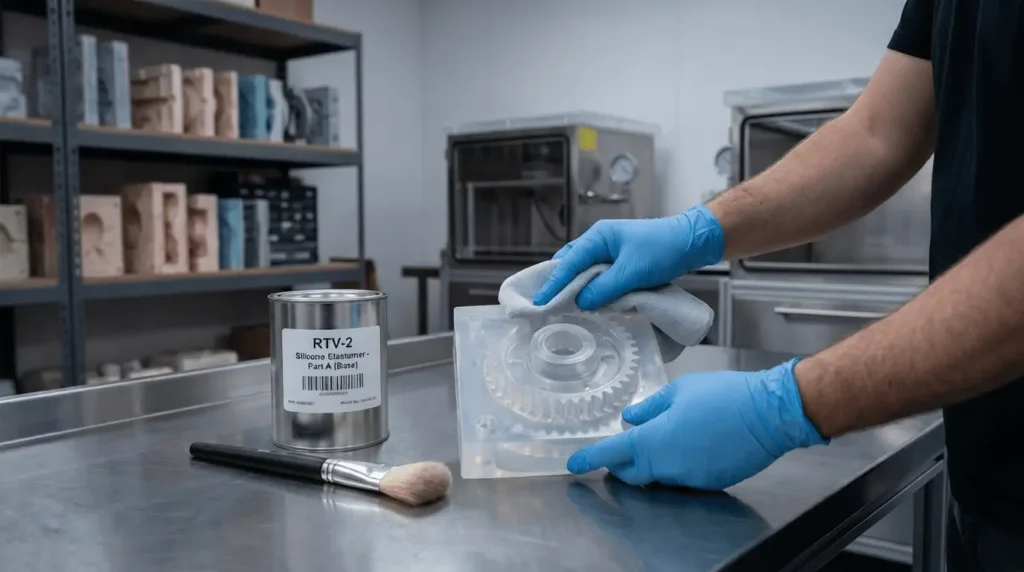
For standard daily maintenance—such as removing mild oils, wax build-up, or surface dust—stick to a gentle, non-chemical wash sequence:
- The Soak: Submerge the RTV-2 silicone mold in warm water blended with a neutral-pH liquid degreasing soap. Avoid overly harsh commercial laundry detergents which can contain chemical stripping agents.
- The Scrub: Use a soft-bristle technical brush or a non-scratch microfiber sponge to clear the cavity. Never use steel wool, abrasive scouring pads, or wire brushes. These will micro-scratch the silicone surface, creating permanent flaws that transfer directly onto your next cast product.
- The Dry: Rinse thoroughly with clean water until all soap residue is gone. Always choose to air-dry your molds on a clean rack or pat them dry with an absorbent, lint-free cloth. Avoid using heating ovens to force-dry empty molds, as localized thermal expansion can lead to dimensional warping.
2. Advanced Cleaning: Removing Tough Industrial Residues
When basic soap and water fail to clear specialized casting materials, transition to these verified workshop protocols:
Removing Un-cured Epoxy or Polyurethane Resin
If a batch of resin suffers from 치료 억제 and leaves a tacky, sticky residue inside your silicone mold cavity, water will not dissolve it.
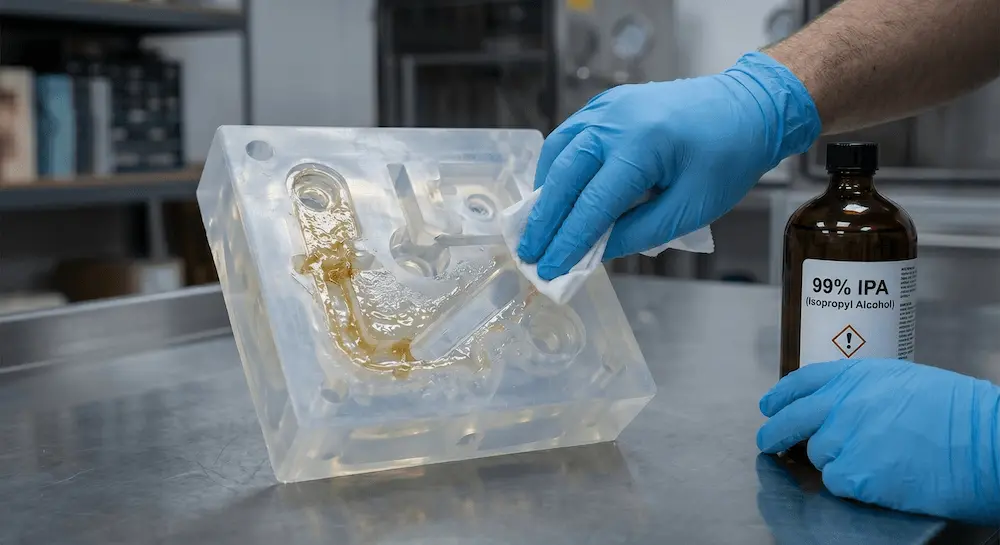
- The Fix: Saturate a soft microfiber towel with 99% Isopropyl Alcohol (IPA). Gently wipe the sticky resin layer away. The alcohol breaks down the liquid monomers safely. Do not submerge the entire mold in an IPA bath for hours, as prolonged exposure can temporarily swell the silicone matrix.
Eliminating Cement and Concrete Laitance
Casting concrete or GFRC (Glass Fiber Reinforced Concrete) leaves behind a tough, white, alkaline calcium carbonate crust on the silicone face, making the mold look dull.
- The Fix: Prepare a mild acid solution using a 1:1 mix of white vinegar and water. Spray it onto the mineral scale and let it sit for 15 to 20 minutes to chemically dissolve the calcium build-up. Scrub gently with a soft brush, then execute a neutral water rinse to stop the acid reaction.
Clearing Embedded Odors or Stubborn Discoloration
Certain casting pigments or fragrance compounds used in candle making can leach deep into the porous structure of the silicone, causing strong odors or deep staining.
- The Fix: Create a thick paste using standard baking soda and warm water. Apply the paste evenly across the stained cavity walls and let it sit overnight. The baking soda naturally draws out embedded oils and neutralizes organic scents without altering the material’s structural shore hardness.
Chemical Bans: What to Keep Away From Your RTV-2 Molds
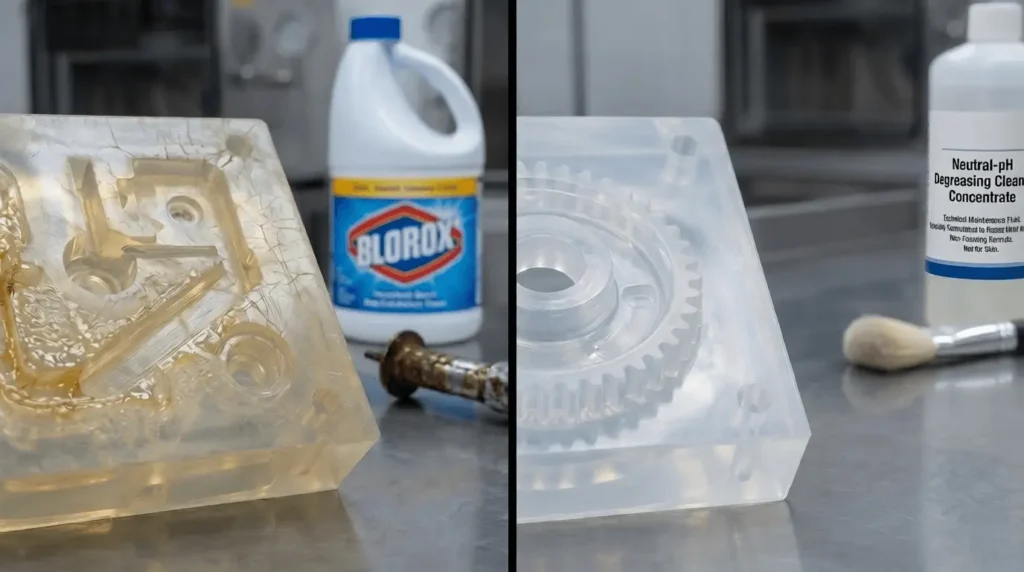
To prevent your high-spec molds from turning brittle, shrinking prematurely, or tearing under normal tension, enforce an absolute ban on these three workshop mistakes:
- No Chlorinated Bleach or Solvents: Never clean silicone with chlorine-based disinfectants or aggressive industrial solvents like Acetone or MEK (Methyl Ethyl Ketone). These harsh fluids strip the internal plasticizers from the silicone rubber, leading to rapid embrittlement and micro-cracking.
- No Cooking Sprays or Heavy Aerosols: Avoid using generic consumer aerosol cooking sprays as cheap mold releases. The propellants used in these cans can permanently bake onto the silicone surface, creating an un-removable, sticky varnish over time. Stick to verified industrial silicone-safe release agents.
- No Sharp Extraction Tools: Never use metal spatulas, utility knives, or screwdrivers to pick out trapped casting fragments. One minor slip will gouge the silicone skin, permanently ruining the mold geometry. Use flexible plastic or wooden scrapers if necessary.
Post-Clean Storage Protocols
Once your molds are 100% dry and free of particulate debris, store them correctly to preserve their elastic memory:
- Environment: Place them in a cool, dark, dust-free enclosure. Prolonged exposure to direct UV sunlight will accelerate polymer degradation over time.
- Geometry: Store molds flat in their original structural orientation. Never stack heavy industrial components on top of flexible rubber molds, or they will experience permanent micro-deformation under structural stress.