
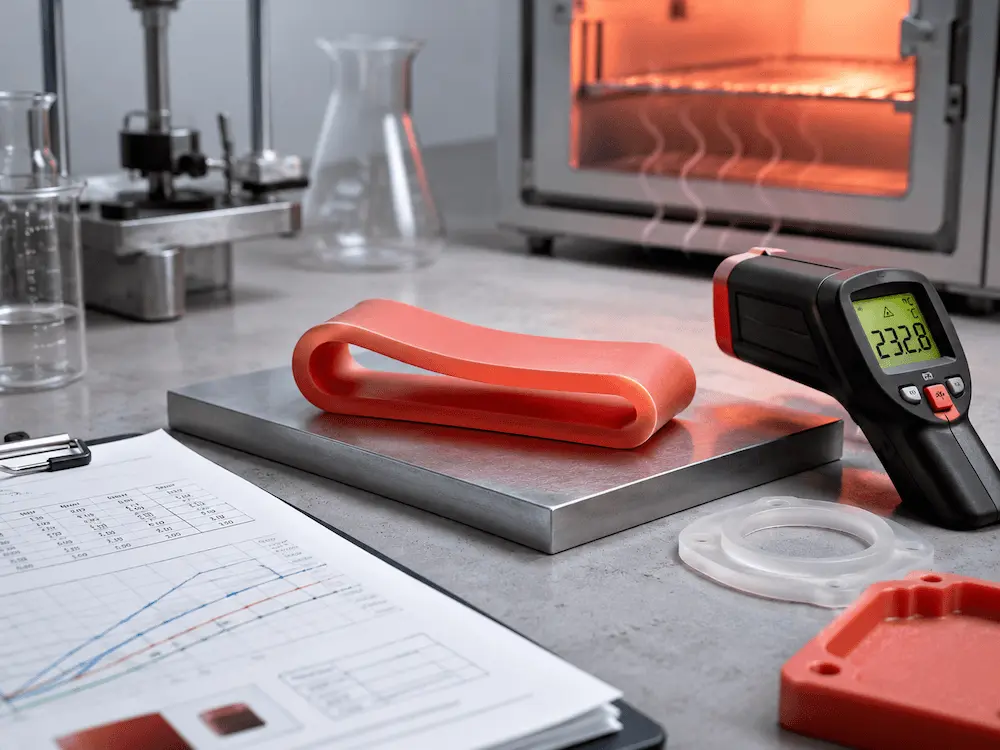

Many people search for the silicone melting point or ask a simple question: Does silicone melt?
Kısa cevap şu: cured silicone rubber usually does not melt like ordinary plastic. Instead of turning into liquid, it may gradually lose flexibility, harden, crack, discolor, burn, or degrade when exposed to excessive heat.
This is because silicone rubber is an elastomer with a crosslinked structure. Once silicone has cured, it does not normally return to a liquid state when heated. Its heat performance depends on the silicone type, formulation, cure system, exposure time, and working environment.
So instead of asking only “What is the melting point of silicone?”, the better question is:
Which silicone grade can handle your working temperature and application conditions?
Does Silicone Melt Like Plastic?
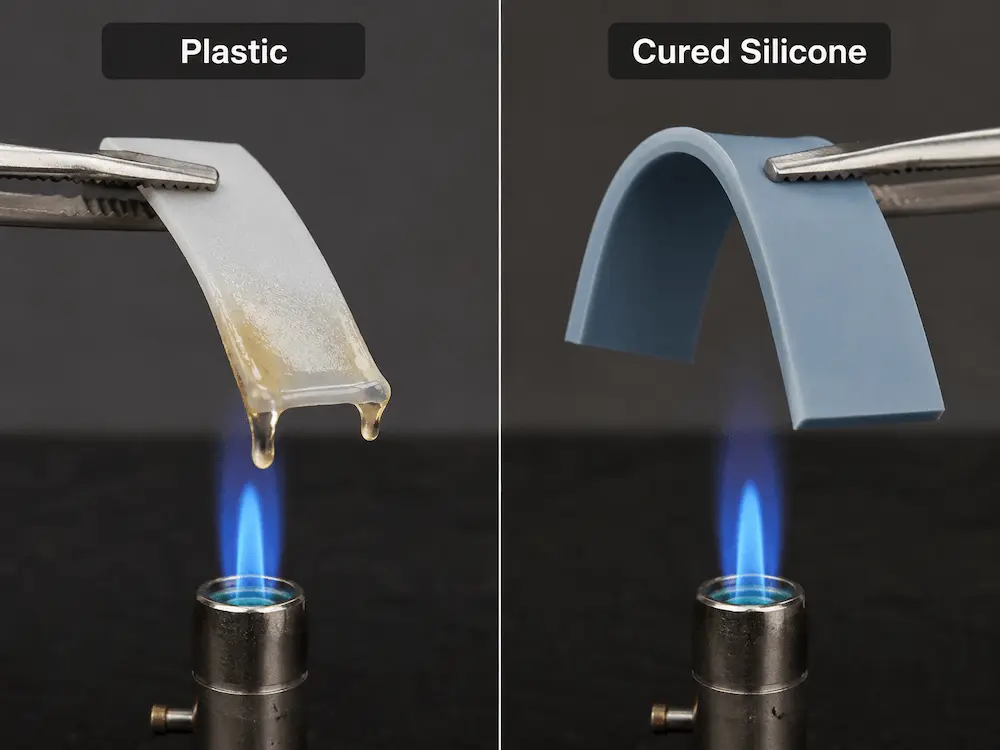
In most practical cases, cured silicone rubber does not melt like plastic.
Many common plastics are thermoplastics. When heated, they may soften, melt, and flow. When cooled, they become solid again.
Silicone rubber behaves differently. After curing, it forms a flexible rubber network. This structure helps silicone stay flexible across a wide temperature range, but it also means the material does not simply melt back into liquid silicone.
If silicone is exposed to temperatures beyond its recommended range, it is more likely to degrade than melt. It may become harder, lose elasticity, crack, discolor, or lose mechanical strength.
What Is the Melting Point of Silicone?
The phrase melting point of silicone can be misleading because silicone rubber does not have one simple, sharp melting point like some metals or thermoplastics.
The heat resistance of silicone depends on several factors:
- silicone grade
- formulation
- cure system
- fillers and additives
- hardness
- exposure time
- continuous or short-term heat
- application environment
That is why one general number is not enough. A silicone baking mold, RTV-2 mold-making silicone, silicone sealant, electronics potting silicone, and high-temperature silicone rubber may all have different recommended working temperature ranges.
For real applications, the safest approach is to check the supplier’s technical datasheet rather than relying on a generic melting point number.
Real Silicone Temperature Example
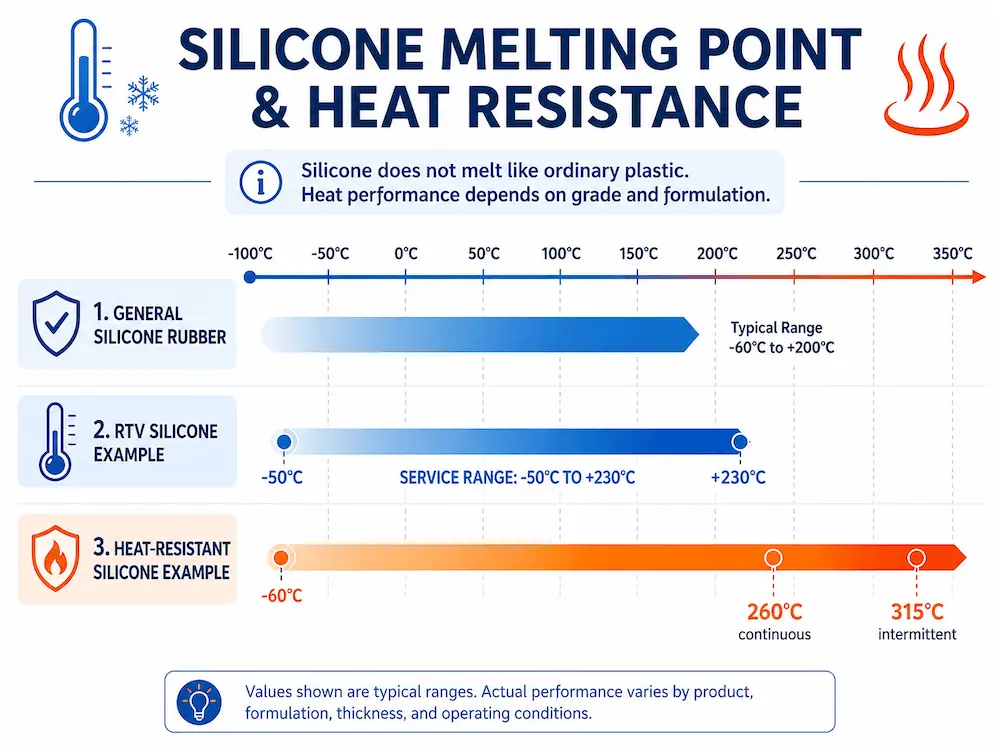
A useful way to understand silicone heat resistance is to look at real product data.
For example, Dow describes DOWSIL™ 736 Heat Resistant Sealant as a red RTV adhesive/sealant for temperatures up to 315°C / 600°F. Dow also states that it may be used in applications with continuous exposure to 260°C / 500°F ve intermittent exposure to 315°C / 600°F. Its listed uses include heating elements, industrial ovens, aerospace gasketing, high-temperature potting, encapsulating, and protective coating applications.
| Product Example | Published Temperature Information | What It Shows |
| DOWSIL™ 736 Heat Resistant Sealant | 260°C continuous exposure; 315°C intermittent exposure | Some silicone grades are specially formulated for high-temperature applications. |
This example shows why “silicone melting point” is not a universal value. Different silicone grades are designed for different working temperatures and application conditions.
What Happens When Silicone Gets Too Hot?
Even if silicone does not melt like plastic, excessive heat can still damage it.
| Heat Effect | Ne anlama geliyor |
| Loss of flexibility | The silicone becomes less elastic and harder to bend. |
| Surface hardening | The surface may feel dry, stiff, or less rubber-like. |
| Cracking | The material may develop cracks after heat exposure. |
| Renk Değişikliği | The silicone may turn yellow, brown, or darker. |
| Lower strength | Tear strength, elongation, and flexibility may decrease. |
| Degradation | Under extreme heat, silicone may smoke, burn, or break down. |
For silicone molds, this can lead to shorter mold life, easier tearing, deformation, or less accurate castings.
For electronics potting or sealing, overheated silicone may lose flexibility, insulation performance, or protection ability.
Does RTV Silicone Melt After Curing?
RTV means room temperature vulcanizing. In simple terms, RTV silikon cures at room temperature and becomes a flexible rubber material.
There are two common types:
- RTV-1 silicone: one-component silicone, often used for sealants and adhesives.
- RTV-2 silicone: two-component silicone, often used for mold making, casting, potting, encapsulation, and silicone gels.
After RTV silicone cures, it usually does not melt back into liquid silicone. If exposed to excessive heat, it may harden, crack, lose flexibility, or degrade.
For RTV-2 silicone molds, heat performance depends on the grade. A silicone mold used for resin casting may have different heat requirements from silicone used for electronics potting, food molds, or industrial sealing.
If your application involves heat, do not choose RTV silicone only by hardness. You should also check the cure system, tear strength, working temperature, and long-term use conditions.
Does Food Grade Silicone Melt?
Gıda sınıfı silikon is often used for baking molds, kitchen tools, baby products, chocolate molds, food-contact seals, and similar applications. It is popular because it is flexible, durable, and heat-resistant.
However, food grade does not mean unlimited heat resistance.
A food-grade silicone product still has a recommended working temperature range. If it is exposed to temperatures beyond that range, it may discolor, become weaker, lose flexibility, or degrade.
If you are choosing silicone for food-related molds or baking-related applications, do not rely only on the phrase “food grade.” You should also check:
- Recommended service temperature
- cure system
- intended food-contact conditions
- technical documents
- supplier guidance
For many food mold projects, platinum-cure silicone is commonly considered, but the exact grade should still be selected based on the real application and document requirements.
How to Choose Silicone for Heat-Related Applications
If your project involves heat, do not choose silicone only by asking for its melting point.
Instead, consider:
- working temperature
- continuous or intermittent heat exposure
- silicone cure system
- hardness
- yırtılma mukavemeti
- flexibility after curing
- electrical insulation, if needed
- food-contact or document requirements, if needed
- supplier technical data sheet
For mold making, heat resistance is only one part of the selection. You also need to consider the casting material, mold size, demolding difficulty, detail level, and expected mold life.
For electronics potting or encapsulation, flexibility, insulation, moisture protection, and long-term stability may matter more than a simple heat number.