
What Is FDA Silicone?
“FDA” often appears beside hardness, viscosity and cure time in a silicone RFQ. But FDA status is not a physical property and cannot be confirmed from a TDS or platinum-cure label.
This guide explains what FDA silicone means, what 21 CFR 177.2600 requires and how to evaluate supporting documents before approving a food-mold material.
Quick answer: FDA silicone is not a separate polymer or blanket certificate issued by the U.S. Food and Drug Administration. For repeated-use food-contact rubber, it usually means a defined silicone formulation supported under an applicable U.S. basis—commonly 21 CFR 177.2600. Compliance depends on the formulation, cured condition, intended use and evidence.
Regulatory note: This article provides general information, not legal advice. Final requirements should be confirmed for the finished article, target market and intended conditions of use.
What Is FDA Silicone Made Of?
FDA silicone usually combines a silicone base polymer with reinforcing silica, crosslinkers and, depending on the cure system, catalysts, inhibitors or vulcanizing agents. Pigments and other processing ingredients may also be present.
What makes it different from a general-purpose industrial silicone is not its appearance. It is whether the complete formulation and cured material are supported for the intended food-contact use.
Two translucent silicones can have the same hardness and appearance while only one has appropriate formulation and extractables evidence. Softness, colour and odour are not substitutes for documentation.
For a broader explanation of food-contact requirements across different markets, read What Does Food-Grade Silicone Really Mean?.

Why Is Silicone Used for Food-Contact Molds?
Silicone is considered for reusable food molds because it can combine:
- flexibility for demolding detailed shapes;
- stability across a wide temperature range;
- low water absorption and fine-detail reproduction;
- repeated-use durability when the grade and mold design are appropriate.
These are potential advantages, not universal specifications. Temperature resistance, tear strength, shrinkage and mold life vary by grade. Compliance also does not guarantee the correct working time, viscosity or strength for a particular mold.
Material safety and production performance must therefore be evaluated together.
Does the FDA Approve or Certify Silicone?
“FDA-approved silicone” is a common commercial phrase, but it can create the wrong impression that the FDA issues a universal approval certificate for every commercial silicone grade.
U.S. food-contact substances may be supported through a regulation, effective Food Contact Notification (FCN), Threshold of Regulation exemption or another valid basis. Authorization is connected to substance identity, intended use and conditions of use; an FCN is also manufacturer- or supplier-specific. See the FDA’s overview of how food-contact substances are regulated.
For silicone evaluated under 21 CFR 177.2600, more precise wording includes:
- “FDA-compliant silicone”;
- “complies with 21 CFR 177.2600”; or
- “tested to the applicable requirements of 21 CFR 177.2600.”
Buyers should still ask which grade, colour, cured condition and use the declaration or report covers.
What Does FDA 21 CFR 177.2600 Cover?
21 cfr 177.2600 addresses rubber articles intended for repeated use in manufacturing, processing, preparing, packaging, transporting or holding food.
It includes silicone basic polymer and several silicone elastomer categories, but the word “silicone” alone does not establish compliance.
1. Formulation Eligibility
The complete formulation—not only the base polymer—must be considered. Curing materials, fillers, plasticizers, colourants and processing ingredients need an appropriate basis and must observe relevant limitations.
Substances should not exceed the amount reasonably required for their technical effect or be intended to affect food.
Evidence for natural-colour silicone should not automatically cover every custom colour. Added pigment, silicone oil, thinner or filler may change the assessed formulation.
2. Finished-Surface Extractables
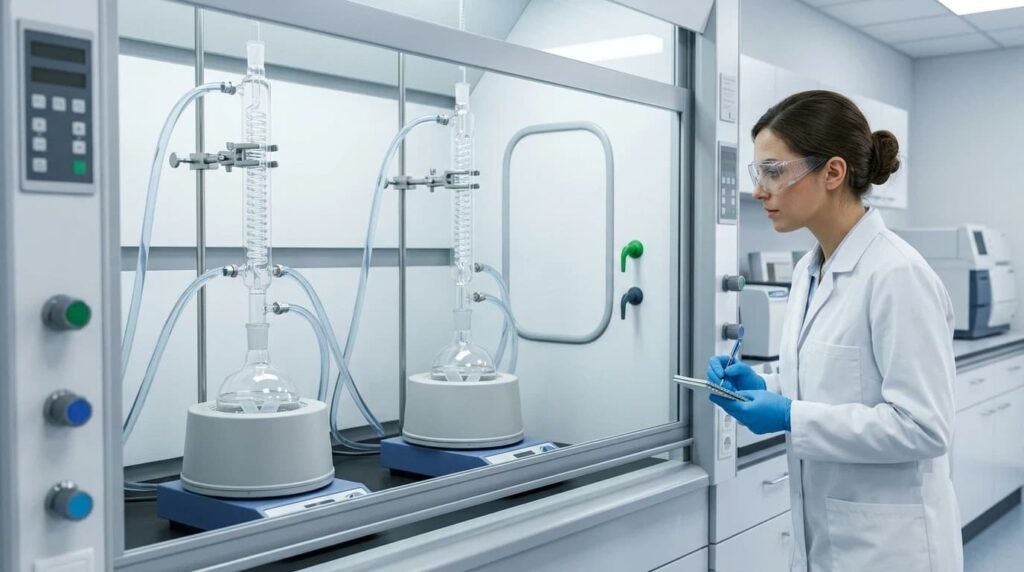
For repeated contact with aqueous and fatty foods, the finished food-contact surface must meet the following total extractables limits under the specified conditions:
| Intended contact | Extraction condition | Total extractables limit |
|---|---|---|
| Aqueous food | Distilled water at reflux temperature | First 7 hours: ≤20 mg/in²; succeeding 2 hours: ≤1 mg/in² |
| Fatty food | n-Hexane at reflux temperature | First 7 hours: ≤175 mg/in²; succeeding 2 hours: ≤4 mg/in² |
| Dry food | Formulated and cured under good manufacturing practice for repeated use | No corresponding numerical extraction limit stated in paragraph (d) |
These are test-specific total extractables limits, not universal migration limits. Finished rubber articles must also be thoroughly cleansed before first food-contact use.
The FDA maintains an inventory of substances listed in 21 CFR for food-contact uses, but every entry must be read with its regulation, use and limitations.
Why Platinum-Cured Does Not Automatically Mean FDA-Compliant
Platinum-cured silicone is often preferred for food molds. Its addition-cure chemistry does not rely on the volatile condensation byproducts associated with many tin-cure systems, and it can offer low shrinkage and dimensional stability.
But “platinum-cured” describes crosslinking chemistry. It does not prove formulation eligibility or compliance with extractables limits.
The correct conclusion is therefore:
Platinum cure can be a strong technical direction for food molds, but only a properly scoped compliance package can support an FDA claim.
Do not use tin-cured silicone for food contact without evidence for the exact formulation and cured specimen. A documented سيليكون معالج بالبلاتين is generally the better food-mold starting direction.
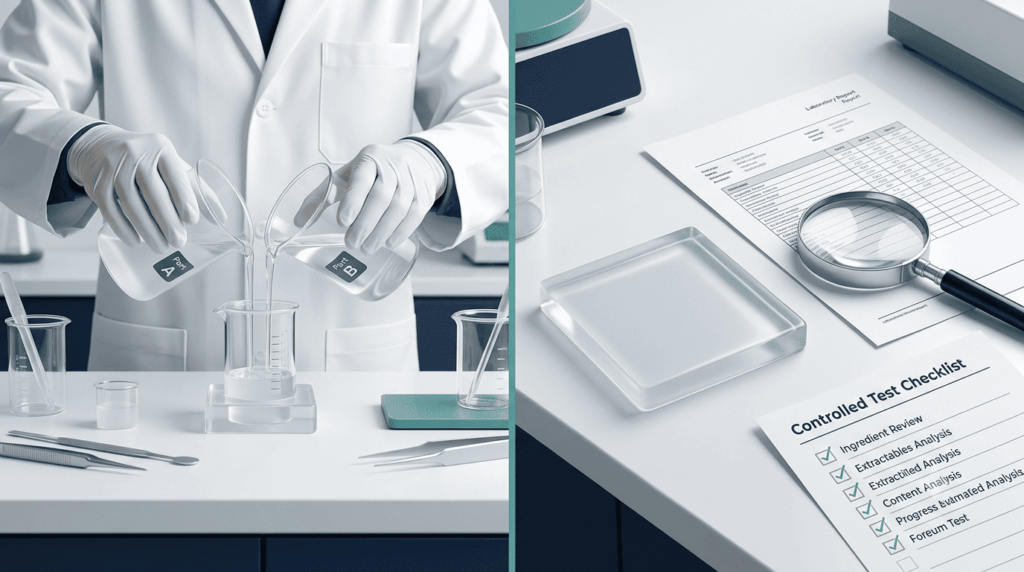
What Should an FDA Silicone Evidence Package Contain?
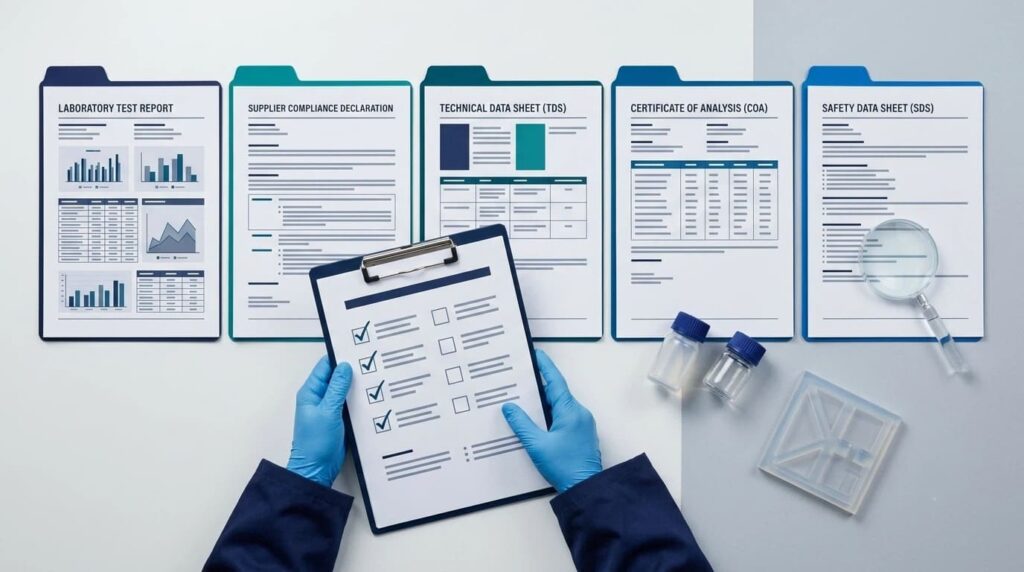
A TDS, SDS, COA and regulatory report serve different purposes.
| Document | What it helps establish | Main limitation |
|---|---|---|
| 21 CFR 177.2600 test report | Results for the identified specimen and reported test conditions | Does not automatically cover every grade, colour or customer-modified article |
| Supplier compliance declaration | Product identity, regulatory basis and declared scope | Strength depends on its detail and supporting evidence |
| TDS | Processing and performance data such as hardness, viscosity and cure time | Does not prove food-contact compliance |
| COA | Selected batch-specific quality-control results | Does not replace regulatory evidence |
| SDS | Hazard, handling, storage and transport information | Does not establish food-contact suitability |
Before approval, verify:
- Identity and formulation: Does it cover the exact grade and colour?
- Specimen preparation: Were Parts A and B mixed and cured as stated?
- Test scope: Were formulation provisions and extractables considered?
- Limitations: Are any foods, temperatures or finished articles excluded?
Do not extend a report for a cured 1:1 natural-colour sample to another grade or customer-modified formulation without review.
Not sure whether a document covers your food-mold project? Send Topsil the grade, food type, maximum contact temperature, target market and requested compliance document. Our technical support team can help identify which questions should be resolved before sample testing.
FDA Silicone vs. General-Purpose Silicone
The difference is not simply “premium” versus “cheap.” FDA-compliant silicone should have a defined food-contact basis, traceable identity, appropriately scoped evidence, controlled processing instructions and reviewable limitations. General-purpose silicone may still provide excellent hardness, mold release and value for resin, plaster, wax or concrete.
General-purpose silicone is not automatically unsafe; it simply lacks a basis for a food-contact claim unless supported otherwise.
Does a Raw-Material Report Cover the Finished Silicone Mold?
Not automatically.
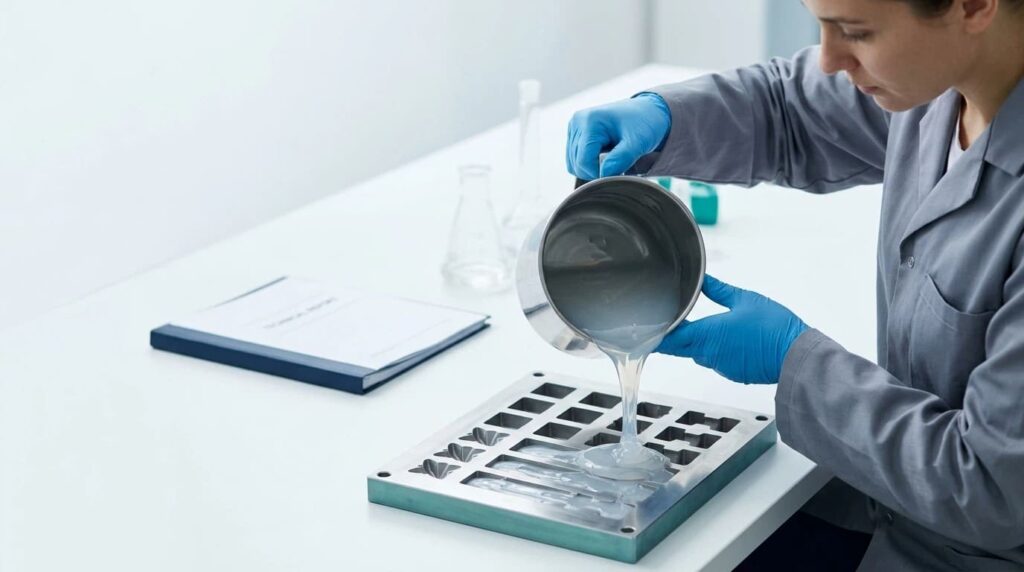
An RTV-2 supplier may test a cured specimen made from a specific grade, ratio and cure schedule. The mold maker still controls:
- weighing, mixing and cure completeness;
- pigments or other additions;
- post-curing and first-use cleaning;
- contamination and batch traceability.
The company placing a commercial finished mold on the market should determine whether additional finished-article assessment is required. This prevents a supplier report from being applied beyond its scope.
How to Choose FDA Silicone for a Food-Mold Project
Before requesting a grade or sample, define:
- food type, contact temperature, duration and repeated use;
- mold geometry, undercuts and thin sections;
- mix ratio, viscosity, working and demold time;
- hardness, tear resistance and shrinkage;
- target market and colour;
- required report, declaration, TDS, SDS and COA.
A correctly matched material and evidence package can reduce customer-audit questions, duplicate testing, reformulation, rejected finished molds and shipment delays.
Our guide to reading a platinum silicone TDS explains how working time, viscosity, hardness, tear strength and cure conditions interact in production.
For product-level selection, review Topsil’s guidance for food-grade silicone mold projects.
Common Applications of FDA-Compliant Silicone
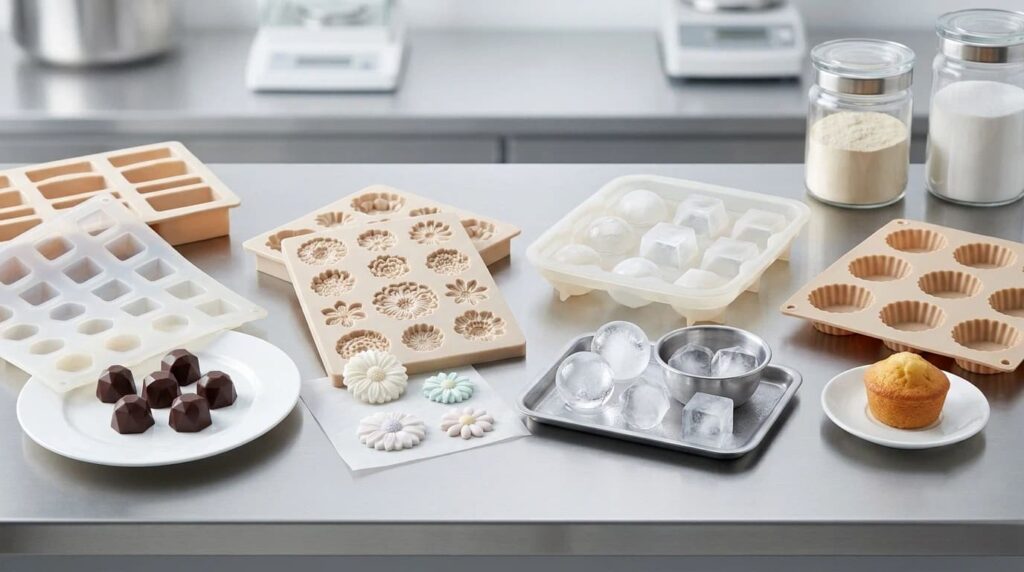
Depending on grade, evidence and use conditions, applications may include:
- chocolate and confectionery molds;
- fondant and decorative bakery molds;
- ice molds;
- reusable food-casting molds and selected food-processing components.
Topsil supplies RTV-2 liquid silicone rubber for mold making. One general FDA statement does not cover every finished mold, gasket or medical component.
الأسئلة المتداولة
Is Food-Grade Silicone the Same as FDA Silicone?
Not exactly. “Food-grade” may refer to different markets; FDA silicone normally refers to a U.S. food-contact basis.
Does the FDA Issue a Certificate for Each Silicone Grade?
Not generally. Buyers should identify the applicable regulation or authorization and review the supplier’s evidence.
Does a TDS Prove That Silicone Is FDA-Compliant?
No. A TDS describes processing and performance; it does not replace regulatory evidence.
Does a Supplier’s Report Automatically Cover My Finished Mold?
No. Confirm that grade, colour, A/B ratio, cure conditions and intended use match. Added ingredients or process changes may require further assessment.
Select the Silicone and the Evidence Together
FDA silicone should not be chosen by label alone. The material must work in production, and its evidence must match the use.
When requesting a recommendation, provide the food type, contact temperature and duration, mold geometry, hardness, working time, target market, colour and required documents.
Topsil Silicone can review whether an available RTV-2 direction and its current documents are suitable for initial sampling. Final compliance must be confirmed for the finished article and sales market.