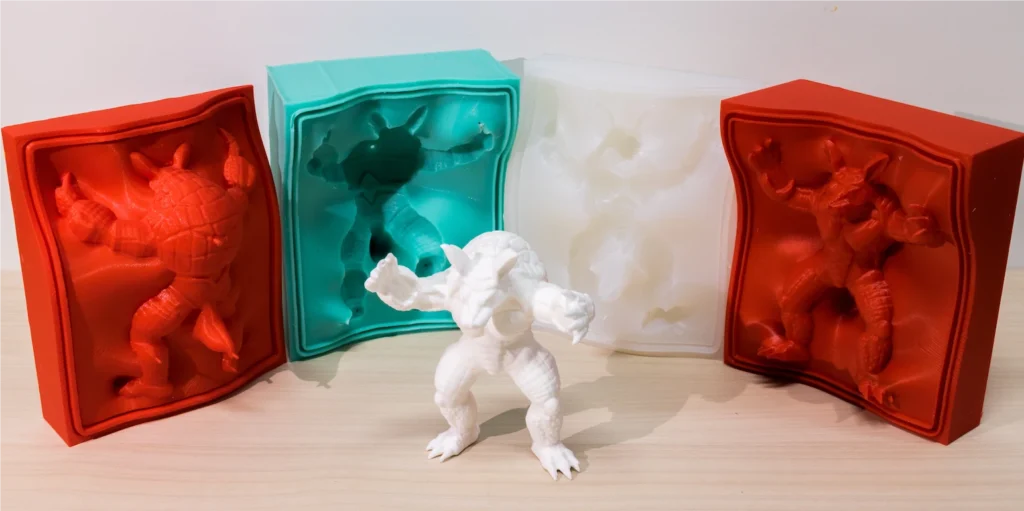

In material science, RTV-2 stands for Room Temperature Vulcanizing, Two-Component. It is a liquid raw material that cross-links into a solid elastomer at ambient temperatures, unlike HCR (High Consistency Rubber), which requires high heat and high pressure. This section analyzes the curing mechanisms, physical specifications, and critical differences required for effective material selection.
How It Works: Addition vs. Condensation Cure
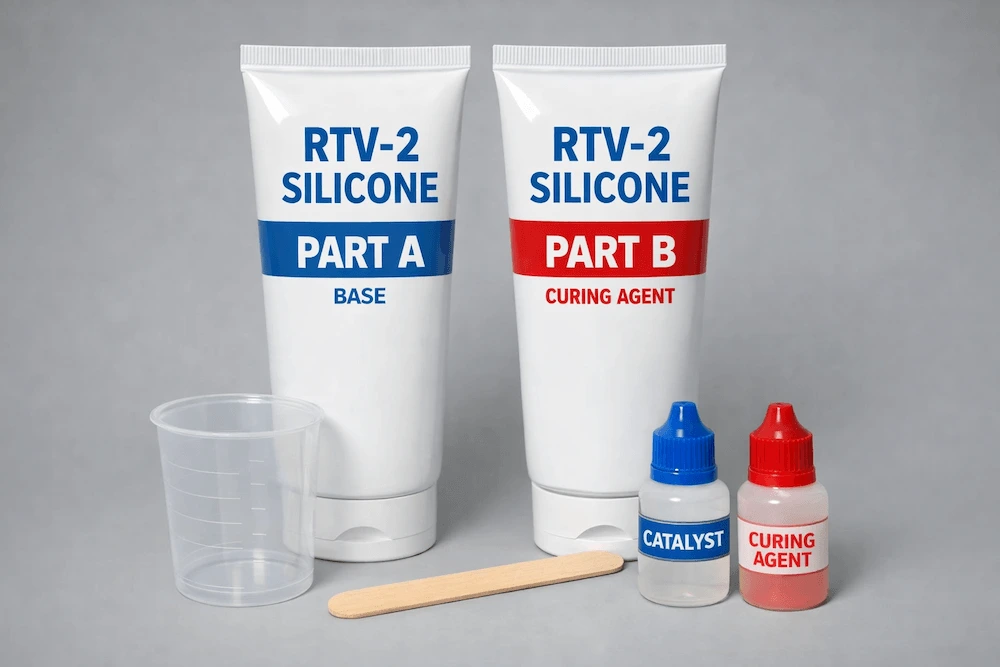
The performance of an RTV-2 system is dictated by its curing chemistry. There are two primary classifications:
1. Condensation-Cure (Tin-Cure) Silicone
Using a tin-based catalyst, this legacy system cures by reacting with atmospheric moisture. It is cost-effective and extremely forgiving with contaminants, but releases an alcohol byproduct.
- Drawback: Linear shrinkage is high, typically between 0.5% and 1.0%, which causes long-term dimensional inaccuracy.
2. Addition-Cure (Platinum-Cure) Silicone
Using a 백금 촉매, this system cross-links the Part A vinyl-polymer and Part B hydride-functional polymer without generating volatile byproducts.
- Advantage: Near-zero linear shrinkage (strictly < 0.1%). For applications requiring extreme dimensional stability, such as rapid prototyping molding, platinum-cure RTV-2 is the required industrial benchmark.
Still not sure which silicone grade fits your application?
Tell us your casting material, target hardness, working time, and expected use. Topsil will help recommend a suitable RTV-2 silicone grade for sample testing.
RTV-2 Performance Specifications
When selecting an elastomer, technicians must analyze key metrics of the TDS (Technical Datasheet). Below is a comparison of TOPSIL’s primary RTV-2 material families, demonstrating objective viscosity and tear strength benchmarks:
| Elastomer System | Base Viscosity (cP) | 경도(쇼어 A) | 인열 강도(kN/m) | Ultimate Application |
| TOPSIL P-Series (Platinum) | 4,500 | 25 | 22 | Intricate prototypes, medical models, fine art resin casting. |
| TOPSIL P-Series (Platinum) | 10,000 | 45 | 20 | Electronics potting, large geometric molds. |
| TOPSIL C-Series (Tin) | 25,000 | 25 | 18 | Architectural concrete stamps, basic statues. |
Core Applications in B2B Production
Due to its high duplication fidelity and thermal resistance (-60°C to 250°C), RTV-2 silicone is widely specified across the following industrial sectors:
1. High-Precision Mold Making & Industrial Tooling
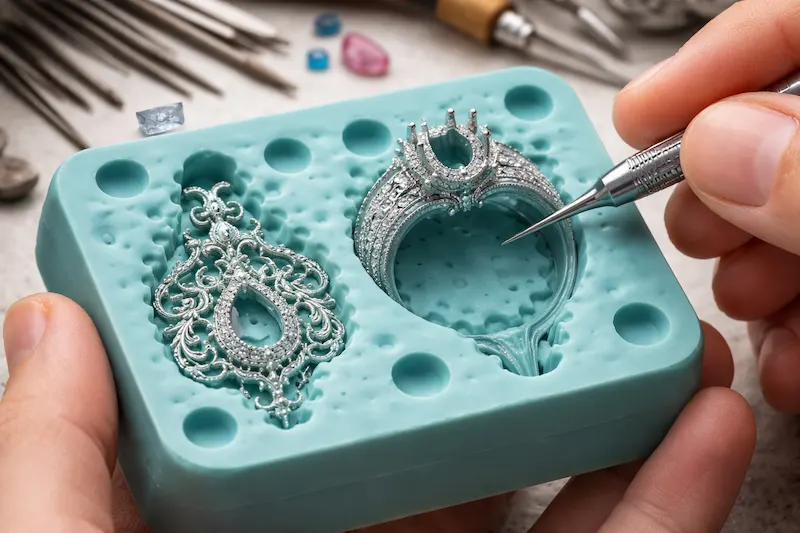
This is the most prevalent application for RTV-2. For creating flexible, production-line molds that require zero dimension change, addition-cure platinum RTV2 is the only choice. It is widely used to create master molds for:
- Resin Casting (Polyurethane, Epoxy, Polyester).
- Architectural & Concrete Casting (Concrete stamps, decorative stone).
- 로스트 왁스 캐스팅 for high-end jewelry or sculpture duplication.
Click here to see more 금형 제작 애플리케이션
2. Electronics & Electrical Engineering
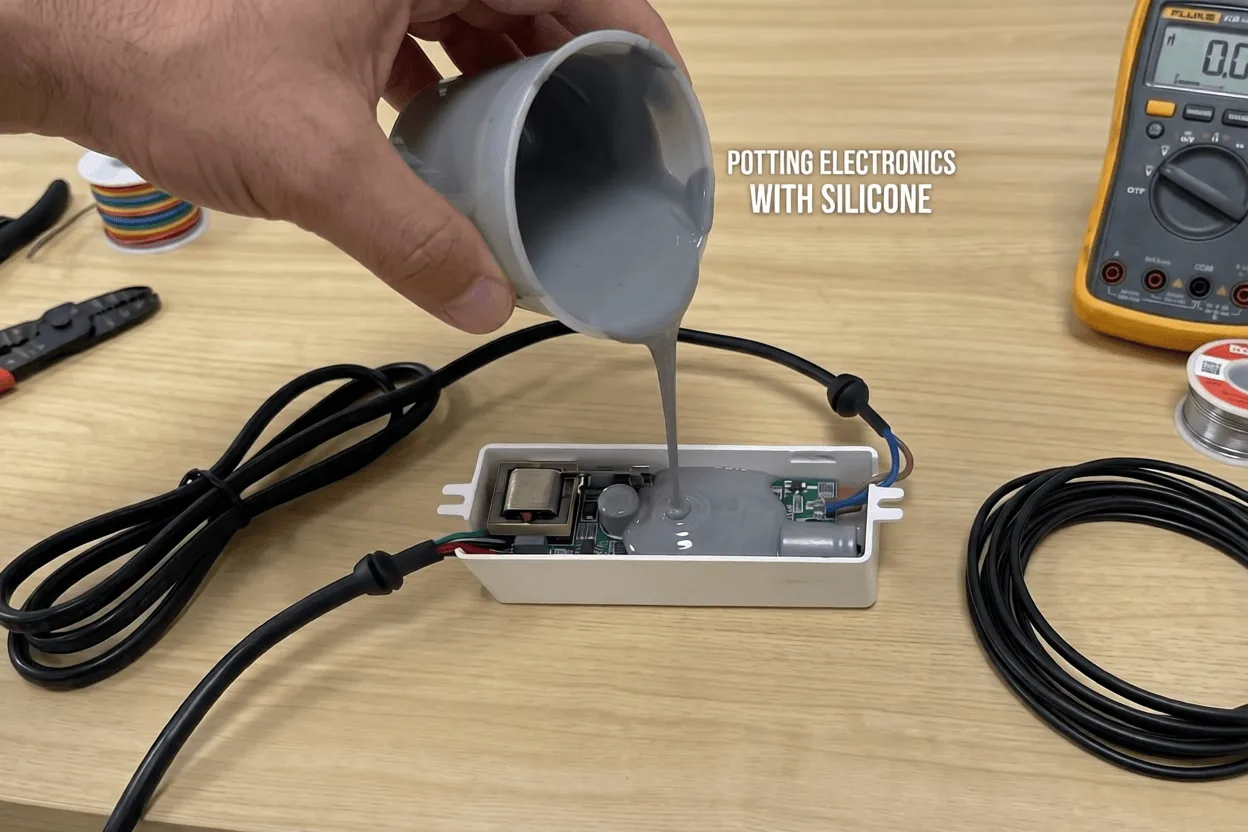
High-spec components require protection from moisture, vibration, and thermal stress. The selection of a specified RTV-2 potting compound prevents early failure on automotive and chip production lines.
3. Shoemaking and Prosthetics
When selecting 깔창 제작용 실리콘, engineers prioritize specific durometers (hardness levels) to achieve optimized cushioning, rebound, and hypoallergenic biocompatibility.
Performance Tuning: How Temperature and Impurities Impact Cure
In regulated production environments, every industrial shipment of TOPSIL raw material comes with a Batch COA to guarantee consistent initial properties. However, workshop environmental factors can significantly shift the material’s curing curve:
- Thermal Impact: If the workshop ambient temperature is below 20°C (68°F), addition-cure platinum silicone may experience extremely slow curing times. Conversely, temperatures exceeding 30°C will vastly accelerate the cure cycle, reducing the material’s necessary pot life and de-airing window.
- Cure Inhibition: Platinum catalysts are extremely sensitive. Trace amounts of sulfur (in modeling clay), latex gloves, or uncured RTV-1 silicone caulk will permanently “poison” the catalyst, causing a tacky, incomplete cure at the interface.
FAQ: RTV-2 Performance and Customization
Q: Why specify RTV-2 for large casting projects?
A: Unlike one-part (RTV-1) silicones, which rely on atmospheric moisture and are limited to shallow seals, RTV-2 cures uniformly throughout the entire mass due to its chemical reaction. This makes it essential for deep-section casting, mold making, and electronic potting where a complete, through-cure is required. 👉 For a deep dive, read our guide: RTV 실리콘 대 RTV-2 대 실리콘 | 주요 차이점
Q: Can we alter the material properties in the workshop?
A: Yes. Technicians can adjust viscosity by adding silicone thinner/solvents or increasing speed by using temperature. For specialized industrial printers, using 정전기 방지 패드 인쇄 실리콘 involves custom-formulating a static-free matrix to ensure perfect color transfer.
RECOMMENDED NEXT STEP
Choosing the right silicone involves more than just hardness or cure system.
Send us your application details, and we’ll map out the exact grade for your testing.
Compare RTV-2 Silicone Grades