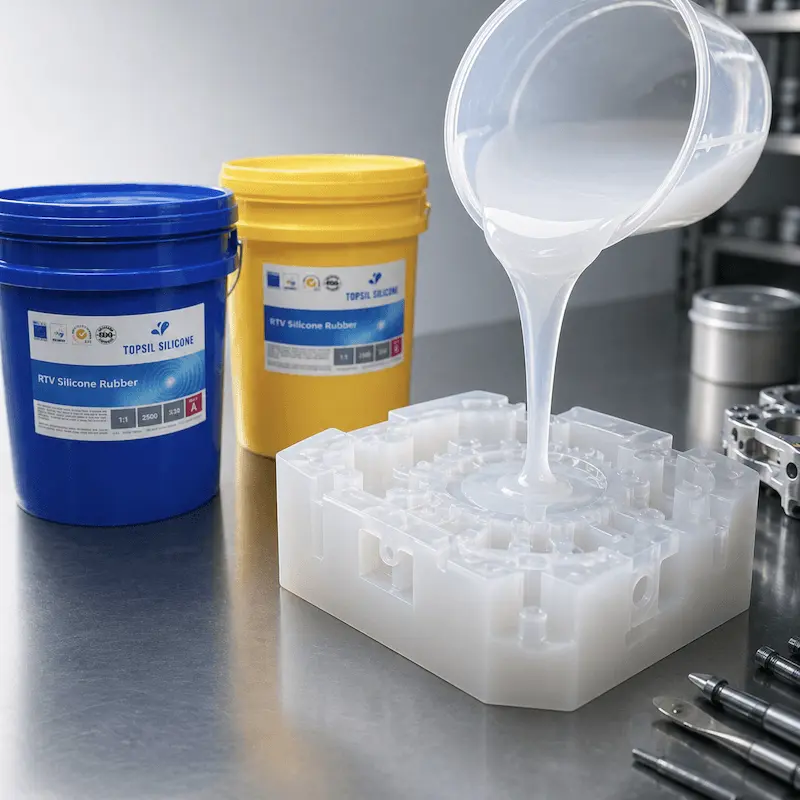
Silicone Rubber for Resin Mold Making

Resin molds do not fail for one reason. Some fail because detail is not captured cleanly. Others fail because the mold tears too early during demolding. If you want the right RTV-2 grade, start by matching silicone to your mold geometry, detail level, and expected mold life.
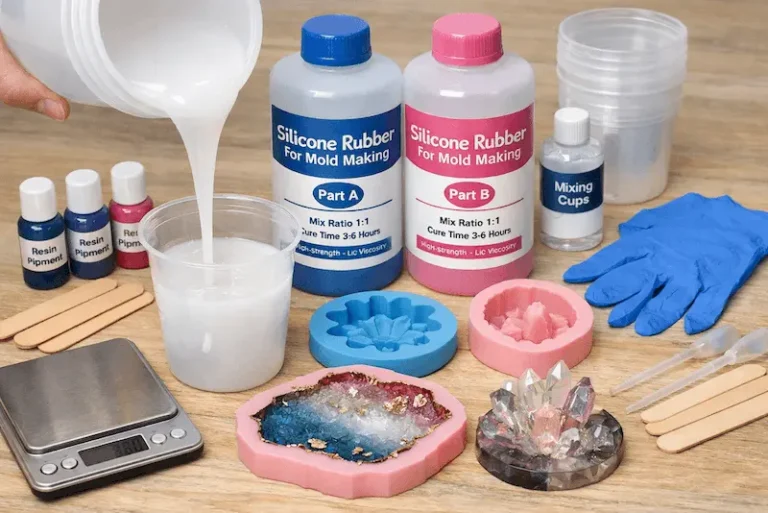
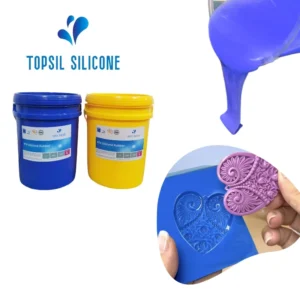
best silicone for resin molds

Choose by Mold Type, Not by Generic Silicone Claims

For resin mold making, the best silicone is not simply the softest or the lowest-viscosity option. The right grade depends on what your mold needs most: cleaner detail, easier release, better durability, or a more stable performance across repeated casts.
Use this quick logic before choosing a grade:

Jewelry molds/fine-detail molds

Start with flow + flexibility + clean detail transfer

Figurine molds/complex shapes

Start with tear strength + release stress control

Open-face decorative molds

Start with surface detail + practical mold body

Repeat-use commercial molds

Start with mold life + durability + total mold cost

What Resin Mold Buyers Should Prioritize?

Detail Capture

If the mold cannot reproduce fine texture, edges, or surface finish cleanly, the grade is already wrong even if it feels easy to pour.

Tear Strength

If the mold includes thin walls, sharp edges, deep undercuts, or repeated demolding stress, low tear strength often leads to early failure.

Mold Life

For repeat-use resin molds, the better grade is usually the one that lasts longer and stays more stable over time, not the one that only looks cheaper per kilogram.

Why Resin Molds Commonly Fail?​

In many resin mold projects, the real problem is not “bad silicone” in general. The issue is often grade mismatch. A silicone may pour easily, but still be the wrong choice if it cannot handle the actual mold geometry or release stress.
Most resin mold problems show up in one of these ways:

01. Bubbles in the Mold

The silicone does not wet the master well enough, or the pouring process is rushed.

02. Mold Tears Too Early

The grade flows well, but it cannot survive the real demolding stress.

03. Poor Casting Detail

The mold captures the shape, but not the fine surface or edge quality required for a clean finished part.

04. Short Mold Life

The mold works for a few casts, then performance drops quickly.

A Common Real-World Mistake

Many resin mold buyers ask for the softest or lowest-viscosity silicone first. But a mold that pours beautifully can still be the wrong mold if it tears after only a few uses.
That is why resin mold silicone should be matched to mold geometry + release stress + expected mold life, not chosen by softness or price alone.

A Better Way to Choose the Grade

Before choosing a resin mold silicone, answer these four questions:
If your mold is fine-detail and easy to release, flow matters more first. If your mold is complex and hard to demold, tear strength matters more first. If your mold is repeat-use, mold life matters more. If your mold is large and soft-looking, body support matters more than softness alone.
Resin mold silicone should be selected based on actual mold behavior, not just softness, price, or one property on the data sheet.

Typical Applications

Jewelry molds
Figurine molds
Decorative resin molds
Open-face casting molds
Small-batch commercial resin molds
Repeat-use mold production for resin parts

Need a Better Silicone Grade for Resin Mold Making?

Send us your resin type, mold geometry, target hardness, and expected mold life. We’ll help you narrow down a more suitable RTV-2 silicone starting point.

FAQs

What is the best silicone for resin molds?

The best silicone depends on mold geometry, detail level, demolding stress, and expected mold life. Buyers should usually compare hardness, viscosity, and tear strength together.

Is softer silicone always better for resin molds?

No. Softer silicone can help with flexible demolding and fine detail, but it may reduce mold body and durability if the mold design is more demanding.

What matters more for resin molds: low viscosity or high tear strength?

It depends on the mold. For fine detail and easier flow, viscosity may matter more first. For difficult demolding and repeat use, tear strength often matters more.

Should I use platinum cure silicone for resin molds?

For more demanding, premium, or detail-sensitive resin molds, platinum cure is often a stronger option. For general-purpose resin molds, tin cure may still be practical.

Can you recommend a grade for my resin mold project?

Yes. Share your mold type, resin type, expected mold life, and performance target for a more practical recommendation.

How do I reduce bubbles in resin molds?

To reduce bubbles, use proper mixing techniques, pour slowly, and choose a silicone with suitable viscosity. For high-detail molds, vacuum degassing may also help.

How long does a resin silicone mold last?

Mold life depends on the silicone grade, mold design, casting material, and handling conditions. A properly selected silicone with good tear strength can last through many casting cycles.

WhatsApp

Contact Us Today, Get Reply in 24 hrs!

Your information will be kept strictly confidential.

Topsil Silicone CEO

This is Evan, the Manager of Topsil Silicone. Congratulations on finding a professional supplier!  Pls send your inquiry, and we will contact you within 24 hours.

Compare Flow vs Tear Strength

when Flow Matters More

When Tear Matter More

Free Topsil Silicone Rubber E-book

If you still want to know more about our products,  a detailed E-catalogue can send to you.