
Quick Answer
Shore A hardness is used for softer, more flexible materials such as silicone rubber, elastomers, and many rubbers. Shore D hardness is used for harder, more rigid materials such as hard plastics and rigid elastomers. This quick comparison also helps explain why Shore A is more commonly referenced for flexible silicone rubber materials.
In This Guide
What Is the Difference Between Shore A and Shore D Hardness?
The main difference between Shore A hardness and Shore D hardness is the type of material each scale is designed to measure. Shore A is used for softer, more flexible materials such as silicone rubber, elastomers, and many rubbers. Shore D is used for harder, more rigid materials such as hard plastics and rigid elastomers.
In simple terms, Shore A is more useful when the material can still bend, compress, or flex noticeably in use. Shore D becomes more relevant when the material feels much firmer, more structural, and more resistant to indentation.
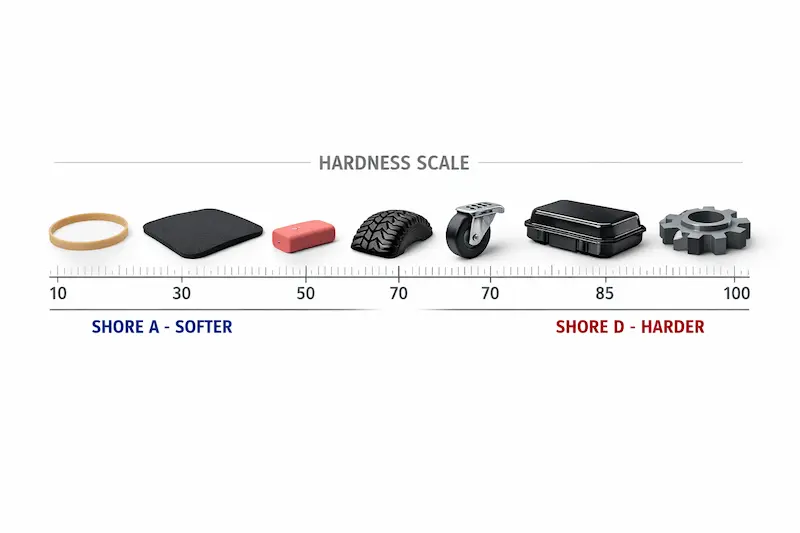
This difference matters because the two scales are not meant to describe the same material range in the same way. A softer rubber and a rigid plastic should not be judged on the same hardness scale. Using the wrong scale can make a material seem harder or softer than it really is in practical use.
Shore A vs Shore D: Quick Comparison Table
| Hardness Scale | Best For | Typical Materials | What It Usually Tells You |
|---|---|---|---|
| Shore A | Softer, flexible materials | Silicone rubber, elastomers, rubber | Flexibility, compression, release behavior |
| Shore D | Harder, more rigid materials | Hard plastics, rigid elastomers | Stiffness, indentation resistance, structural hardness |
How Are Shore A and Shore D Hardness Measured?
Shore A and Shore D hardness are both measured with a durometer. The tool applies a standard indenter to the material surface and measures how strongly the material resists indentation.
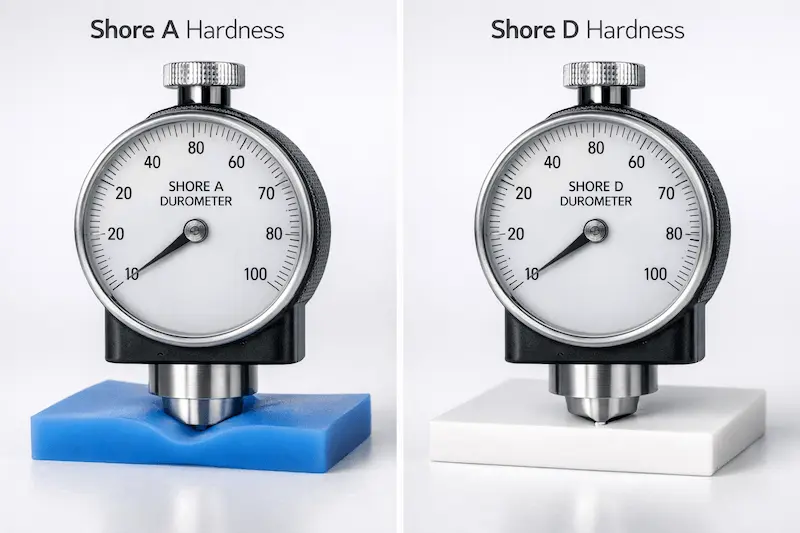
The main difference is that Shore A and Shore D use different indenter shapes and are designed for different material ranges. Shore A is intended for softer, more flexible materials, while Shore D is intended for harder, more rigid materials.
In simple terms, both scales measure resistance to indentation, but they do not measure it in the same way for the same type of material. That is why Shore A is more suitable for flexible silicone rubber and elastomers, while Shore D is more suitable for harder plastics and rigid materials.
What Materials Use Shore A Hardness?
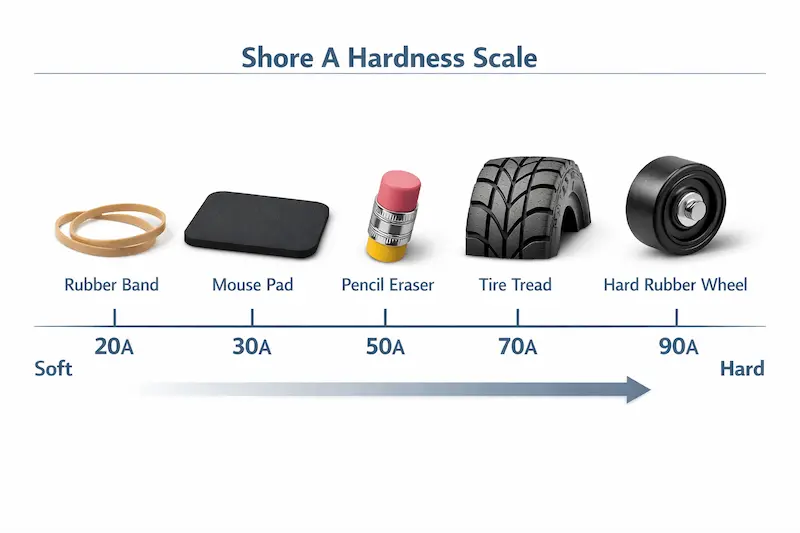
Shore A hardness is used for materials that are softer, more flexible, and more elastic in real use. This includes many types of silicone rubber, elastomers, and general rubber materials. When a material still bends, compresses, or flexes noticeably under normal handling, Shore A is usually the more appropriate hardness scale.
In practical terms, Shore A is commonly used to describe materials such as silicone rubber, soft rubber components, flexible seals, gaskets, tubing, and many mold rubbers. Flexible silicone rubber materials are often discussed in Shore A values such as 10A, 20A, 30A, or 40A. For these materials, the goal is not just to know whether the material is “hard” or “soft,” but to understand how it will flex, compress, and behave in practical use.
What Materials Use Shore D Hardness?
Shore D hardness is used for materials that are harder, more rigid, and less flexible in practical use. It is more commonly applied to hard plastics, rigid elastomers, and materials that need stronger structural stiffness rather than soft flexibility.
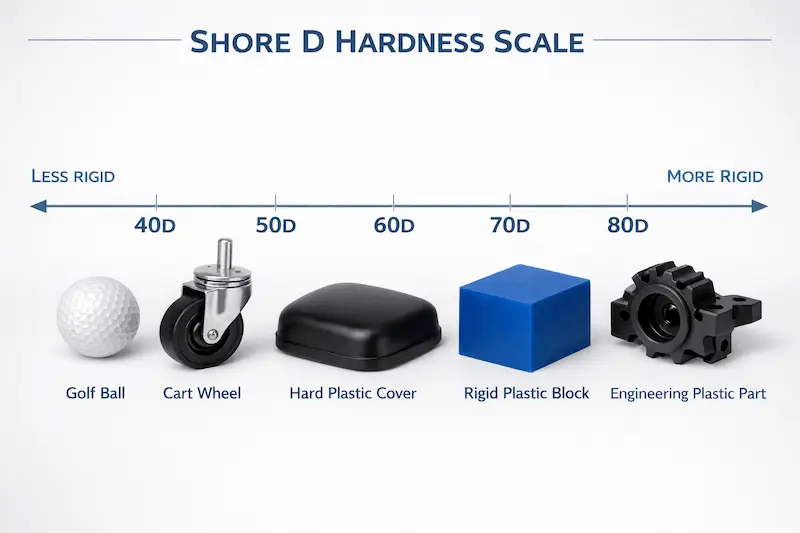
In simple terms, Shore D becomes more relevant when a material no longer feels like a flexible rubber and begins to behave more like a hard engineering material. These materials resist indentation more strongly and usually provide less compression, less bend, and less elastic movement than materials measured on the Shore A scale.
Typical examples include hard plastic housings, rigid industrial parts, semi-rigid polymer components, and other materials where shape stability and stiffness matter more than flexibility. In these cases, Shore D helps describe how resistant the material is to pressure and surface indentation.
Why the Difference Matters in Real Applications
The difference between Shore A and Shore D matters because material selection is not only about hardness in a general sense. It is about choosing the right type of hardness scale for the way a material will actually be used.
A softer, more flexible material and a harder, more rigid material do not behave the same way under pressure, during handling, or in production. If the wrong hardness scale is used as a reference, buyers may misunderstand what the material is really like in practice. A material that sounds “hard” on one scale may still behave very differently from a material measured on another scale.
This becomes especially important in applications where flexibility, shape retention, release behavior, or structural support directly affect performance. In mold making, for example, a material may need enough flexibility to release undercuts safely, but also enough body to support the mold during pouring and repeated use. In harder industrial parts, the concern may be less about flex and more about rigidity, stability, and resistance to deformation.
Need Help Choosing the Right Shore A Or Shore D?
Tell us about your application, and we can help you review a more suitable Shore A direction.
Which Hardness Scale Matters More for Mold Making Silicone?
For mold-making silicone, Shore A is usually the more relevant hardness scale.
That is because RTV-2 silicone rubber is typically evaluated more by flexibility, release behavior, and mold support than by rigid structural hardness. Buyers are usually not asking whether the material behaves like a hard plastic. They are trying to understand whether the silicone can flex enough for release, hold its shape during use, and perform reliably in repeated production.
In practical terms, Shore A helps buyers think about the things that matter most in flexible mold materials:
- how easily the mold can flex during release
- how much body the mold has during handling and pouring
- how softness and shape retention are balanced
- whether the material feels suitable for detail, undercuts, and repeated use
This is why most mold-making silicone products are discussed in Shore A values such as 10A, 20A, 30A, or 40A. These values provide a more practical starting point for flexible silicone materials than Shore D values do.
Read also: how to choose shore a hardness for silicone molding
Can Shore A Be Converted to Shore D?
Shore A and Shore D cannot be converted directly in a fully precise way.
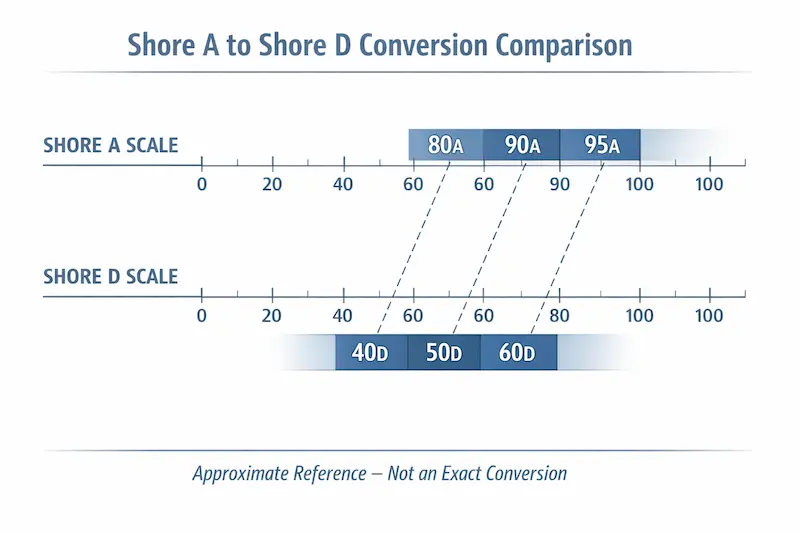
Although some comparison charts show approximate relationships between the two scales, Shore A and Shore D are designed for different material ranges. Shore A is intended for softer, more flexible materials, while Shore D is intended for harder, more rigid materials. Because of that, the same number on one scale does not mean the same practical hardness on the other.
Approximate conversion tables can sometimes be useful for rough reference, especially when a material is close to the upper end of Shore A or the lower end of Shore D. However, these tables should not be treated as exact engineering conversions. They are only estimates.
For practical material selection, the better approach is to first identify the type of material you are dealing with. If the material is a flexible silicone rubber or elastomer, Shore A is usually the correct scale to focus on. If the material is much harder and more rigid, Shore D is usually the better reference point.
For mold-making silicone, this means buyers usually do not need to spend much time trying to convert Shore A to Shore D. In most cases, the more useful step is to stay within the Shore A range and compare different Shore A options based on mold geometry, release behavior, and application needs.
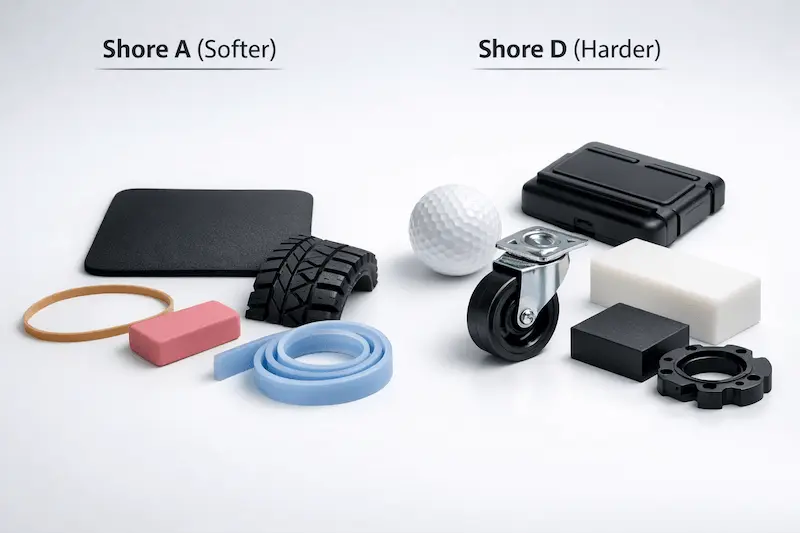
Common Examples of Shore A and Shore D Hardness
One of the easiest ways to understand Shore A and Shore D hardness is to compare them with familiar objects and material types.
In general, Shore A is used for softer, more flexible materials that still feel elastic in use. Shore D is used for harder, more rigid materials that feel more structural and less compressible.
The examples below are only rough reference points, but they can help make the difference between the two scales easier to visualize.
| Hardness Scale | Common Reference Examples |
|---|---|
| Shore A | Rubber band, mouse pad, pencil eraser, tire tread |
| Shore D | Golf ball, hard plastic cover, shopping cart wheel, rigid plastic parts |
These examples should not be treated as exact material matches, but they help show the difference in practical feel. In many flexible silicone rubber applications, materials are still more commonly discussed in the Shore A range than the Shore D range.
Shore Hardness Alone Does Not Tell the Whole Story
Shore hardness is useful, but it is only one part of material selection.
Knowing whether a material is measured on the Shore A scale or the Shore D scale helps you understand its general hardness range. However, hardness alone does not fully explain how a material will behave in real use.
For flexible silicone rubber materials, other factors such as tear strength, viscosity, and application demands can also matter. This is why understanding Shore A vs Shore D is a useful starting point, but not always the final answer.
FAQ
RECOMMENDED NEXT STEP
Choosing the right silicone involves more than just hardness or cure system.
Send us your application details, and we’ll map out the exact grade for your testing.
Compare RTV-2 Silicone Grades