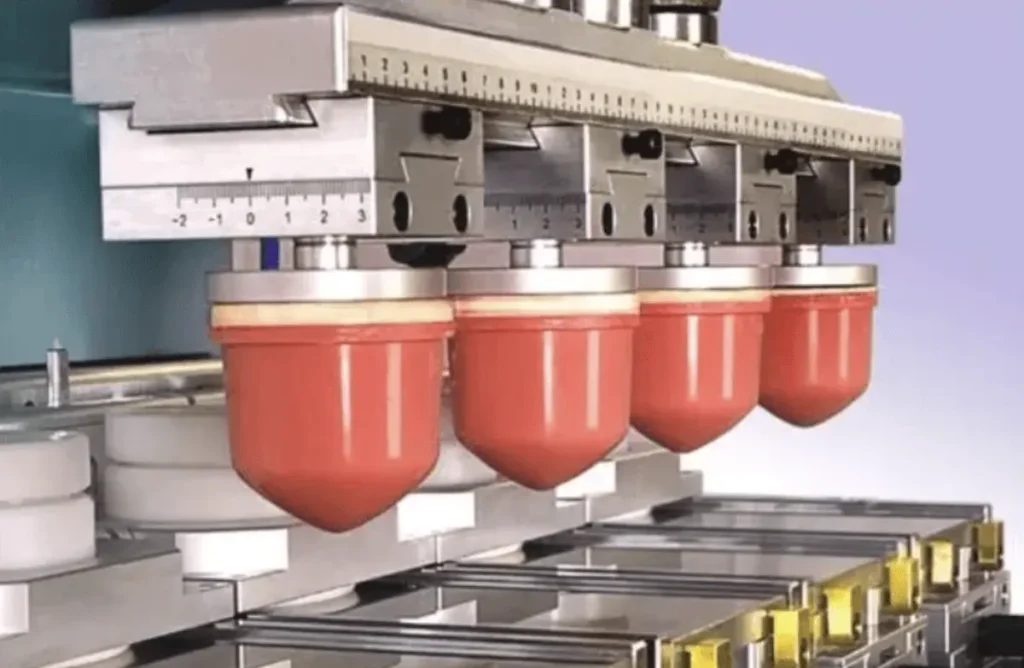

Pad printing is an indirect printing process used to transfer a 2D image onto a 3D object. It is commonly used when the product surface is curved, uneven, recessed, textured, or too difficult to print with traditional flat printing methods.
Instead of printing directly from the plate to the product, pad printing uses a soft silicone pad to pick up ink from an etched plate and transfer it onto the product surface. This makes it suitable for small graphics, fine details, logos, symbols, and markings on complex parts.
Pad printing is widely used for toys, electronics, plastic housings, medical devices, automotive parts, promotional products, control buttons, cosmetic packaging, and many industrial components.
What Is Pad Printing?
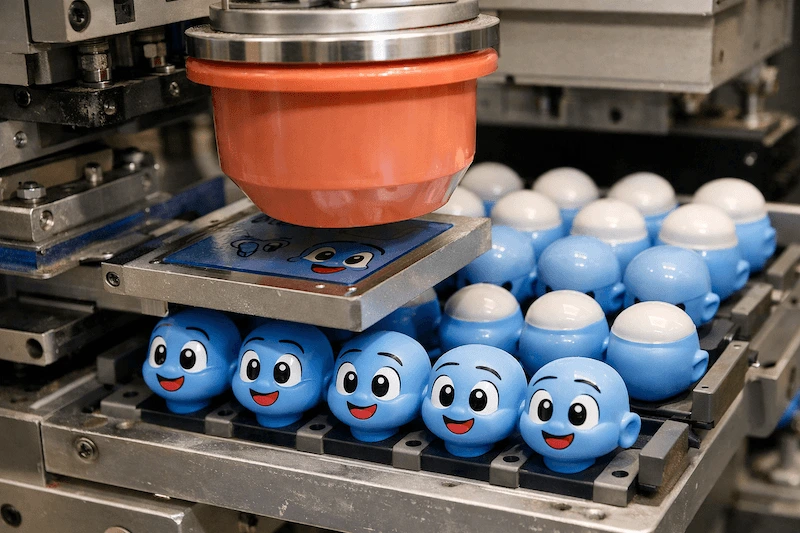
Pad printing is a printing method that transfers ink from a printing plate to a product through a silicone pad.
The printing plate, also called a cliché, holds the image or pattern. Ink fills the etched image area, and the silicone pad presses onto the plate to pick up the ink. Then the pad moves to the product and transfers the image onto its surface.
The key advantage of pad printing is flexibility. Because the silicone pad is soft and elastic, it can adapt to curved, uneven, concave, convex, or irregular surfaces.
This is why pad printing is often used for products that cannot be printed easily with screen printing, digital printing, or other flat-surface methods.
How Does Pad Printing Work?
The pad printing process usually follows several basic steps.
First, the image is etched into a printing plate, also known as a cliché. Ink is applied to the plate and fills the etched image area. Then, the excess ink is removed from the plate surface by a doctor blade or sealed ink cup.
Next, the silicone pad presses onto the cliché and picks up the ink image. The pad then moves to the product surface, compresses onto the part, and transfers the ink. After printing, the pad returns to its original shape and the cycle repeats.
Although the process looks simple, print quality depends on many details, including ink type, cliché depth, pad shape, pad hardness, product surface, printing pressure, and machine setup.
Why Are Silicone Pads Used in Pad Printing?
Silicone pads are used because they are soft, flexible, and effective at picking up and releasing ink.
During printing, the pad must press onto the flat cliché, pick up the ink image, then press onto a product that may be curved, recessed, or irregular. A silicone pad can deform during contact and then return to its original shape after printing.
This flexibility allows the pad to transfer images onto surfaces that are difficult to print directly.
A good silicone pad should have:
- Good ink pickup
- Clean ink release
- Stable elasticity
- Proper hardness
- Good recovery after compression
- Suitable shape for the product surface
- Enough durability for repeated printing cycles
If the silicone pad is too soft, the image may distort. If it is too hard, it may not adapt well to curved or uneven surfaces. If the pad material has poor resilience, print consistency may become unstable over time.
What Products Can Be Pad Printed?

Pad printing is used in many industries because it can print on small, curved, or complex surfaces.
Common applications include:
- Toys and model parts
- Electronic housings
- Keypads and control buttons
- Automotive components
- Medical devices
- Promotional products
- Sports equipment
- Cosmetic packaging
- Industrial plastic parts
- Tools and hardware
- Household products
For example, a logo on a toy, a symbol on a button, a marking on an electronic part, or a small graphic on a curved plastic housing may all be produced by pad printing.
Pad printing is especially useful when the print area is small, the product shape is complex, or the design needs to be placed on a surface that is not flat.
How to Make Pad Printing Silicone?
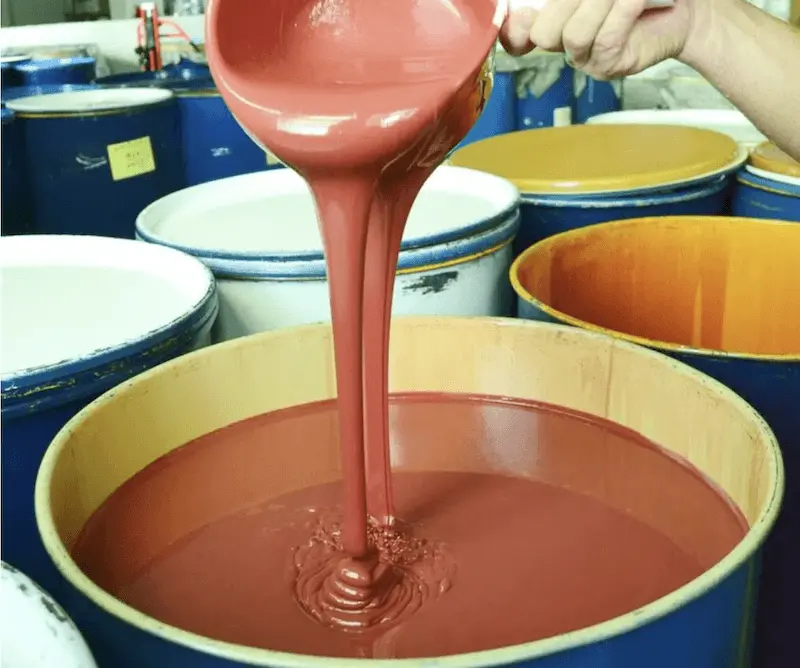
Silicone pads for pad printing are usually made from liquid RTV silicone rubber. The material is mixed with a curing component, poured into a pad mold, and cured into a flexible printing pad with the required shape and hardness.
The basic process usually includes the following steps:
Prepare the pad mold
The mold determines the final pad shape. Different printing jobs may require round, rectangular, pointed, roof-shaped, or custom pad designs.
Mix the pad printing silicone rubber
Liquid silicone rubber is mixed according to the supplier’s recommended ratio. Accurate mixing is important because it affects curing, hardness, elasticity, and final pad performance.
Remove air bubbles if needed
Air bubbles inside the silicone can create weak spots or surface defects. Vacuum degassing may be used when a cleaner, more consistent pad is required.
Pour the silicone into the pad mold
The mixed silicone is poured slowly into the mold to reduce trapped air and help the material fill the shape evenly.
Let the silicone cure fully
The silicone must cure completely before demolding. If the pad is removed too early, it may deform or lose dimensional accuracy.
Demold and trim the finished pad
After curing, the silicone pad is removed from the mold and trimmed if needed. The finished pad should have a clean surface, stable shape, and proper flexibility for ink transfer.
What Affects Pad Printing Quality?
Several factors can affect the final print result.
Pad Shape
The silicone pad shape affects how the pad contacts the cliché and the product. A good pad shape helps the pad roll smoothly over the surface and reduces trapped air.
If the pad shape is not suitable, the print may have missing areas, distortion, pinholes, or uneven ink transfer.
Pad Hardness
Pad hardness affects how much the pad deforms during printing.
A softer pad can adapt more easily to curved or delicate surfaces, but it may distort the image if it is too soft. A harder pad may help with sharper details, but it may not work well on very irregular surfaces.
Silicone Material
The silicone material affects ink pickup, ink release, elasticity, recovery, and pad life. Poor-quality pad material can lead to unstable printing, shorter pad life, or inconsistent image transfer.
Ink and Surface Compatibility
The ink must be suitable for the product material. Plastic, metal, glass, rubber, coated surfaces, and painted parts may require different ink systems or surface treatments.
Cliché Depth
The depth of the etched image affects how much ink is picked up and transferred. If the cliché depth is not suitable, the print may appear too light, too heavy, or unclear.
Printing Pressure
Too much pressure may distort the image or damage the pad. Too little pressure may cause incomplete transfer.
Machine Setup
Machine speed, pad movement, ink condition, part positioning, and drying time all affect print consistency. For repeated production, a stable setup is essential.
FAQ
What is pad printing used for?
Pad printing is used to print logos, symbols, markings, and small graphics on curved, uneven, recessed, or irregular surfaces. It is common in toys, electronics, medical devices, automotive parts, promotional products, and industrial components.
Why is silicone used for pad printing pads?
Silicone is used because it is soft, flexible, and effective at picking up and releasing ink. It can adapt to curved or irregular surfaces and return to shape after repeated compression.
What is a cliché in pad printing?
A cliché is the printing plate used in pad printing. The image is etched into the plate, and ink fills the etched area before being picked up by the silicone pad.
Can pad printing be used on curved surfaces?
Yes. Pad printing is especially useful for curved, concave, convex, textured, or irregular surfaces because the silicone pad can deform and adapt to the shape of the product.
What is the difference between pad printing and screen printing?
Pad printing is better for small details and irregular 3D surfaces. Screen printing is usually better for larger flat or slightly curved surfaces.
What affects pad printing quality?
Pad printing quality depends on pad shape, pad hardness, silicone material, ink type, cliché depth, printing pressure, product surface, and machine setup.